

Key Takeaways:
- Nvidia announced a revenue-sharing model for its AI chips on July 2
- The stock has gained 12% in 2026, trailing the SOX index's 80% Q2 surge
- Hyperscaler in-house chips and decelerating growth threaten Nvidia's dominance
Key Takeaways:
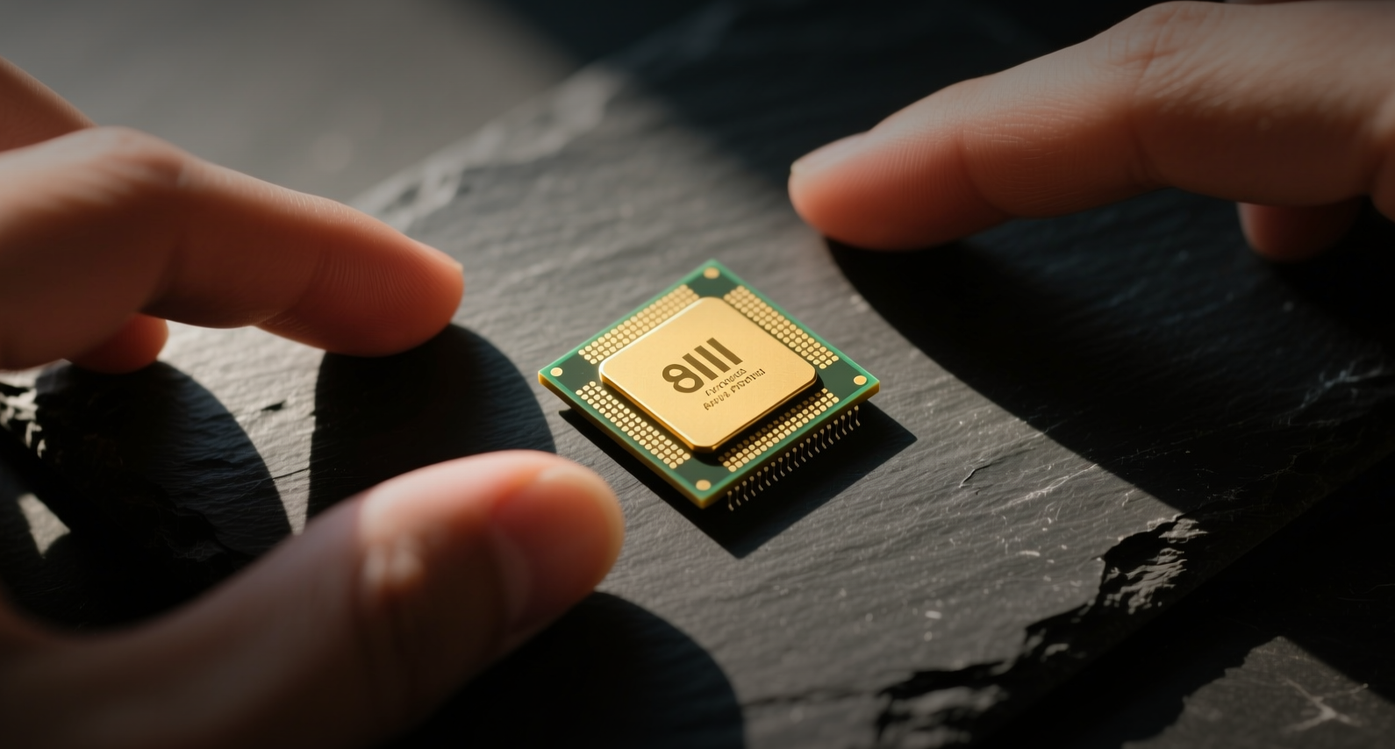
Nvidia's stock has gained just 12% this year, trailing the PHLX Semiconductor Index's 80% second-quarter surge, as investors question whether the company's new revenue-sharing model can sustain growth beyond its dominant AI chip business.
"The revenue-sharing approach lets Nvidia capture value from the entire AI stack, not just the silicon," said Stacy Rasgon, senior analyst at Bernstein. "But the market wants to see concrete numbers, not just a strategy."
Nvidia's plan, announced July 2, would allow cloud providers and enterprise customers to pay a recurring fee tied to the revenue generated by Nvidia's chips in their data centers, rather than a one-time hardware purchase. The model mirrors how software companies shifted from licenses to subscriptions, but applied to physical hardware — a first for the semiconductor industry. Nvidia did not disclose the revenue split percentage or which customers have signed on.
The announcement comes as Nvidia faces mounting competitive pressure. Amazon's Trainium 3, built on TSMC's 3nm process, and Meta's in-house chip efforts threaten to erode Nvidia's estimated 80% share of the AI accelerator market. Meanwhile, hyperscalers including Amazon, Microsoft, and Alphabet are projected to spend more than $650 billion on AI infrastructure this year, according to Nomura, but much of that spending is diversifying away from Nvidia's H100 and B200 processors.
Why the market isn't buying it yet
Nvidia's data center revenue reached $47.5 billion in its most recent fiscal year, but growth is decelerating from the triple-digit rates of 2024 and 2025. The revenue-sharing model could smooth out the boom-bust cycle of hardware procurement — cloud providers typically buy chips in large batches, then pause — but it also shifts revenue recognition from upfront to recurring, which could pressure near-term reported revenue.
The PHLX Semiconductor Index surged more than 80% in the second quarter, its best three-month stretch since 2020, driven by AI infrastructure spending. Nvidia, the index's largest component by market weight, has been a laggard. The VanEck Fabless Semiconductor ETF (SMHX), which holds Nvidia as its top position at 19.06% of assets, has returned about 68% year to date — outperforming Nvidia's single-stock return by a wide margin.
Nomura analysts led by Aaron Jeng published a 119-page deep dive on the semiconductor sector this week, arguing the chip rally has further to run. They cited overlooked bottlenecks in chip-on-wafer-on-substrate packaging, which they said could constrain supply through 2027, and noted that hyperscalers "can't stop spending" as memory-chip costs rise and data-center buildouts accelerate.
What's at stake for investors
Nvidia trades at roughly 35 times forward earnings, a premium to the broader semiconductor sector's 22 times multiple. The revenue-sharing model, if adopted widely, could justify that premium by converting Nvidia from a cyclical hardware supplier into a recurring-revenue platform — but only if customers agree to the terms.
The risk is that hyperscalers building their own chips — Amazon with Trainium, Google with TPU, Meta with its in-house designs — see little reason to lock into long-term Nvidia revenue-sharing agreements. If adoption is limited to smaller cloud providers and enterprise customers, the financial impact may be negligible relative to Nvidia's $3.2 trillion market capitalization.
"Investors seem to be experiencing AI fatigue," veteran market strategist Ed Yardeni wrote in a recent note. "They are questioning whether the hyperscalers' massive spending on AI infrastructure will ever pay off." For Nvidia, the revenue-sharing plan is an attempt to answer that question — but the stock's continued underperformance suggests the market is waiting for proof.
This article is for informational purposes only and does not constitute investment advice.
