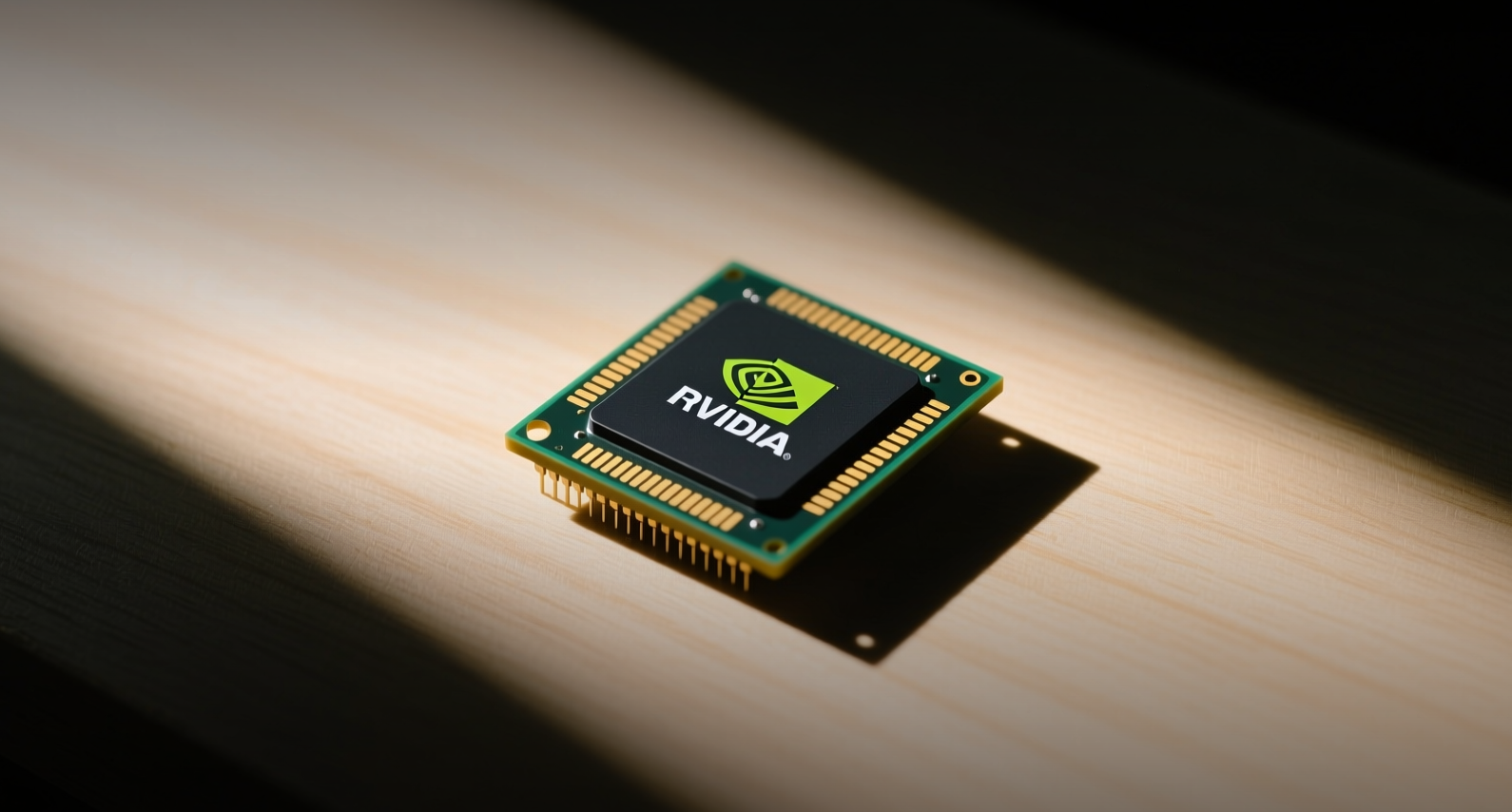
NVIDIA's Rubin architecture is the industry's first 100% liquid-cooled AI platform, using 45°C coolant to eliminate fans and slash data center water consumption by as much as 100%.
NVIDIA's Rubin generation runs coolant as hot as 45°C — warmer than a hot tub — in a sealed, fanless design that cuts data center cooling water consumption to near zero, a milestone for an industry where cooling accounts for up to 40% of electricity use.
"With dry-cooler-based designs, it's a closed-loop system with no evaporative water cooling — outside of maybe 1% of the year when we might need chillers in some climates," Ali Heydari, NVIDIA's director of data center cooling, said.
The system circulates a 75% water and 25% propylene glycol mixture through cold plates mounted directly on every processor, networking chip, and power component — eliminating the hybrid air-liquid approach of prior generations. Coolant enters the rack at 45°C and exits at roughly 55°C after absorbing heat across the chip surface. A 50-megawatt hyperscale facility adopting the technology could save more than $4 million annually in cooling-related energy and water costs, according to NVIDIA, while reducing PUE from 1.35 to 1.15.
The Rubin NVL72 racks, integrating 72 GPUs and 36 CPUs at power densities exceeding 100 kW per cabinet, are priced as high as $8.8 million each. NVIDIA shares traded at $210.69 on June 19, giving the company a $5.14 trillion market cap. The cooling innovation removes a key bottleneck for scaling AI infrastructure, strengthening NVIDIA's competitive position against AMD and custom ASIC rivals at a moment when hyperscalers are scrutinizing every watt of data center power.
How 45°C Coolant Changes the Physics of Data Centers
Traditional data centers rely on energy-intensive chillers and fans to push cooled air through hot and cold aisles, with cooling fans generating noise levels at or above 85 decibels. NVIDIA's approach flips that model: by capturing heat directly at the chip via liquid-cooled cold plates, the system can reject heat through outdoor dry coolers — essentially large radiator coils — without mechanical refrigeration for most of the year.
The geography caveat matters. Facilities in cooler climates can operate entirely chiller-free, while locations like Phoenix may need minimal chiller activation during peak summer days. Even in warmer regions, the shift toward 45°C coolant moves operators closer to that chiller-less ideal, with chillers potentially running only a few days annually.
The Rubin platform also introduces microchannel technology in its cold plates, with flow channels machined to micron-level precision using techniques such as precision milling, skiving, laser processing, etching, or 3D printing. Copper is the preferred base material for these microchannel cold plates due to its superior thermal conductivity over aluminum, according to Huayuan Securities analyst Li Ze.
Supply Chain and Competitive Implications
The transition to 100% liquid cooling creates ripple effects across the data center supply chain. Motivair, the advanced cooling division of Schneider Electric, has worked alongside NVIDIA's product roadmap for nearly a decade, developing high-impedance coolant formulations to enhance reliability and minimize leak risks. "Once the watts per chip crossed a certain level, liquid cooling became mandatory," Motivair President and CEO Richard Whitmore said.
For cloud providers building out AI infrastructure, the operational savings are material. A facility using conventional cooling-tower systems consumes roughly 2.6 million gallons of water per megawatt per year. NVIDIA's closed-loop design eliminates nearly all of that consumption. The potential for waste heat recovery — repurposing residual heat from AI factories to warm nearby commercial or residential buildings — adds another layer of value.
NVIDIA's Rubin architecture, the successor to Blackwell, is scheduled to power the next wave of hyperscale AI deployments. With single-cabinet power exceeding 200 kW, air cooling is no longer viable for these densities. Competitors including AMD and a growing roster of custom ASIC designers will need to match NVIDIA's thermal engineering to remain competitive in the AI hardware market.
NVIDIA shares trade at roughly 35x forward earnings. The cooling efficiency gains, if adopted broadly across the installed base, could reduce total cost of ownership for hyperscalers by hundreds of millions of dollars annually — a factor that may justify the premium pricing of Rubin racks and reinforce NVIDIA's dominant position in AI infrastructure.
This article is for informational purposes only and does not constitute investment advice.