

Nvidia’s chief executive counters the prevailing narrative of AI-driven job fears, telling new graduates they have the best tools in history to start a career.
Nvidia’s chief executive counters the prevailing narrative of AI-driven job fears, telling new graduates they have the best tools in history to start a career.
Nvidia’s chief executive counters the prevailing narrative of AI-driven job fears, telling new graduates they have the best tools in history to start a career.
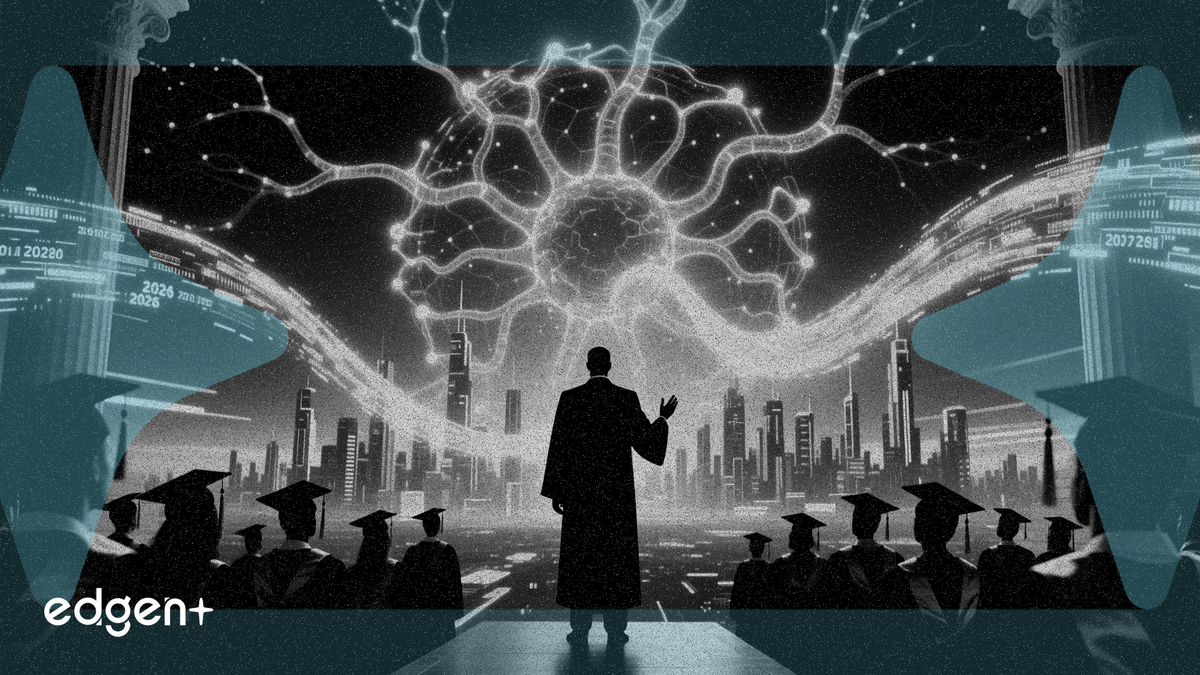
(May 10, 2026) – Nvidia Corp. founder Jensen Huang on Sunday framed artificial intelligence as a historic opportunity for new graduates, directly countering rising fears that AI will eliminate white-collar jobs. In a commencement speech to more than 5,800 graduates at Carnegie Mellon University, the chief executive argued that the current moment is the best time to enter the workforce.
"AI is unlikely to replace you," Huang said after receiving an honorary Doctor of Science and Technology degree. "But someone who uses AI better than you, might."
Huang, whose company’s chips are the primary engine of the current AI boom, compared the technology’s arrival to the PC revolution. He described AI as the catalyst for the largest technology infrastructure build-out in history, urging graduates to seize the moment. "No generation has entered the world with more powerful tools — or greater opportunities — than you," he said. "We are all standing at the same starting line. This is your moment to help shape what comes next. So run. Don't walk."
The speech provides a strong counter-narrative to market anxiety, aiming to solidify investor confidence in the long-term growth of the AI sector. For Nvidia, which dominates over 80 percent of the AI chip market, framing the technology as a tool for job creation and productivity is crucial for sustaining the high-multiple valuation of its stock and encouraging broader enterprise adoption.
Huang’s optimistic message contrasts sharply with recent surveys, including one from the Pew Research Center showing nearly half of Americans are more concerned than excited about AI's proliferation. It also comes as some companies, such as Cloudflare and Snap, have cited AI-driven efficiency in recent layoffs. Huang directly criticized pessimistic "doomsday" forecasts from other tech leaders, including warnings he attributed to Anthropic's CEO about AI eliminating junior positions and Elon Musk's speculation on existential risks, calling such comments unhelpful.
Instead, Huang positioned AI as a democratizing force that will close the "technology divide" and empower a new generation of builders beyond the tech industry. He argued the technology automates tasks, not entire jobs, freeing up human workers to focus on higher-value "mission" oriented work. He used the example of a radiologist, whose task of reading a scan can be automated, but whose mission of caring for the patient is enhanced.
Carnegie Mellon President Farnam Jahanian, who introduced Huang, echoed the theme of empowerment, praising the CEO for "advancing a vision of technology as a powerful tool for amplifying what people can create, discover and achieve." The message resonated with graduates like Simi Olusola-Ajayi, a master's student in Human-Computer Interaction, who spoke of navigating the "middle" between expectations and new realities shaped by technology.
For investors, Huang's speech is more than just graduation advice; it's a strategic defense of the AI industry's social license to operate and a reaffirmation of its growth trajectory. By framing AI as a tool of empowerment rather than replacement, the leader of the market’s most important AI company is working to ensure that enterprise customers and policymakers continue to support the massive capital investment required for the next phase of AI development.
This article is for informational purposes only and does not constitute investment advice.
