The partnership to codevelop memory for Nvidia's next-generation AI platforms comes as South Korea's Kospi index suffers its worst two-day selloff in years, with SK Hynix and Samsung shares plunging despite the bullish announcement.
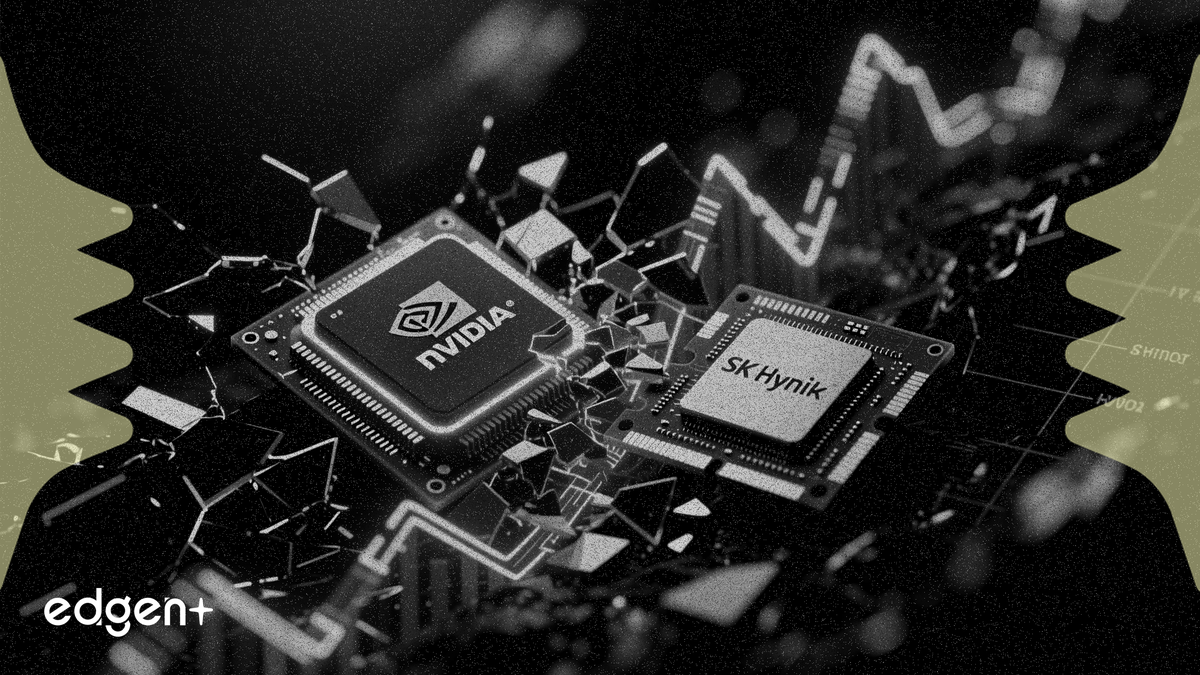
Nvidia and SK Hynix on Monday announced a multiyear technology partnership to codevelop next-generation memory for AI factories, covering platforms from Nvidia's Vera Rubin supercomputers to Jetson Thor robotic computing. The deal extends a years-long co-engineering relationship that has powered some of the most advanced AI computing platforms, according to a joint statement.
"AI factories are the engines of the next industrial revolution, and advanced memory is essential to their performance," Jensen Huang, founder and CEO of Nvidia, said. "SK Hynix has been an extraordinary partner to Nvidia, playing a central role in delivering advanced memory technologies for our AI computing platforms."
Under the agreement, SK Hynix will diversify into new markets Nvidia is creating — spanning AI infrastructure, personal AI and physical AI — codeveloping memory for Nvidia Vera Rubin AI supercomputers, Vera CPUs, RTX Spark-powered PCs and Jetson Thor robotic computing platforms. The South Korean memory chipmaker will also apply AI to semiconductor design and manufacturing, using Nvidia's CUDA-X libraries and PhysicsNeMo framework to accelerate technology computer-aided design and computational lithography workflows. SK Hynix is additionally developing factory digital twins using Nvidia's Omniverse platform and cuOpt optimization engine to drive fully autonomous fab operations.
The deal's significance extends beyond the two companies. SK Telecom, a sister company of SK Hynix, said it would build a gigawatt-scale AI cloud in South Korea using Nvidia technology, with the first data centre coming online in 2027. Nvidia also announced cooperation with South Korean internet giant Naver and conglomerate Doosan, which provides materials used in Nvidia's most powerful Blackwell chips and will use the U.S. firm's physical AI technology. The financial terms of the agreements were not disclosed.
The AI trade hits a wall
Despite the bullish news, shares of SK Hynix opened 10.3% lower in Korean trading Monday, while Samsung Electronics fell as much as 10.9%. The Kospi index dropped as much as 8.8% before paring losses to about 6.1%, extending a 6.2% decline from Friday that marked the chip sector's worst day in six years. The Kospi had rallied 94% in 2026 before the selloff, driven largely by SK Hynix and Samsung as the two dominant memory-chip suppliers powering AI data centers.
The selloff reflects growing investor uncertainty about whether the memory-chip pricing cycle has peaked. Memory chips have been in extremely short supply relative to AI-fueled demand, affording SK Hynix, Samsung and Micron Technology substantial pricing power. Huang said over the weekend that the shortage is "going to persist for several years," according to Reuters. But the companies have begun striking long-term agreements that lock in elevated pricing levels, potentially limiting further near-term upside.
"One day does not make a trend, but when the market's hottest AI playground suddenly turns into a fire drill, traders tend to notice," Stephen Innes, managing partner at SPI Asset Management, said in a note. He cautioned that the real verdict on the AI trade would come when U.S. markets open.
What the partnership means for the memory market
The multiyear agreement addresses a structural challenge in the memory industry: advanced memory chips require extended development cycles and significant capital investment, making supply planning difficult when demand is volatile. By aligning SK Hynix's memory roadmap with Nvidia's infrastructure plans, the deal aims to ensure stable supply as AI factories scale globally.
For Nvidia, the partnership secures access to the high-bandwidth memory (HBM) that is critical to its GPU performance. SK Hynix has been Nvidia's primary HBM supplier, and the expanded relationship reduces the risk of supply bottlenecks that have constrained AI infrastructure buildouts. For SK Hynix, the deal provides revenue visibility across multiple product cycles and opens new markets in personal AI and robotics — areas where Nvidia is pushing its RTX Spark and Jetson Thor platforms.
The competitive implications for Samsung and Micron are significant. Samsung, the world's largest memory-chip maker by revenue, has been racing to catch up in HBM supply but has yet to secure a comparable long-term commitment from Nvidia. Micron, the third major memory supplier, has also been expanding its HBM capacity but faces similar uncertainty about demand duration. All three companies trade in sympathy with AI sentiment, and Monday's selloff erased billions in combined market value.
This article is for informational purposes only and does not constitute investment advice.