
Key Takeaways:
- North Korea's economy grew 3.7% in 2024, its fastest pace in eight years
- Arms sales to Russia exceeded $10 billion, with 15,000+ troops deployed
- Xi Jinping visited Pyongyang as Pyongyang declared nuclear status nonnegotiable
Key Takeaways:
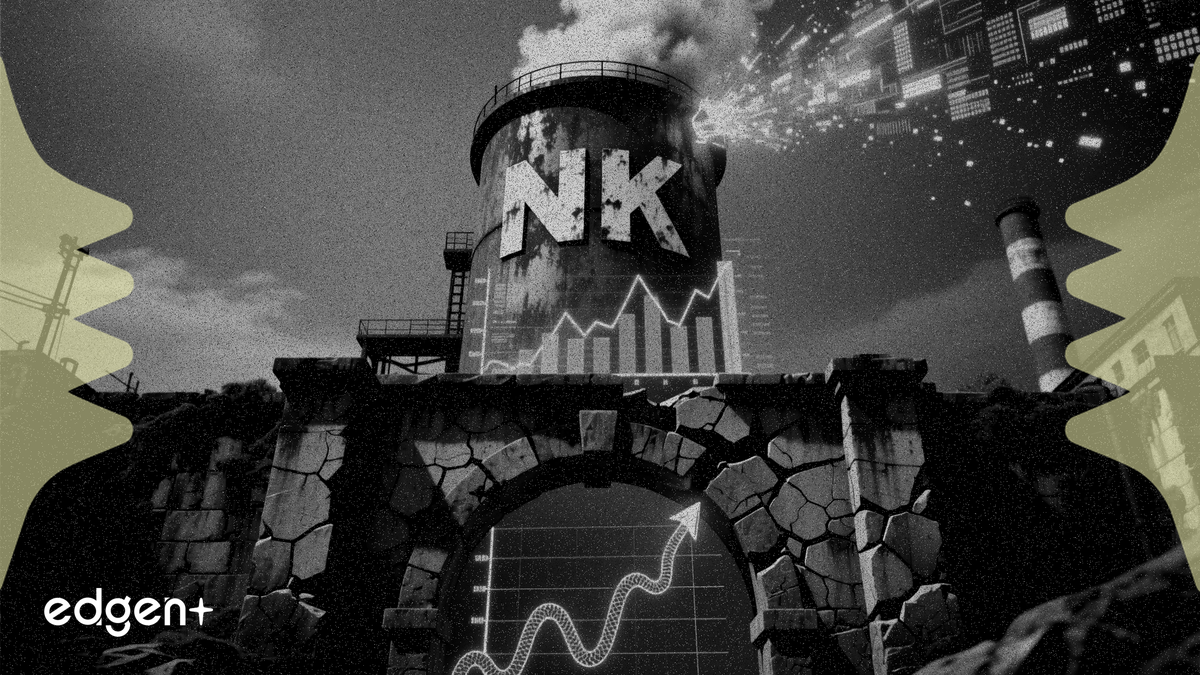
North Korea has emerged as the world's most unlikely growth story, with its economy expanding at the fastest pace in eight years as arms sales to Russia and deepening ties with China transform the sanctions-hit nation.
North Korea's economy grew 3.7% in 2024, its fastest expansion in eight years, as arms sales to Russia exceeding $10 billion and surging trade with China fueled a construction boom and consumer spending in Pyongyang, according to data from South Korea's central bank compiled using spy-agency information.
"The regime is wealthier than ever," said Jung H. Pak, who was a senior official handling North Korean issues during the Biden administration, citing the dual boost from weapons revenue and Russian military technology transfers.
Monthly trade with China hit an eight-year high, reaching $2.79 billion last year, while North Korea deployed more than 15,000 troops to support Russia's war in Ukraine, generating over $600 million in direct personnel payments, according to estimates by the Institute for National Security Strategy, a Seoul-based think tank. The capital Pyongyang built 10,000 new homes in 2025 — more than either Los Angeles or Chicago — and now shines roughly three times brighter at night than five years ago, satellite data from the Earth Observation Group shows.
The economic rebound has emboldened Pyongyang to reject any future denuclearization talks, with Kim Yo Jong, the influential sister of leader Kim Jong Un, declaring the country's nuclear status "absolutely irreversible" and "nonnegotiable" — dimming prospects for US-led diplomatic efforts and strengthening North Korea's hand ahead of Chinese President Xi Jinping's state visit this week.
Arms for Growth
North Korea's economic turnaround began after Russia's February 2022 invasion of Ukraine, which Pyongyang publicly endorsed. By mid-2023, North Korea had become a major munitions supplier to Moscow, sending approximately 250 advanced KN-23 ballistic missiles and deploying special forces, engineers and drone operators to combat zones including Russia's Kursk region.
The arms sales generated more than $10 billion from the summer of 2023 through the end of last year, according to INSS — a substantial sum for an economy with an estimated gross domestic product of about $27 billion. In exchange, Moscow transferred over $600 million in direct personnel payments alongside deliveries of energy supplies, foreign currency, weapons manufacturing materials and sensitive military technology.
Western intelligence assessments indicate the technological and financial injection has helped accelerate North Korea's domestic fissile material production to a pace capable of yielding up to 20 nuclear warheads annually, while its expanding intercontinental ballistic missile inventory threatens to overwhelm existing US midcourse defense frameworks.
A Capital Transformed
Visitors to Pyongyang describe a city unrecognizable from before the pandemic. Taxis can now be hailed through a smartphone app called Samhung, similar to Uber. Restaurants serve brick-oven pizza and chicken wings, with diners paying through mobile QR-code systems. Chinese electric vehicles crowd the streets alongside imported BMWs.
Domestic production of cellphones reaches half a million devices annually, with more than 50 different smartphone brands now available, according to Russian tour agency Vostok Intur. New services include food delivery apps, cash-payment platforms and internet-gaming cafes.
Kim has initiated a nationwide construction boom under his "20x10" initiative, which calls for new factories in 20 cities and counties each year for a decade. Major projects completed over the past year include Pyongyang's largest hospital, a greenhouse complex larger than New York's Central Park and a new beach-resort compound.
Diplomatic Calculus
The economic strengthening has shifted the geopolitical calculus around North Korea. Both China and Russia, which hold veto power at the United Nations Security Council, have reiterated calls to relax sanctions on Pyongyang. Xi Jinping arrived in Pyongyang this week for his first foreign trip of the year and his first visit to North Korea in seven years, marking the 65th anniversary of the China-North Korea Treaty of Friendship, Cooperation and Mutual Assistance — the only defense pact China has with any nation.
Kim Yo Jong's statement dismissing the possibility of denuclearization talks came days after the White House said President Donald Trump and Xi had reaffirmed their commitment to the "complete denuclearization of the Korean Peninsula" during their summit in Beijing last month. She characterized the US disclosure as "false information" and an "absurd fake."
The last time North Korea's economy grew at a comparable pace was in 2016, before international sanctions were tightened in response to the country's nuclear advancement. That earlier period of growth was driven largely by coal exports to China — a channel that has since been replaced by arms sales to Russia and a broader array of Chinese consumer goods and components.
For Washington, the economic progress dims the prospect of a nuclear deal, since the US has historically dangled sanctions relief or economic incentives to get Pyongyang to freeze or roll back its weapons programs. With North Korea's economy now growing on the back of Russian petrodollars and Chinese trade, that leverage has substantially eroded.
This article is for informational purposes only and does not constitute investment advice.
