

Nextpower's $365 million acquisition of battery storage provider Prevalon Energy positions the solar tracker maker to capture surging electricity demand from AI data centers as federal tax subsidies expire.
Nextpower's $365 million acquisition of battery storage provider Prevalon Energy positions the solar tracker maker to capture surging electricity demand from AI data centers as federal tax subsidies expire.
Nextpower's $365 million acquisition of battery storage provider Prevalon Energy positions the solar tracker maker to capture surging electricity demand from AI data centers as federal tax subsidies expire.
The expiration of the 30% federal solar tax subsidy on July 4 would normally batter utility-scale solar. But Nextpower Inc. is sidestepping the blow by pivoting into battery storage and data-center power infrastructure, where AI-driven demand is creating a new growth runway.
"The Prevalon deal cements Nextpower as the all-around way for investors to play AI-supported solar plus storage growth," BNP Paribas analyst Moses Sutton said after the May acquisition, raising his price target to $182.
Nextpower agreed to pay as much as $365 million for Prevalon, a U.S.-based battery storage provider with more than 6 gigawatt-hours of systems deployed globally and 1.3 gigawatts of firm supply contracts supporting AI and hyperscaler data-center deployments. The company raised its fiscal 2027 revenue outlook to $4.0 billion to $4.4 billion, up from a prior $3.8 billion to $4.1 billion range. Shares trade around $113, well below Sutton's $182 target.
The move comes as solar power generated more electricity than coal for the first time in May, according to Ember Energy, even as the tax subsidy that helped drive that growth disappears. For Nextpower, the bet is that AI data centers' insatiable power needs — and the battery storage and power management software required to serve them — will more than offset the policy headwind.
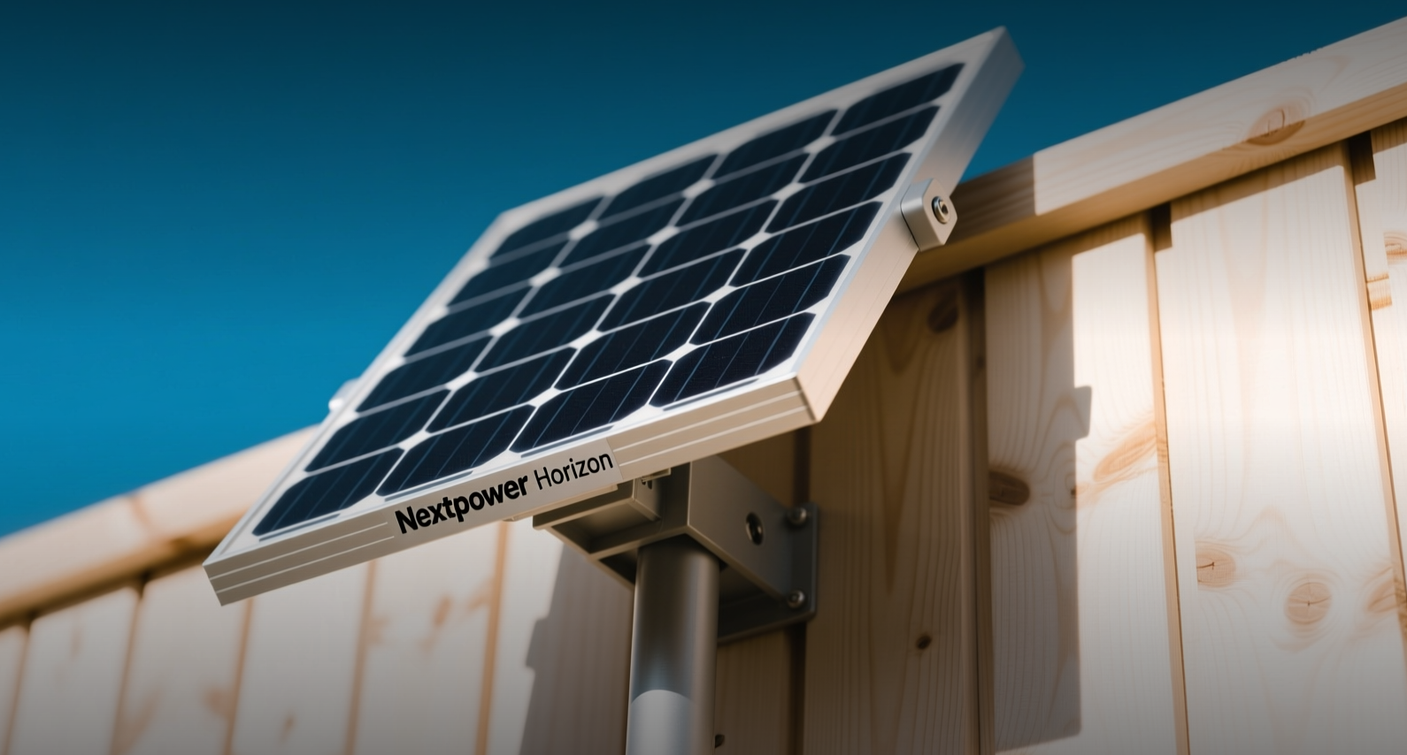
The Fremont, California-based company, known for its NX Horizon solar tracking systems that let panels follow the sun throughout the day, has been expanding beyond its core hardware business. Prevalon's software regulates power usage at data centers, where electricity demand can swing dramatically in short periods — a capability that pairs with Nextpower's existing inverter and electrical balance-of-systems products. The company now offers a full stack: solar trackers, foundations, power conversion, energy storage, controls, and software.
RBC Capital maintained an Outperform rating on Nextpower after the deal was announced May 28, lifting its price target to $149 from $146, saying the acquisition pairs well with Nextpower's inverter business.
The broader solar industry is splitting into winners and losers as the subsidy cliff approaches. Residential solar companies face a 21% decline in installations this year. Sunrun, which leases rooftop panels to homeowners, announced a partnership with Tesla to aggregate power from those panels to supply data centers, sending its stock up 13%. SolarEdge Technologies and Enphase Energy have also announced plans to make power equipment for data centers, with both stocks doubling at points in 2026.
But those gains look speculative, based on untested products that may not come to pass. Nextpower's Prevalon acquisition, by contrast, brings existing revenue, deployed assets, and signed contracts — giving it a more concrete foothold in the data-center power market. Prevalon's 1.3 gigawatts of firm supply contracts are already supporting AI and hyperscaler infrastructure deployments.
Nextpower trades at roughly 4.5 times forward sales based on its $16.1 billion market cap and the midpoint of its fiscal 2027 guidance. If the company captures even a fraction of the data-center power management market — estimated to require tens of gigawatts of new capacity by decade's end — the multiple could expand. The risk: execution on the Prevalon integration and any further policy changes that could slow utility-scale solar deployments.
This article is for informational purposes only and does not constitute investment advice.
