

Micron's investment thesis comes down to one number: how much high-bandwidth memory each AI chip consumes.
Micron's investment thesis comes down to one number: how much high-bandwidth memory each AI chip consumes.
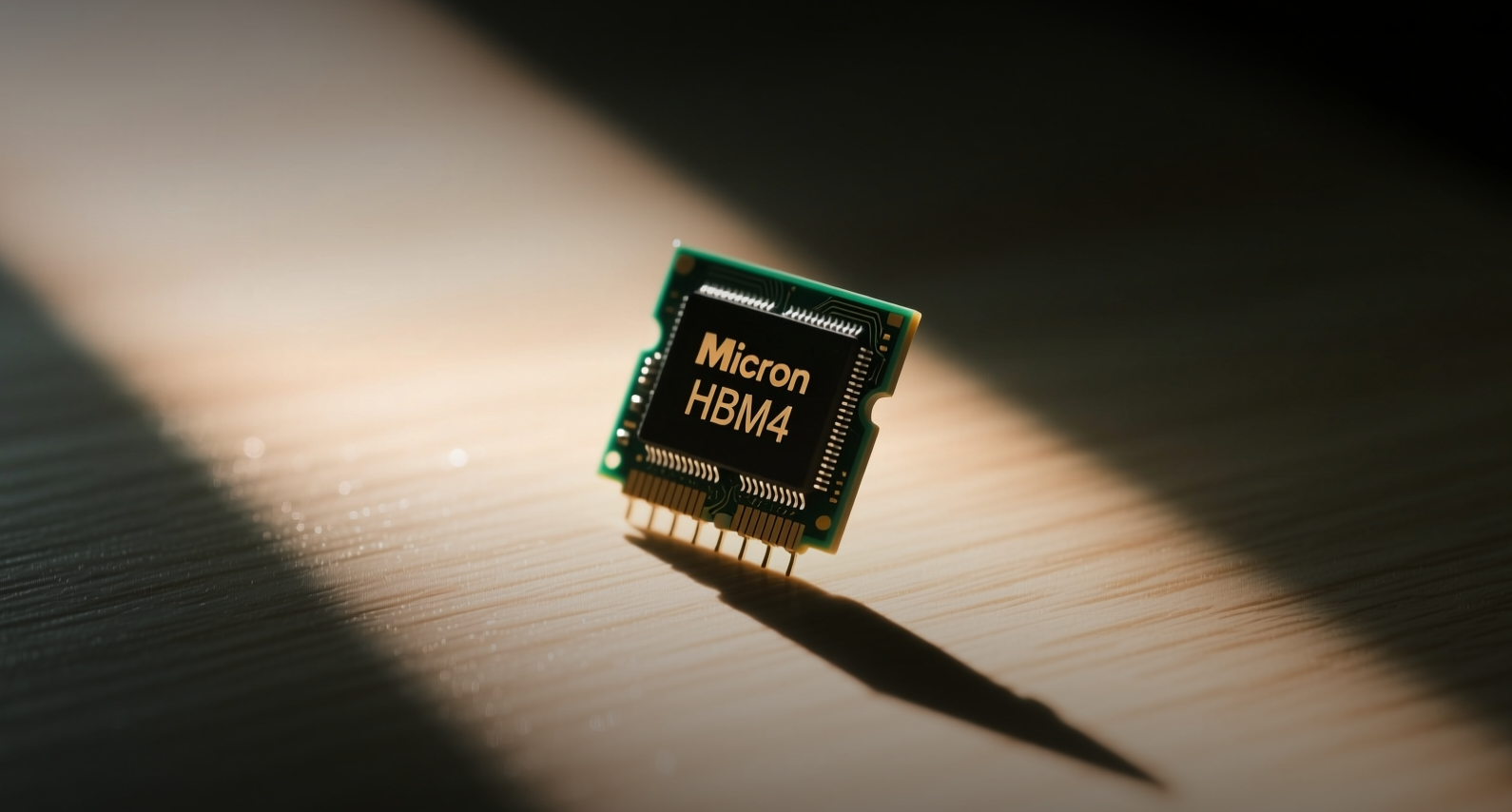
As AI models grow larger, chipmakers are packing more high-bandwidth memory into each server, creating a demand driver for Micron Technology that extends beyond AI server shipment volumes alone.
"The current DRAM upcycle has already lasted 12 quarters, exceeding the eight- to nine-quarter cycles experienced in 2014 and 2018," RBC Capital analysts said in a note, raising their Micron price target to $1,200 from $525. The firm expects the cycle to continue for another five to six quarters as supply growth remains constrained.
Micron has commenced volume shipments of HBM4 for new AI platforms and is advancing HBM4E development for a planned 2027 ramp. The company's entire 2026 HBM production capacity is sold out, with DRAM shortages expected to persist past 2027 as AI capital expenditures continue accelerating. During the second quarter of fiscal 2026, revenue surged 196 percent year over year to $23.9 billion, supported by record DRAM, NAND and HBM sales. Third-quarter gross margin is projected at approximately 81 percent.
Micron trades at 9.7 times forward earnings, a steep discount to the Nasdaq Composite's 25.5 times, reflecting the memory industry's history of boom-bust cycles. If the market re-rates Micron as a structural AI beneficiary rather than a cyclical commodity play, the valuation gap could narrow significantly. According to TrendForce, the global memory market is expected to reach $1.3 trillion by 2027, with DRAM revenue rising 303 percent this year to $619 billion.
HBM Content Per Chip Reshapes the Demand Equation
The shift toward higher memory density per accelerator is the structural argument underpinning Micron's bull case. AI training and inference workloads require enormous bandwidth that conventional memory solutions cannot deliver efficiently. HBM, layered directly alongside GPU clusters in servers, enables the low-latency data movement essential for large language models and other compute-intensive applications.
Micron, Samsung and SK Hynix are the three manufacturers of HBM. Unlike past memory cycles where spot-market pricing drove volatility, Micron has secured multiyear supply agreements with hyperscalers that lock in both volume and pricing. These contracts should reduce the boom-bust volatility that has historically plagued the memory market, according to RBC.
The supply side reinforces the pricing story. Limited clean-room capacity, ongoing conversion of DRAM production lines to HBM, and strong capital expenditure trends from hyperscalers all point to sustained tightness. RBC cited these factors as supporting a longer-than-normal upcycle, with few near-term developments appearing capable of easing supply constraints.
Micron's competitive position is strengthened by its early lead in HBM4. The company began volume shipments ahead of rivals, securing design wins with major AI accelerator makers. Each successive HBM generation increases memory content per chip — HBM4 packs more than double the bandwidth of HBM3e, meaning every GPU shipped pulls more Micron revenue than previous generations. This dynamic is what separates the current cycle from past memory booms, where unit volumes drove growth rather than content per unit.
Valuation Gap Reflects a Structural Shift
Micron's trailing price-to-earnings multiple of 48 looks expensive against its historical range of 3.5 to 8 during past downturns. But that multiple captures both an immediate earnings inflection and the market's ongoing reassessment of memory's role as durable AI infrastructure rather than pure commodity.
The forward P/E of 9.5 tells a different story. Nvidia, Broadcom and Taiwan Semiconductor Manufacturing have all traded at forward multiples in the mid-20s to mid-30s throughout the AI buildout. Micron's discount suggests the market has not fully priced in the structural shift toward higher memory content per chip, leaving room for valuation expansion if earnings materialize as expected.
The risk is that new foundry capacity comes online faster than anticipated or that hyperscalers moderate their data center capital expenditures. Either scenario would compress margins and multiples toward historical averages. But with HBM supply sold out through 2026 and multiyear contracts providing revenue visibility, the near-term trajectory appears constructive.
For investors, the key question is whether Micron's forward multiple expands toward AI peer levels as earnings materialize. At 9.7 times forward earnings, the stock prices in a cyclical downturn that may not arrive as long as HBM content per chip continues rising. If the market assigns even half the multiple of Nvidia's 30-plus times forward earnings, Micron shares would have substantial upside from current levels near $1,076.
This article is for informational purposes only and does not constitute investment advice.
