

Key Takeaways:
- Micron shares slid 6% pre-market after Burry short disclosure
- Analyst Paul Franke downgraded MU to Strong Sell on valuation
- Stock surged 700% from 2022 lows on AI memory demand
Key Takeaways:
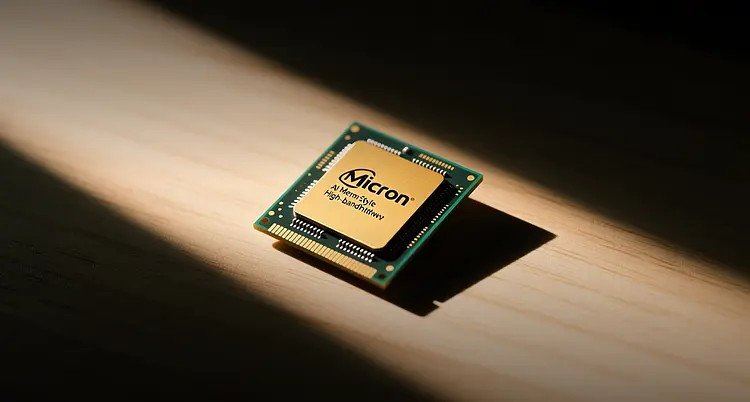
Micron shares slid more than 6% pre-market after Burry's short disclosure and a strong sell rating.
"I rate MU stock a Strong Sell due to dramatic long-term overvaluation, bringing limited sustainable upside vs. serious downside risk," Paul Franke, the Seeking Alpha analyst who downgraded the stock from his previous buy recommendation in August 2022, said.
The stock closed Monday at $984.75, giving the Boise, Idaho-based memory-chip maker a market capitalization of about $1.1 trillion. Franke pointed to an enterprise value-to-revenue multiple of 12 times and a price-to-tangible-book ratio of 11 times, both exceeding peaks reached during the Dotcom bubble. Free cash flow yield has fallen to 2.4%, below the rate of basic inflation, he said. The valuation contrasts sharply with August 2022, when Franke recommended buying the stock as a deep value opportunity with shares trading below $60. At that time, the stock carried an EV-to-revenue multiple of just 2.5 times and a free cash flow yield above 15%.
Burry's Scion Asset Management disclosed the short position on July 1, adding to selling pressure on a stock that has surged about 700% from its 2022 lows on AI-driven demand for high-bandwidth memory chips used in Nvidia Corp.'s accelerators. Insider selling has also accelerated in 2026, according to Franke. The stock's forward price-to-earnings ratio stands at 13.3 times, with short interest at 3.68% of shares outstanding. The company posted revenue growth of 167% year-over-year in its most recent quarter, driven by AI memory demand.
The broader semiconductor sector also faced headwinds. Nvidia fell 1.2% in pre-market trading, while Advanced Micro Devices Inc. and Intel Corp. each declined more than 1%. The Philadelphia Semiconductor Index was down 0.8%.
The selloff comes as the AI trade shows signs of fatigue. The S&P 500 has been range-bound in recent weeks, with some investors rotating out of AI infrastructure beneficiaries into defensive sectors. Data center project cancellations and rising scrutiny of AI usage costs have raised questions about the sustainability of memory demand growth.
The decline puts Micron at risk of breaking below its 50-day moving average for the first time since April. The company's next catalyst is its fiscal fourth-quarter earnings report, expected in late September, where investors will scrutinize data-center revenue growth and gross margin trends. The stock has already fallen about 10% from its all-time high of $1,089 reached in late June.
This article is for informational purposes only and does not constitute investment advice.
