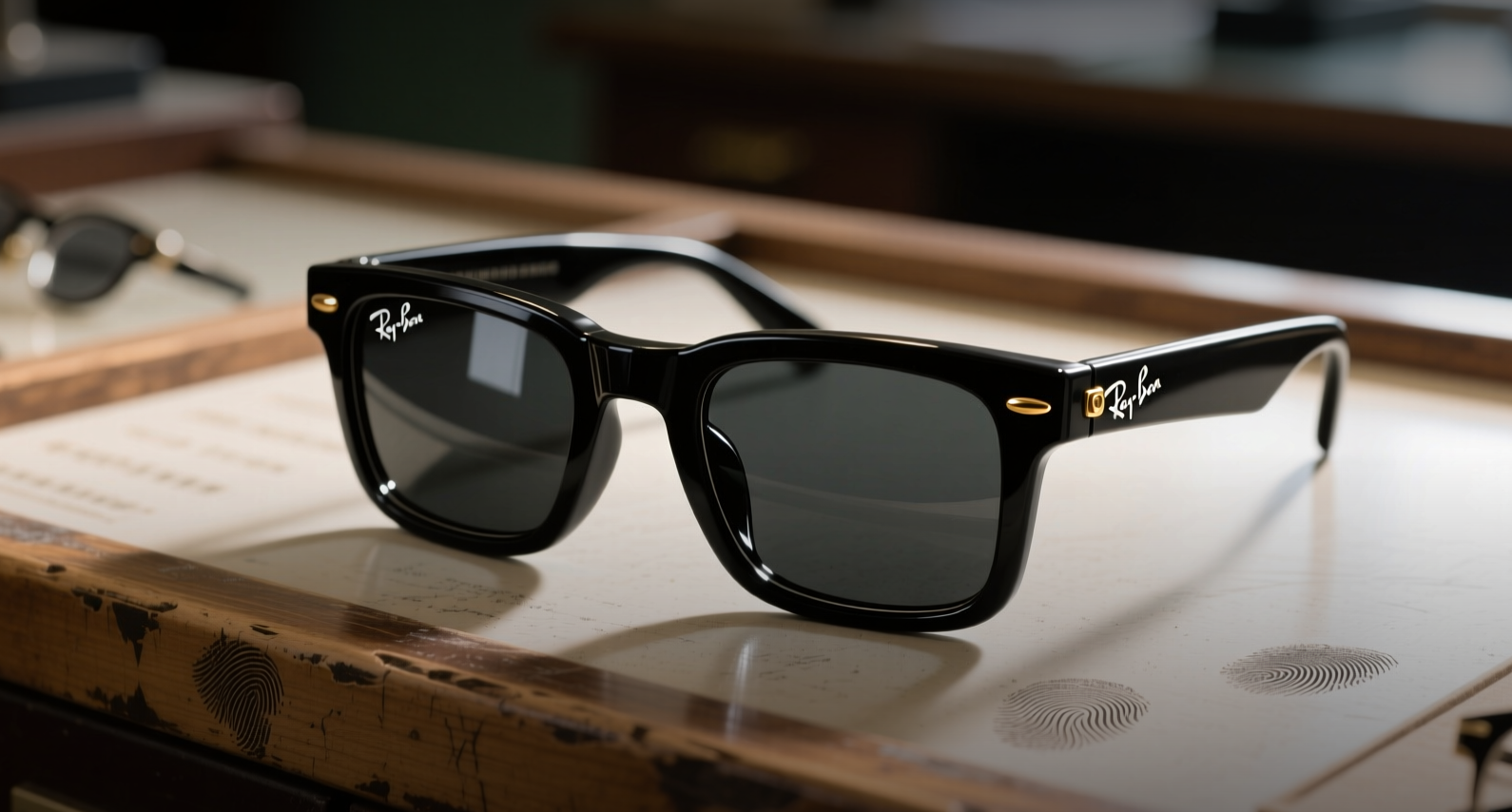
Meta Platforms put three new pairs of artificial-intelligence glasses on sale at its annual Connect developer conference on Sept. 23, pricing the range from $249 to $449 and making a camera-free model the centerpiece of its answer to a widening privacy backlash against wearable recording devices.
The launch spans the Ray-Ban Meta Audio at $349, the third-generation Ray-Ban Meta at $449, and a stripped-down Meta Adventurer at $249 — the widest price spread Meta has offered in the category and the first time its cheapest AI glasses undercut $300. The Ray-Ban Meta Audio ships Oct. 13 with pre-orders opening the same day, the Gen 3 is available immediately, and the Adventurer reaches shelves Oct. 23.
"Meta is building a future for everyone," Chief Executive Mark Zuckerberg said during the keynote, framing the glasses as a way to give users AI assistance without reaching for a phone. Zuckerberg also teased a fourth device, the Muse Charm, a keychain-sized AI gadget with a display, speakers, microphones and a fingerprint sensor that he said would ship in time for the holiday season.
The camera-free Ray-Ban Meta Audio is the strategic pivot. At 43 grams, Meta calls it its lightest and slimmest AI glasses, with 12 hours of battery life per charge and 48 hours with the charging case, across 23 color and lens combinations. It handles music, calls and the Meta AI assistant but cannot capture photos or video — the feature that earned Meta's earlier glasses the "pervert glasses" label and drew scrutiny over covert recording. The Gen 3 keeps the camera, adds a six-microphone array that Meta says cuts more than 90 percent of background noise, extends battery life to nine hours from eight, and offers a 12-megapixel camera with 3K video capture across 27 color and lens combinations.
Meta is also pushing the software layer onto the hardware. The company said it is "working on" bringing its Muse AI agent to the glasses, where it would guide workouts, log meals, book appointments and help users shop for items they are looking at. Muse agents are getting their own email addresses, and a Mac app will be able to operate a user's computer. Meta AI will also deliver what the company calls more context-rich answers when users ask about what they are seeing, a feature aimed partly at blind and low-vision users.
A $149 hearing feature and a $1,299 VR bet
Alongside the glasses, Meta introduced a hearing enhancement feature it describes as FDA-cleared software for adults with perceived mild to moderate hearing loss. It costs $149 as an add-on after a 30-day trial, or comes bundled with a Meta One subscription, and Meta says it qualifies for FSA and HSA reimbursement — a direct challenge to Apple's AirPods hearing-aid feature, which uses a similar tone-based setup flow.
The most expensive item on the roadmap is not a pair of smart glasses at all. Meta's VR Glasses, a 100-gram head-worn display tethered to a pocket puck, launch in spring 2027 at $1,299. That sits between Meta's $599.99 Quest 3 and Apple's $3,499 Vision Pro, and the device carries a Qualcomm Snapdragon Reality Elite chip, 128GB of storage, 12GB of RAM and a 5K MicroOLED display at 2412 x 2288 pixels per eye with a refresh rate up to 120Hz. Meta says the glasses are the first IMAX Enhanced certified VR device and will run the full Quest app catalog, with more than 75 games supporting hand tracking at launch.
Meta is simultaneously widening distribution. The Ray-Ban Display, priced at $799 in the US, went on sale in the UK and Canada and opens pre-orders in France, Italy and Germany at €899, with availability in those three markets on Oct. 13. The broader glasses line is expanding to Singapore, South Korea, Mexico and the United Arab Emirates, with Brazil listed as coming soon.
The competitive frame is crowded. Google and Xreal are developing XR glasses, Snap is pushing its augmented-reality Specs, and Apple's Vision Pro remains the premium reference point at $3,499. Meta's advantage is price and volume: the $249 Adventurer and $349 audio model sit far below anything Apple or Google has shipped, and Meta's EssilorLuxottica partnership gives it Ray-Ban, Clubmaster, Aviator and Zena frame styles plus collaborations with Kylie Jenner and Blackpink's Lisa that competitors cannot match on brand reach.
The open question is whether camera-free glasses sell. Meta has not disclosed unit targets or pre-order volumes for any of the three models, and the company has not said how much revenue the glasses line contributes. The privacy backlash that prompted the audio-only design cuts both ways: it removes the objection that has driven regulatory and public criticism, but it also strips out the feature that made the category distinctive. Meta's own marketing has leaned on the camera as the reason to buy.
For investors, the glasses are a small line item against Meta's advertising business, but they carry outsized strategic weight as the company's main consumer hardware bet outside VR. Meta has scaled back its VR ambitions, and the $1,299 VR Glasses arriving in 2027 — more than a year out — leave the smart glasses line as the near-term test of whether AI wearables can move from novelty to volume. Meta shares have traded on AI infrastructure spending and ad revenue trends rather than hardware, and the company has not broken out wearables revenue in its financial reporting, leaving the market with little to price until unit data surfaces.
This article is for informational purposes only and does not constitute investment advice.