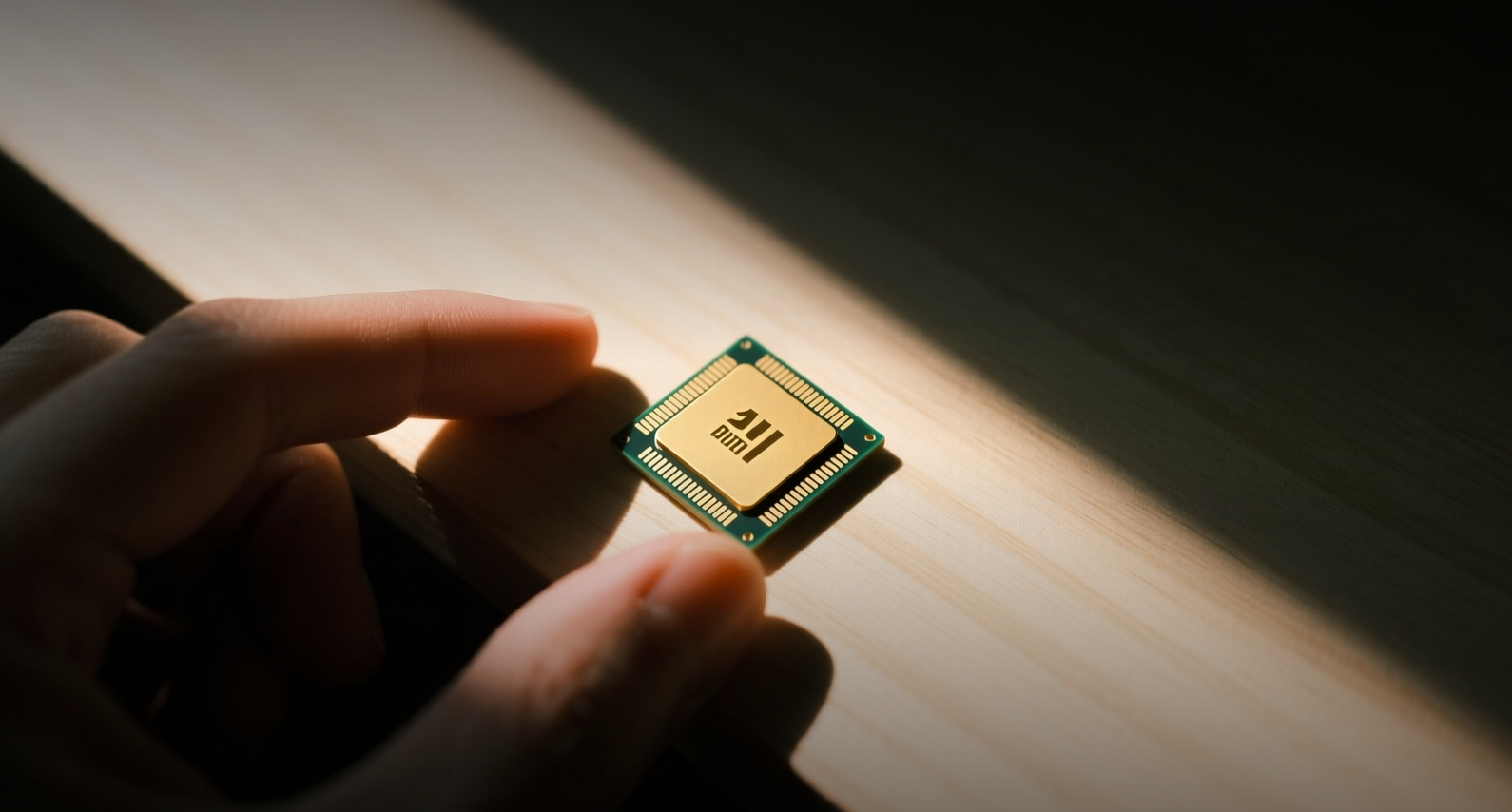
Meituan's LongCat-2.0 is the first trillion-parameter model trained entirely on a domestic Chinese GPU cluster, a milestone that challenges assumptions about China's dependence on Nvidia hardware and pressures Western AI labs on pricing.
Meituan released and open-sourced LongCat-2.0, a 1.6-trillion-parameter model with 48 billion average activated parameters and native 1-million-token context, trained from scratch on a 50,000-card domestic GPU cluster, the company said in late June.
"This demonstrates that Chinese AI labs can now train frontier-scale models without relying on Nvidia hardware," said a person familiar with the project, who spoke on condition of anonymity because the details are not yet public.
LongCat-2.0 uses a Mixture-of-Experts architecture, activating 33 billion to 56 billion parameters per token — a design that keeps inference costs closer to a 48-billion-parameter dense model while maintaining the capacity of a 1.6-trillion-parameter system. The 1-million-token context window matches the longest available from Western frontier labs. Meituan has not disclosed benchmark scores, training cost, or inference pricing.
The open-source release puts Meituan in direct competition with Chinese AI labs Zhipu AI and Moonshot AI, whose GLM 5.2 and Kimi K2.7 Code models have gained enterprise adoption in recent weeks. It also pressures Western labs like Anthropic and OpenAI, whose pricing power depends on maintaining a performance gap over open-weight alternatives.
The domestic GPU breakthrough
Training a trillion-parameter model requires tens of thousands of GPUs running in parallel for weeks — a task that typically demands Nvidia's H100 or B200 clusters with proprietary NVLink interconnects. Meituan's 50,000-card cluster used domestic accelerators, though the company did not specify the chip vendor or architecture. Huawei's Ascend 910B and 910C are the most likely candidates, as they are the only Chinese-made AI chips available at scale.
The milestone matters because U.S. export controls, tightened most recently in January 2025, restrict the sale of Nvidia's H100 and B200 to China. If Meituan trained a competitive trillion-parameter model on domestic chips, it suggests Chinese labs have found a workaround — one that could accelerate the country's AI development timeline independent of Western supply chains.
Pricing pressure on Western labs
LongCat-2.0 enters a market where Chinese open-weight models are already gaining traction. Zhipu AI's GLM 5.2, released June 13 under an MIT license, costs $1.40 per million input tokens and $4.40 per million output tokens — roughly one-third to one-sixth the price of Anthropic's Opus 4.8. Moonshot AI's Kimi K2.7 Code, released June 12, follows a similar pricing strategy. Coinbase disclosed June 27 that it now defaults its engineers to these two models, cutting AI spending by 50%.
Meituan has not disclosed LongCat-2.0's pricing or benchmark performance, making direct comparison impossible. The company's decision to open-source the model under an unspecified license suggests it will compete on accessibility rather than proprietary advantage. For Meituan itself, the model represents a strategic asset: the food-delivery and local-services giant can deploy LongCat-2.0 internally for recommendation systems, logistics optimization, and customer service automation, potentially reducing its reliance on third-party AI providers.
Investor implications
The open-weight AI market is fragmenting along geopolitical lines. Western enterprises now face a choice between higher-cost frontier models from U.S. labs and lower-cost Chinese alternatives that carry regulatory and provenance risks. Meituan's entry adds another option — a model trained on domestic hardware by a publicly traded company with no direct exposure to U.S. export controls.
Meituan shares trade on the Hong Kong Stock Exchange. The company does not break out AI spending separately in its financial disclosures, but its annual R&D expenditure was approximately 21.1 billion yuan ($2.9 billion) in 2025, according to its most recent annual report. The LongCat-2.0 training run likely consumed a significant portion of that budget, though the company has not disclosed the cost.
This article is for informational purposes only and does not constitute investment advice.