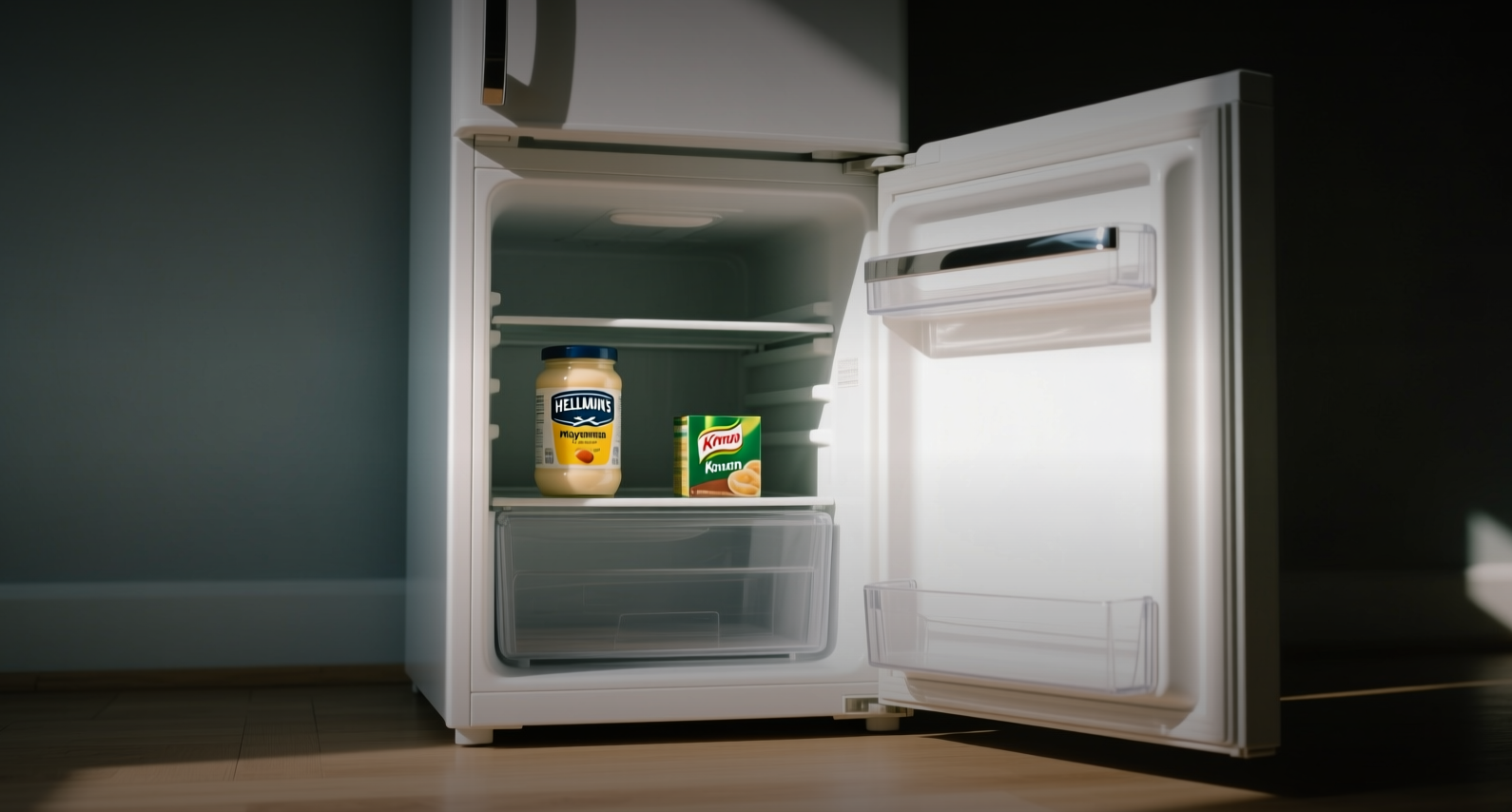
McCormick & Co. is remaking itself with a $45 billion bet on mayonnaise and bouillon, acquiring Unilever's food division to shrink its core spice business from over 30% of revenue to less than 15% after private-label rivals captured nearly 40% of the seasoning aisle.
"The deal addresses a structural weakness that has weighed on McCormick's stock for years — the erosion of pricing power in spices," said Tom Brennan, M&A analyst at Edgen. "Hellmann's and Knorr face far less private-label competition because of taste differentiation and brand loyalty."
The transaction, structured as a Reverse Morris Trust, adds brands including Hellmann's mayonnaise, Knorr bouillon, French's mustard and Frank's RedHot sauce to McCormick's portfolio. The Unilever food business is 1.5 times the size of the 137-year-old spice company. Post-merger operating margins are projected to expand from 17% to 21% after integration, though debt will rise to four times net debt-to-EBITDA. Existing McCormick shareholders face significant dilution, while Unilever shareholders may sell their MKC shares after receiving them, creating additional overhang. McCormick shares rose 0.85% on the announcement, while Unilever gained 1.88%.
The deal transforms McCormick from a pure-play seasoning company into a diversified packaged-foods giant with stronger pricing power and retailer leverage. But execution risks are significant: the merger is not expected to close until mid-2027, and the integration of a business 1.5 times McCormick's current size will test management's capabilities. If successful, the combined company could command higher margins and more stable revenue growth. If not, the debt load and complexity could weigh on returns for years.
A Strategic Pivot Away From the Spice Aisle
Private-label brands now command nearly 40% of unit volume in the spice and seasoning category, one of the highest penetration rates in any grocery aisle, according to industry data. That has eroded McCormick's pricing power and contributed to its recent underperformance relative to peers such as Kraft Heinz and Conagra. The Unilever deal is designed to dilute that exposure by adding categories where brand loyalty is stronger.
Mayonnaise and bouillon face less competition from store brands because taste differentiation creates a higher switching cost for consumers, the company said. Hellmann's has held the top spot in the U.S. mayonnaise market for decades, while Knorr is a dominant player in bouillon and meal solutions globally. The combined entity will have greater shelf presence in both the dry-goods aisle and the refrigerated section, giving McCormick leverage in negotiations with retailers.
The last major packaged-food deal of this scale — Kraft's $49 billion merger with Heinz in 2015 — showed that cost synergies can be realized but revenue growth remains the harder challenge. McCormick's projected margin expansion from 17% to 21% relies on procurement savings and manufacturing efficiencies, not top-line acceleration, a pattern that mirrors the Kraft Heinz playbook.
Complex Structure, Extended Timeline
The Reverse Morris Trust structure complicates matters for shareholders of both companies. Existing McCormick shareholders will be heavily diluted, while the balance sheet will carry four times net debt-to-EBITDA. Unilever shareholders receiving MKC shares may create additional selling pressure on the stock after the deal closes, analysts said.
The transaction requires regulatory approvals in multiple jurisdictions, contributing to the extended timeline. McCormick expects the deal to close by mid-2027 at the earliest. Until then, the stock faces an overhang that limits upside.
Currently, with inflation driving shoppers to cheaper alternatives across grocery categories, there is little reason to rush into the stock. As the integration plans become clearer and the cost structure takes shape, the combined company could offer a more compelling risk-reward profile. For now, the strategic rationale is sound, but the execution risk keeps the stock in wait-and-see territory.
This article is for informational purposes only and does not constitute investment advice.