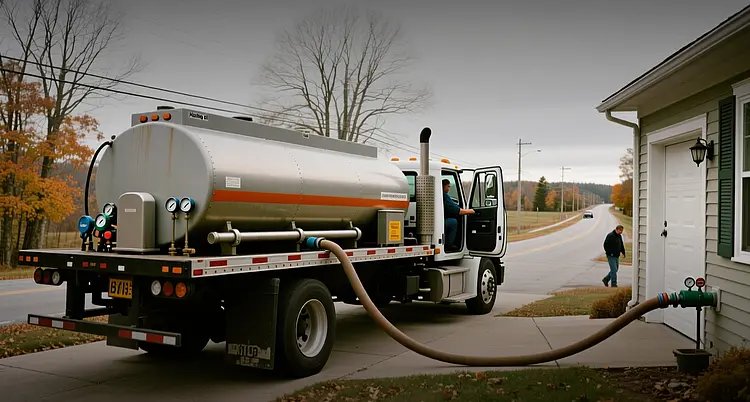
Diesel's climb past $6.50 a gallon has turned a regional fuel reserve into the center of a national price fight, with Maine's two senators asking President Donald Trump to release emergency heating oil before winter demand peaks.
"We write to request that you release home heating oil from the Northeast Home Heating Oil Reserve to protect Mainers from the very high prices that are imposing a difficult financial burden," Senators Susan Collins, a Republican, and Angus King, an independent who caucuses with Democrats, wrote in a letter to Trump dated Tuesday. Collins, who is in a tight race for her seat in the November 3 midterm elections, said the cost of energy is a "huge issue in my state" and that tapping the reserve "would help put downward pressure on prices."
The national average diesel price hit a record $6.53 a gallon this week, up more than 75 percent from a year earlier, according to the streamlinefeed report on the administration's deliberations. Maine households are paying about $675 more to fill a heating oil tank than they did last year, the senators said, citing a Maine Department of Energy Resources survey. The Northeast reserve holds 1 million barrels of diesel across four sites stretching from Maine to New Jersey — roughly 10 days of heating oil for the region. It was created in 2000 by former President Bill Clinton and has not been tapped since 2012, when it supplied fuel to emergency responders after Hurricane Sandy. Trump's budget last year proposed shutting the reserve, which is expensive to maintain.
The White House did not immediately respond to a query about the letter. Collins separately joined Senator Jack Reed, a Democrat of Rhode Island, in asking the administration to release home heating program money for low-income households.
Two policy levers, one price problem
The reserve request lands alongside a more aggressive option the president has already endorsed. Trump said Sept. 22 at the United Nations General Assembly that he supports a temporary ban on diesel exports, echoing Louisiana Governor Jeff Landry, who began calling for the measure last week. "Right now a record amount of diesel is going to Europe and Americans are subsidizing Europe's problems," Landry said Sept. 21 on CNBC.
The administration is studying whether a full or partial export ban would lower domestic pump prices without disrupting the refining system, Treasury Secretary Scott Bessent said alongside Trump before a bilateral meeting with Ukrainian President Volodymyr Zelensky. The White House on Wednesday denied a news report that it was preparing a 90-day diesel export ban.
Industry groups argue the ban would backfire. "Restricting U.S. energy exports would only compound the problem — exacerbating refining challenges and ultimately hurting consumers," American Petroleum Institute President Mike Sommers said in a statement. Tommy Faucheux, president of the Louisiana Mid-Continent Oil and Gas Association, said pipelines for domestic diesel transport are "already at max capacity," so halting exports would force refineries to cut runs and reduce gasoline output as well. Energy Secretary Chris Wright made the same argument in an interview with The Daily Caller last week.
The supply shock behind the price is global, not domestic. U.S. refineries already produce more diesel than the country consumes. Targeted strikes on Russian refining infrastructure, rerouted tanker traffic around the Red Sea, and years of underinvestment in global refining capacity have removed volumes from the world market. A unilateral U.S. withdrawal would leave Europe short as its own heating season begins.
What a reserve release would actually move
The Northeast reserve is small relative to the problem it is being asked to solve. At 1 million barrels, it covers about 10 days of regional heating oil demand — enough to blunt a spike, not to reset a market priced off global crude and refining margins. The last release, after Sandy in 2012, was a logistics intervention for emergency responders rather than a price intervention.
The transmission into household budgets is more direct. Diesel sets the cost of freight, harvest equipment, and long-haul transport, so a sustained price at these levels filters into supermarket and industrial costs. Maine's $675-per-tank increase is the retail edge of that chain, and it arrives as early voting begins in pivotal swing states. Republican candidates in competitive districts, including Senator Dan Sullivan of Alaska and Representatives Ashley Hinson of Iowa and Mike Rogers of Michigan, have publicly pushed for an export pause, with the autumn harvest season putting diesel costs directly against farm margins.
For distillate markets, the two levers cut in opposite directions. A reserve release would pressure heating oil and diesel futures and near-term refining margins while easing consumer cost pressure; an export ban would tighten global supply and, on the industry's reading, raise domestic prices by forcing run cuts. A refusal to act leaves the price path to winter weather and the wars that created the deficit. The Louisiana Farm Bureau's Richard Fontenot backed the export ban, saying diesel supply to agriculture "hasn't yet become critical, but we have to make sure it doesn't become critical."
An executive decision is expected within weeks as early voting expands, leaving distillate futures, distillate-heavy U.S. refiners, and fuel-cost-sensitive transport and utility outlooks exposed to whichever lever the White House pulls.
This article is for informational purposes only and does not constitute investment advice.