

Li Auto wants its vehicles to think, drive and interact like living assistants — and it has laid out a timeline to prove it by year-end.
Li Auto wants its vehicles to think, drive and interact like living assistants — and it has laid out a timeline to prove it by year-end.
Li Auto wants its vehicles to think, drive and interact like living assistants — and it has laid out a timeline to prove it by year-end.
Li Auto held its Livis Day software and embodied intelligence event on June 15, where Chairman and Chief Executive Officer Li Xiang defined the company's vision for intelligent vehicles as a "four-in-one" system combining an electric vehicle, a professional driver, an AI computer and a life assistant. The EV and AI computer form the "body," while the driver and assistant represent the "intelligence," he said.
"Over the past decade, we created a mobile home," Li Xiang said. "In the next decade, we will imbue both vehicles and homes with life."
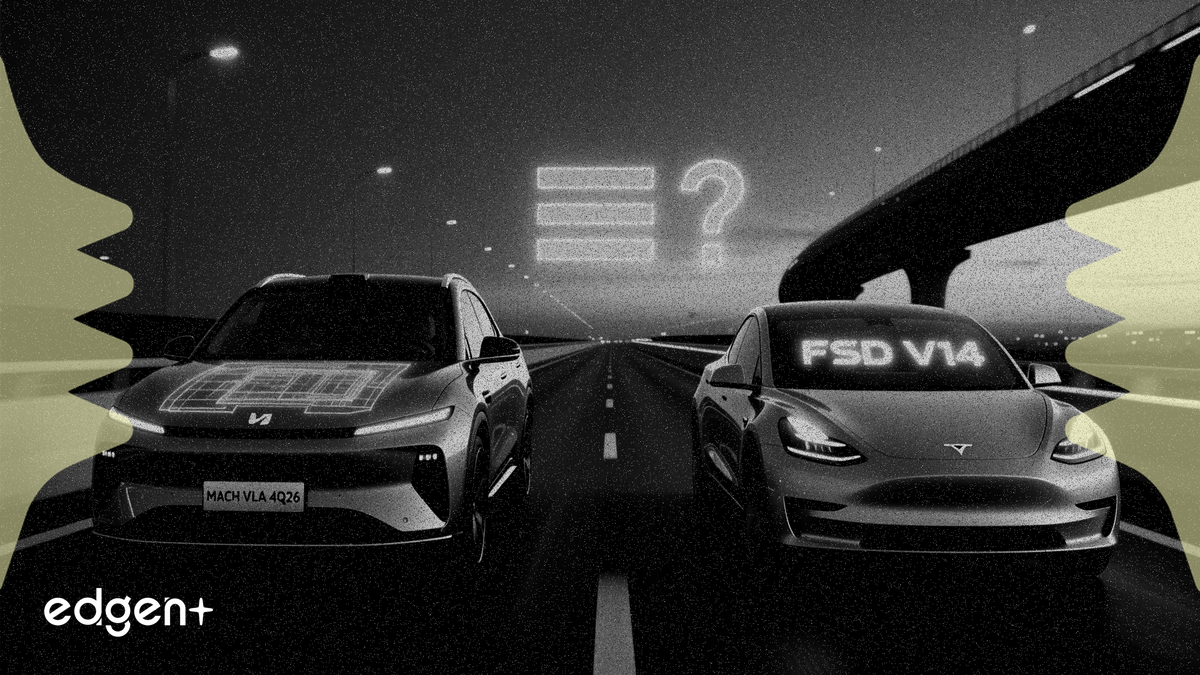
The company's autonomous driving roadmap hinges on its in-house Mach VLA model — a vision-language-action architecture designed to process driving scenes and execute maneuvers in real time. Zhan Kun, head of foundation model at Li Auto, said Mach VLA capabilities will continue to evolve through the second half of 2026. In the third quarter, the company's AD Max system will roll out a new Mach VLA model, and by the fourth quarter it is expected to match the capabilities of Tesla's FSD V14, according to Zhan.
Li Auto also announced a three-stage over-the-air update schedule for its Livis embodied intelligence system. A July update targets a 30% improvement in intelligent driving efficiency. September's release focuses on enabling the system to "reverse like a human." The December milestone sets the most ambitious goal: "safety and efficiency surpass humans."
On the hardware side, Li Auto debuted a new flagship cockpit platform powered by Qualcomm's Snapdragon 8797 Elite automotive processor, marking its first appearance in a production vehicle. The chipset integrates a 504K CPU task-processing architecture, GPU rendering performance of 8.1 trillion operations per second and a neural processing unit capable of 320 TOPS of AI computing power — exceeding the capability of many current flagship smartphones, the company said. The cockpit's ultra-wide panoramic display features a 90Hz refresh rate, 180Hz touch-sampling capability and 23.5 Gbps of display bandwidth, with real-time eye-tracking technology that dynamically adjusts interface layouts based on where occupants are looking.
The cockpit platform supports both Apple CarPlay and Android smartphones compliant with the ICCOA Carlink standard. Li Auto said CarPlay integration extends beyond screen mirroring, allowing navigation data to be displayed on the head-up display and enabling steering-wheel control of music playback. The audio system delivers 5,440 watts of peak output across a 9.3.6-channel configuration, creating separate immersive zones for front and rear occupants.
The competitive stakes are high. Tesla's FSD V14, expected by late 2026, represents the benchmark Li Auto has publicly committed to matching. If Li Auto delivers on its December "surpass humans" target, it would position the company among the first Chinese automakers to claim parity with — or superiority to — Tesla's full-self-driving software in production vehicles. Li Auto shares traded 0.7% lower on the Hong Kong exchange on June 15, a modest move that suggests the market is waiting for proof of execution rather than rewarding the roadmap alone.
This article is for informational purposes only and does not constitute investment advice.
