
Lenovo is betting that the future of personal AI isn't a $4,000 GPU, but a 2999 yuan box that sits on your desk.
Lenovo is betting that the future of personal AI isn't a $4,000 GPU, but a 2999 yuan box that sits on your desk.
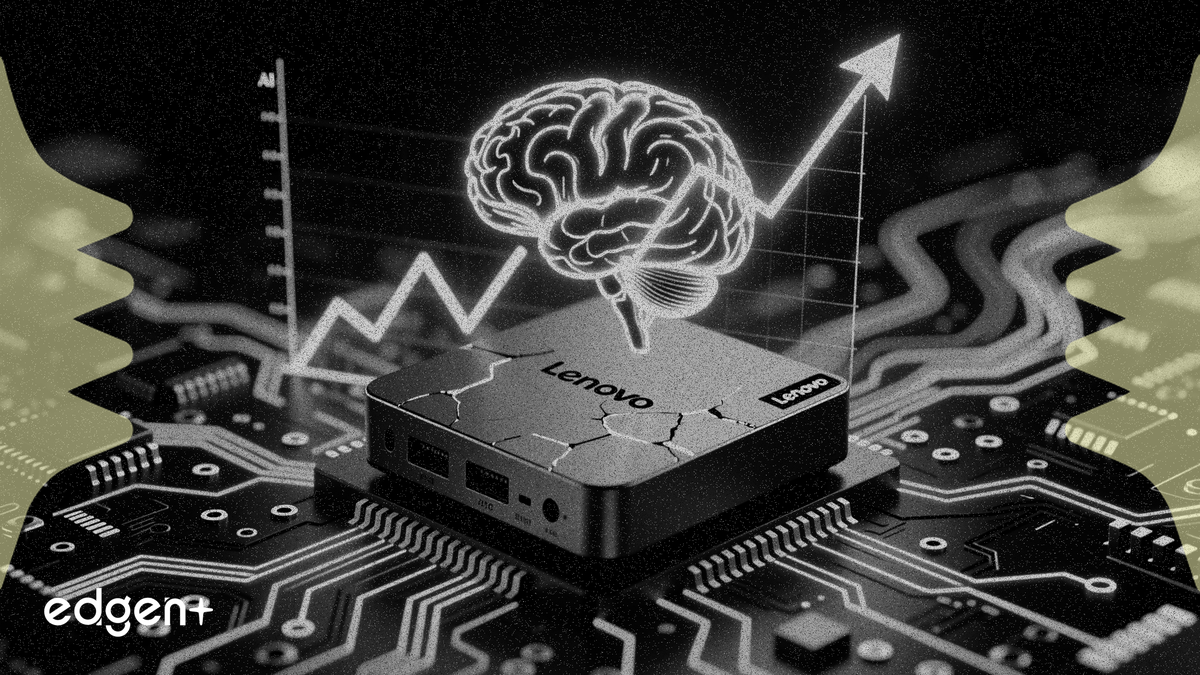
Lenovo Group (HKG: 0992) is challenging the high-cost narrative of artificial intelligence with a new mini PC priced at just 2999 yuan ($415). The "AI Host Mini," unveiled on May 19, packs 45 trillion operations per second (TOPS) of local processing power into a compact frame, a direct attempt to carve out a new market for affordable, dedicated AI hardware and sidestep the expensive GPUs from Nvidia that have dominated the AI boom.
To fuel this vision, the company is launching a developer initiative to build out its software capabilities. "We are officially launching the Tianxi AI Skills 'Cangqiong Plan,' providing 1 trillion tokens of computing power support and establishing a 10 million-level incentive fund for developers," Lenovo Executive Vice President and China President Liu Jun said at the launch event.
The AI Host Mini is built on Lenovo's new Tianxi AI 4.0 platform. It operates on a hybrid model, using a "cloud-based main inference + local execution of small models" to manage workloads. This allows the 100x100x43mm device to handle privacy-sensitive tasks and smart terminal control locally without requiring a top-tier processor. The 45 TOPS of local neural processing power is a key metric, positioning the device in the emerging category of AI PCs.
At stake is the definition of the next generation of personal computing. While companies like Apple integrate AI processing into their high-margin Mac lineup and the PC market relies on chips from Intel, AMD, and Nvidia, Lenovo's strategy is to create a new, accessible entry point. If successful, the 2999 yuan device could accelerate mainstream adoption of local AI agents and pressure competitors to address the lower end of the market, potentially creating a new, high-volume hardware category.
The core of Lenovo's strategy rests on the 45 TOPS of local computing power. This specification is crucial as the industry defines what constitutes an "AI PC." For context, Microsoft's standard for a "next-gen AI PC" requires a Neural Processing Unit (NPU) capable of at least 40 TOPS. Lenovo's device meets this threshold, enabling it to run smaller language models and AI agents directly on the device, independent of the cloud.
This approach targets a key market opportunity that emerged in 2026: the demand for local, private AI. The "OpenClaw" trend mentioned in the source material, where users run open-source models on their own hardware, highlighted a desire for AI that is not constantly sending data to servers owned by large tech companies. The AI Host Mini is a direct play for this user, offering a simple, "out-of-the-box" solution that contrasts with the technically complex and expensive high-end graphics card servers from Nvidia that power most of the world's AI today. By handling sensitive tasks locally, it addresses growing consumer privacy concerns while using the cloud for heavier lifting.
While technically capable, the AI Host Mini faces the challenge of defining its target user. For tech enthusiasts, the appeal is clear: a low-cost, energy-efficient machine for running private knowledge bases, automating tasks with AI agents, and experimenting with local models. However, for the average consumer, the value proposition is less defined. The key question is whether a 2999 yuan standalone box offers a compelling enough advantage over the increasingly powerful AI features being integrated directly into smartphones and traditional PCs from competitors like Apple.
The answer may lie in the broader industry shift towards agent-based AI, as seen in recent announcements from Google. With "AI agents" poised to manage digital life across devices, a dedicated, always-on hub like the AI Host Mini could become a central piece of the puzzle. Lenovo's success will depend on its ability, through its "Cangqiong Plan," to foster a developer community that builds indispensable applications. If AI agents move from novelty to utility in high-frequency scenarios like office work, home automation, and content creation, Lenovo's bet on an affordable, dedicated host could pay off, establishing a new growth cycle for a PC form factor once considered a niche product. This move positions Lenovo not just as a hardware manufacturer, but as a platform provider in the burgeoning personal AI space, a market that all major tech players are aggressively pursuing.
This article is for informational purposes only and does not constitute investment advice.
