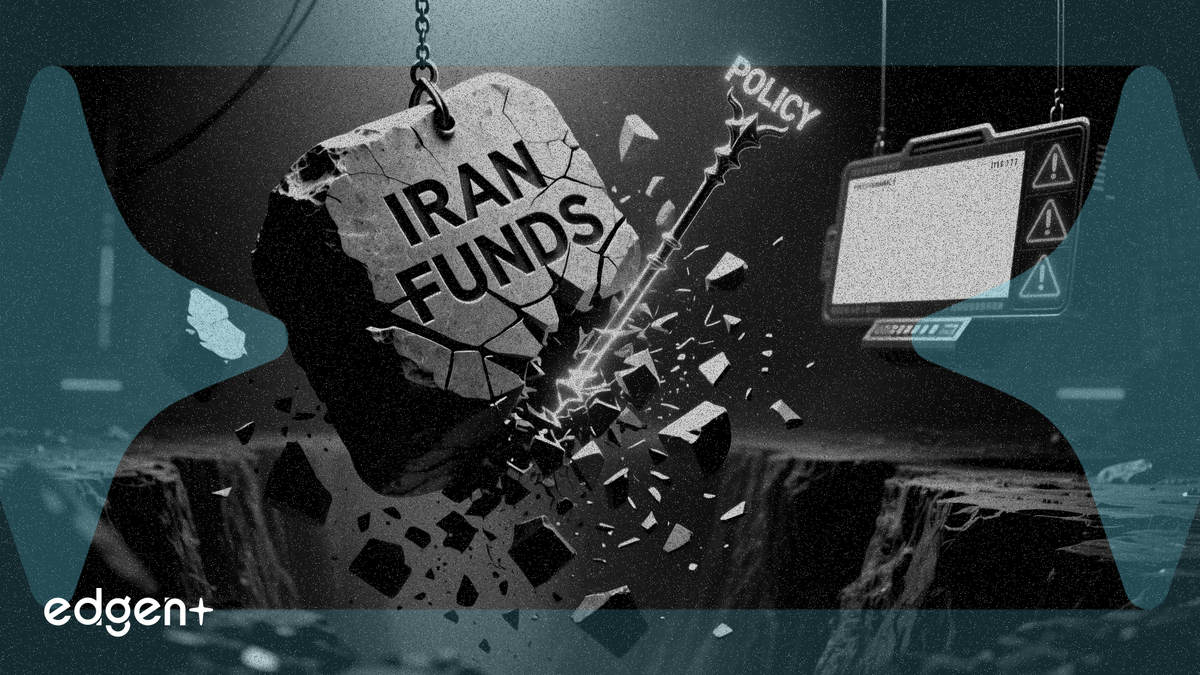
The US will provide no funding to Iran unless Tehran demonstrates measurable changes in behavior, National Economic Council Director Larry Kudlow said June 12, hardening the administration's conditional approach.
Kudlow said the US will provide no money to Iran unless Tehran meets clear performance metrics, a stance that blocks billions in potential flows as the UAE moves to unlock frozen assets.
"'No money for Iran, unless Tehran changes behavior and meets clear performance metrics,' Larry Kudlow, director of the National Economic Council, said in a Fox News interview June 12."
The statement comes as the UAE is in talks to unlock billions of dollars for Iran, according to sources familiar with the matter. The potential fund release would represent one of the largest financial flows to Tehran since the US reimposed sanctions after withdrawing from the 2015 nuclear deal.
The hardened stance threatens to keep geopolitical risk premia elevated in crude oil markets, with traders pricing in supply disruption concerns. Safe-haven assets including gold and the US dollar may see continued demand as the policy framework tightens, potentially pushing gold above $2,400 an ounce and supporting the dollar index near recent highs.
The administration's position marks a continuation of its conditional approach to Iran, requiring verifiable changes before any financial normalization. Previous rounds of sanctions have restricted Iranian oil exports by more than 1 million barrels per day, according to industry estimates, cutting Tehran's primary revenue source by tens of billions of dollars annually.
Oil Markets Face Extended Risk Premium
Brent crude futures have maintained elevated levels as the policy uncertainty persists, with the benchmark trading near $85 a barrel. The Strait of Hormuz, through which about 21% of global oil trade passes, remains a focal point for supply risk. Options markets show increased skew toward out-of-the-money calls, indicating traders are hedging against upside price shocks that could push crude above $100 a barrel in a disruption scenario.
Gold has risen as investors seek safe-haven exposure as geopolitical uncertainty persists, with the metal gaining about 12% year-to-date. The dollar index has also strengthened, reflecting risk-off positioning in currency markets, while emerging-market currencies exposed to oil imports have come under pressure.
Historical Precedent Suggests Prolonged Standoff
The last time the US imposed similar conditional funding restrictions on Iran, negotiations stretched for more than 18 months before any measurable policy shift occurred. During that period, Iranian crude output fell by approximately 500,000 barrels per day, and the Brent-WTI spread widened to reflect differential risk pricing between global and US crude benchmarks.
The current framework, with its emphasis on verifiable performance metrics, suggests the administration is seeking to avoid the perceived shortcomings of earlier agreements that lacked enforcement mechanisms. This approach could prolong the standoff, keeping Iranian oil exports constrained and supporting elevated crude prices through 2026.
The next inflection point will come as the UAE's fund-unlocking talks progress. If the administration maintains its hardline stance, those funds could remain frozen indefinitely, keeping pressure on Iranian oil exports and supporting elevated crude prices. Conversely, any softening of the performance metrics requirement could trigger a sharp unwind of geopolitical risk premia, potentially sending Brent below $75 a barrel.
This article is for informational purposes only and does not constitute investment advice.