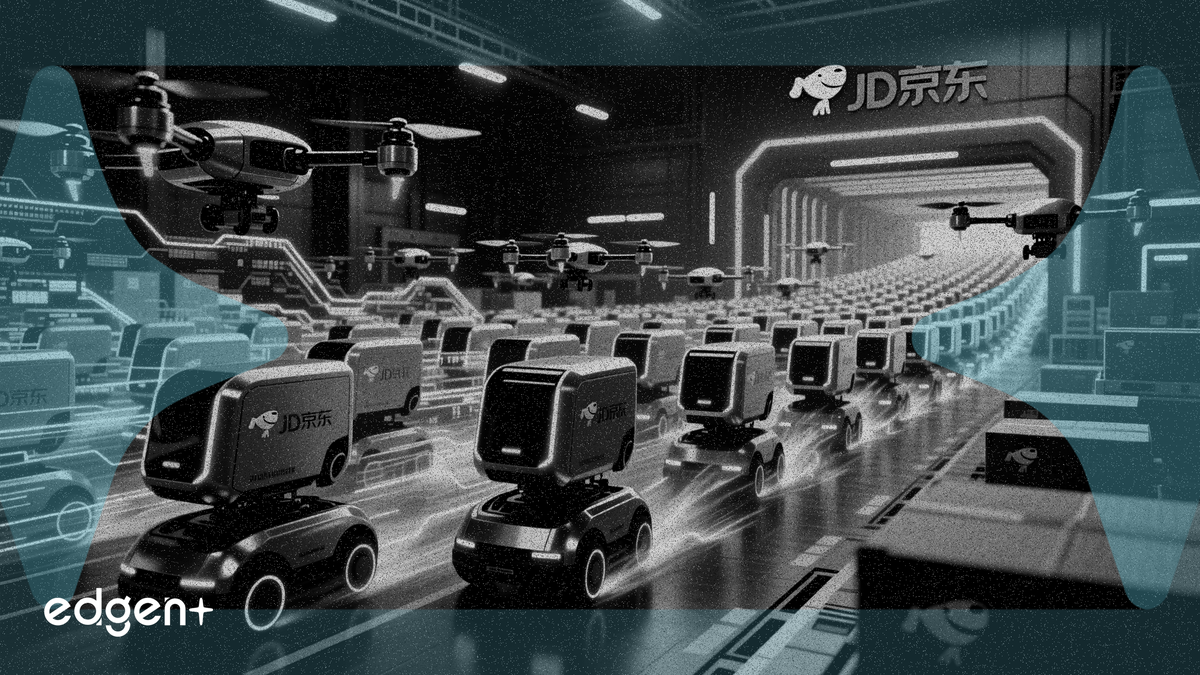
JD.com is increasing its AI research and development investment by over 200% this year, aiming to build the world's largest physical-world operations center and deploy millions of robots to automate its retail and logistics empire. The move signals a major escalation in the technological arms race within China's e-commerce sector.
"The group will build the world's largest physical-world operations center to drive AI from thousands of industries into households," Cao Peng, Chairman of the Technology Committee of JD-SW and President of JD Cloud, said at the JD 618 launch press conference.
The investment surge supports a five-year plan for JD Logistics (02618.HK) to deploy 3 million robots, 1 million autonomous vehicles, and 100,000 drones. On the retail front, cumulative sales of robot brands on JD.com have exceeded RMB 10 billion ($1.4 billion) this year, as the platform shortened product launch cycles by 30%, according to Cao.
The aggressive spending on automation and AI underscores JD.com's strategy to improve long-term margins in its core retail business and solidify its technology lead against competitors like Alibaba and Pinduoduo. The move could pressure rivals to accelerate their own automation investments, escalating the tech arms race in China's competitive e-commerce market.
From Warehouse to Household
The plan extends beyond JD's own warehouses. The success of "robot brands" on its retail platform, with sales hitting over RMB 10 billion this year, shows a growing consumer appetite for automated devices. This category, which includes everything from robotic vacuums to advanced educational bots, benefits from JD.com's role as a key distribution channel for specialized hardware. Market data shows that e-commerce platforms like JD.com are the primary sales channel for over 60% of consumer electronics in China, giving the company significant influence over which technologies reach the mainstream. By fostering these brands, JD not only cultivates a new high-growth retail category but also builds an ecosystem that normalizes automation in daily life.
The Logistics Arms Race
At the heart of the announcement is the massive scaling of JD's logistics capabilities. The goal to deploy 3 million robots and 1 million autonomous vehicles over five years represents one of the largest automation pushes in the global logistics industry. This is a direct response to the dual pressures of rising labor costs and intense competition on delivery speed and efficiency. Competitor Cainiao, Alibaba's logistics arm, has also invested billions in its own network of automated warehouses and delivery robots. JD.com's investment aims to create a decisive advantage in fulfillment costs and delivery times, which are critical factors for consumers in China's hyper-competitive e-commerce landscape.
Investor Impact and Market Context
For investors, the 200%-plus increase in R&D spending is a significant cash outlay that will pressure short-term profits for JD.com (09618.HK). However, the company is framing it as a necessary investment to achieve its long-term target of high single-digit margins for its JD Retail division. By automating vast swathes of its operations, from warehouse picking to last-mile delivery, JD aims to structurally lower its operating expenses. The market has been sensitive to the high capital expenditures of Chinese tech giants, but JD's bet is that demonstrating a clear path to improved profitability through technology will ultimately be rewarded. The success of this strategy will be a key factor for analysts covering the stock, as it directly impacts the company's ability to compete profitably against asset-lighter models like Pinduoduo.
This article is for informational purposes only and does not constitute investment advice.