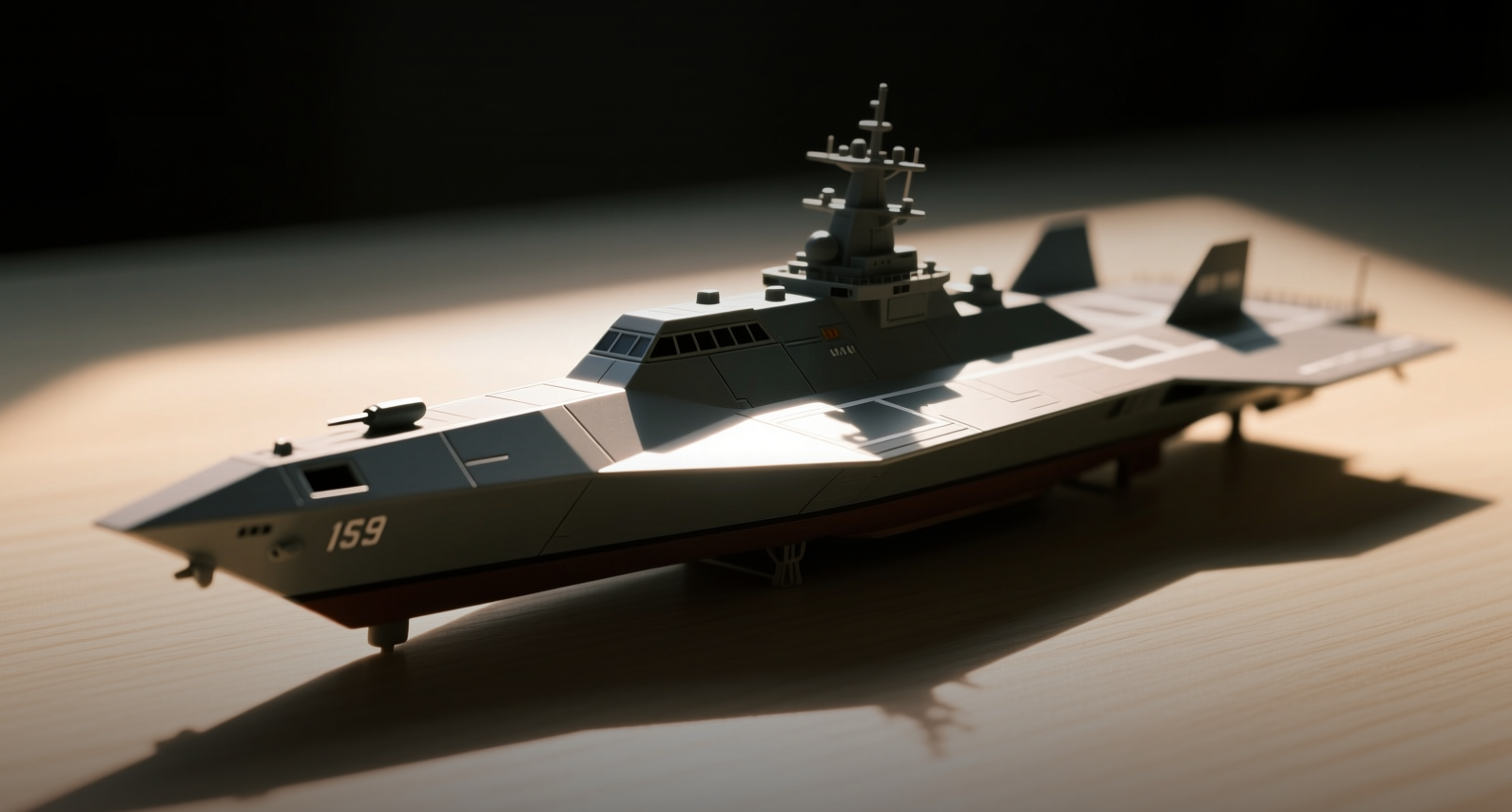
Japan's decades-old ban on lethal arms exports is giving way to a new sales pitch for one of the world's most advanced warships, as the Mogami-class frigate — built by Mitsubishi Heavy Industries at about $710 million per vessel — secures its first international buyer in Australia.
"The Mogami offers a massive advantage to countries suffering from a shortage of sailors," said Yasuhiro Kawakami, a retired rear admiral in the Maritime Self-Defense Force who led the frigate's development and is now senior research fellow at the Sasakawa Peace Foundation. "Hands down, it's the best in class," added John Bradford, a former U.S. Navy destroyer commander who serves as executive director of YCAPS, a nonprofit focused on Asian security.
Australia in April signed a $6.5 billion deal for three upgraded Mogami frigates, with Mitsubishi Heavy Industries agreeing to transfer technology and know-how for domestic production of eight additional vessels. The first is scheduled for delivery in 2029. The upgraded version features a 32-cell vertical launch missile system, a range of 6,900 miles, and a crew of 90 — roughly 25 percent to 35 percent smaller than comparable frigates from France, the U.K., or South Korea, which require 105 to 120 personnel.
The export push marks a strategic pivot for Japan, which adopted pacifist defense policies after its defeat in World War II and long restricted lethal arms sales. Prime Minister Sanae Takaishi is spearheading the overhaul as China rapidly expands its navy and presses maritime claims against Japan, the Philippines, and Vietnam. The shift also reflects anxiety across Asia about the strength of America's security commitment under President Trump, who has pressed allies to spend more on their own militaries.
Mitsubishi Heavy Industries, which built the Zero fighter plane and some of the Imperial Japanese Navy's largest warships during World War II, will have produced 10 Mogami-class frigates by the end of this month since starting production in 2019. That pace contrasts with the U.S. Navy's troubled FF(X) frigate program, where the first vessel is now projected to cost about $1.4 billion amid design changes and cancellations. The U.K.'s Inspiration-class, built by Babcock International, comes in at roughly $330 million per ship.
The Mogami's compact, angular design helps it evade enemy radar, while a twin gas-turbine and diesel engine system allows extended operations far from shore. The ship is equipped with anti-ship, anti-air, and land-attack missiles, torpedoes for submarine hunting, and bays for deploying underwater drones for reconnaissance and mine clearance. Its combat command center provides the crew with a 360-degree view of the surrounding battlespace through advanced monitors and sonar systems.
Some analysts caution that the Mogami's small crew could become a liability under attack, with fewer sailors available to fight fires or replace injured personnel — a reason the U.S. Navy prefers larger crews. Hirohito Ogi, a former Japanese Defense Ministry official now at the Institute for Geoeconomics in Tokyo, also warned that Japan's defense industry should invest more in drone technology reshaping modern warfare rather than expanding surface-combat shipbuilding.
New Zealand and Indonesia have said they are considering the Mogami as they upgrade their navies. Japan has also offered Indonesia and the Philippines older vessels to bolster their defenses. The technology-transfer component of the Australian deal could serve as a template for other countries seeking to build domestic shipbuilding capacity, defense analysts said.
The last time Japan attempted a major defense export push, in 2014 after its first relaxation of arms export rules, it failed to secure a single submarine deal with Australia, losing to France's Naval Group. This time, the combination of a proven, in-service vessel and a willingness to share production technology appears to have shifted the calculus. For Mitsubishi Heavy Industries, the Australian contract opens a potential pipeline to a global frigate market valued at more than $30 billion over the next decade, according to industry estimates.
This article is for informational purposes only and does not constitute investment advice.