
Iran's naval confrontation with US forces in the Gulf of Oman threatens to unravel ceasefire talks just as oil markets show tentative signs of stabilization.
Iran's naval confrontation with US forces in the Gulf of Oman threatens to unravel ceasefire talks just as oil markets show tentative signs of stabilization.
Iran's naval confrontation with US forces in the Gulf of Oman threatens to unravel ceasefire talks just as oil markets show tentative signs of stabilization.
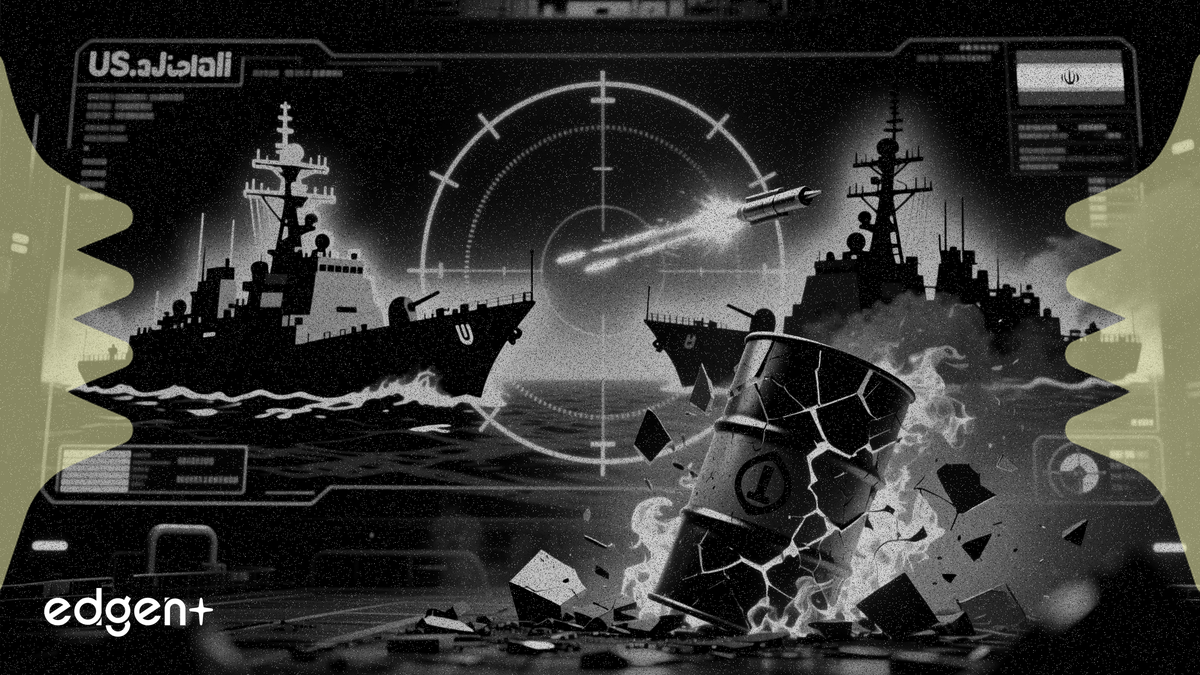
Iran's navy fired warning shots at two US destroyers in the Gulf of Oman on Friday, escalating military confrontation in the strategic waterway even as Washington and Tehran continue ceasefire negotiations.
"This is a deliberate signal that Iran retains the ability to disrupt shipping even as its navy has taken significant losses," said Elena Fischer, geopolitical risk analyst at Edgen. "The Gulf of Oman is the back door to the Strait of Hormuz — any sustained harassment there keeps the oil risk premium elevated."
Brent crude held near $95 a barrel in Asian trading Friday, paring a 2.8% decline from the previous session, while WTI traded at $93.06. Gold slipped 0.5% to $4,452 an ounce, set for a weekly loss, as investors weighed the mixed signals from the region. The Japanese yen touched the psychologically important 160 level against the dollar.
The incident comes as US President Donald Trump said talks with Iran were going "very well" and that an interim deal could be reached "over the weekend." But with the Strait of Hormuz effectively closed since late February and Iran's crude exports down 84% in May from the prior month, according to Lloyd's List, the economic toll continues to mount for both sides.
The warning shots mark the latest in a series of naval confrontations since the US-Israeli strikes on Iran on Feb. 28 triggered the broader conflict. US Central Command said earlier this week that its forces had disabled six commercial vessels attempting to breach the naval blockade of Iranian ports and redirected 122 others since the blockade took effect on April 13.
Iran's Islamic Revolutionary Guard Corps has claimed responsibility for multiple strikes on commercial shipping, including a cruise missile attack on the Panama-flagged MSC Sariska V near Iraq's Umm Qasr port on Monday. The group said the attack was retaliation for a US strike on an Iranian vessel in the Gulf of Oman.
Strait of Hormuz Remains the Flashpoint
The waterway, which handled about a fifth of global seaborne oil before the conflict, remains effectively closed. Iran's IRGC said 24 vessels received authorization to transit the strait in the past day — a fraction of normal traffic. The US blockade has targeted Iran's oil export infrastructure, centered on Kharg Island, which handles roughly 90% of the country's crude exports.
The economic fallout is spreading beyond the region. India's central bank left interest rates unchanged at 5.25% on Friday, citing the dual threat of inflation from elevated energy costs and a weakening rupee that has tumbled to record lows since the conflict began. The Reserve Bank of India faces one of its toughest rate decisions in recent memory as Asia's third-largest economy imports nearly 90% of its oil needs.
Oman suspended crude oil loading at its Mina al Fahal terminal following an explosion near its berths on Thursday, which sources attributed to a drone attack. The disruption adds to supply constraints that have kept oil prices elevated despite the ceasefire framework agreed in early April.
Diplomacy Stalls as Fighting Continues
Trump said Thursday that the main objective of any deal with Iran was to ensure Tehran could not obtain a nuclear weapon and that the Strait of Hormuz would reopen immediately as part of any agreement. But Iran has not submitted its final response to the proposed interim ceasefire, according to the semi-official Mehr News Agency, with Tehran still reviewing the draft.
The last time the US and Iran engaged in direct naval skirmishes in the Gulf of Oman was during the 2019 tanker attacks, when oil prices spiked about 15% over a two-week period before stabilizing. The current conflict has already pushed Brent above $90 for more than three months — a duration that exceeds any comparable disruption since the Iran-Iraq war in the 1980s.
Hezbollah's rejection of a conditional ceasefire in Lebanon on Thursday further complicated the diplomatic picture. The Iran-backed group demanded a comprehensive ceasefire and full Israeli withdrawal, undermining Trump's efforts to separate the Lebanon track from negotiations with Tehran.
This article is for informational purposes only and does not constitute investment advice.
