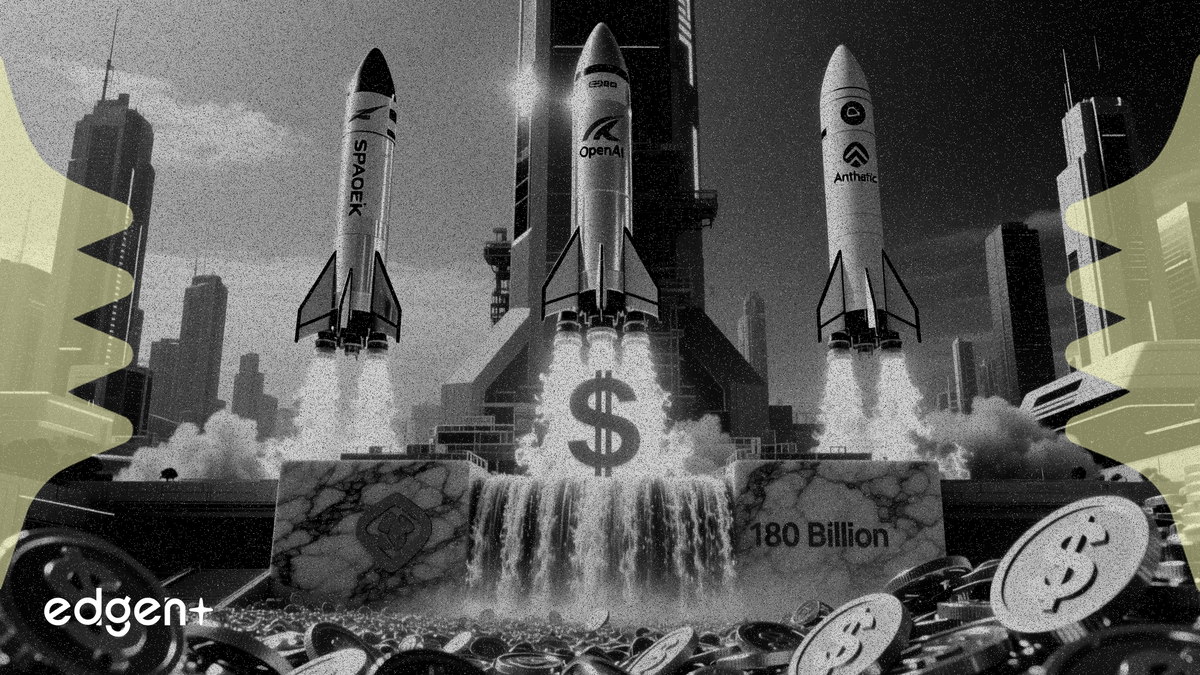
The three largest initial public offerings in history will mint thousands of millionaires and unlock tens of billions of dollars for philanthropic organizations.
Blockbuster public offerings from SpaceX, OpenAI and Anthropic will create a new generation of wealthy donors, delivering what could be the largest single infusion of charitable capital in American history. The foundation that holds a 26% equity stake in OpenAI is expected to have equity valued at around $180 billion — more than twice the size of the Gates Foundation's endowment — and has pledged to distribute at least $1 billion over the next year to causes including disease research and life sciences, according to the Wall Street Journal.
"Not just billions, but potentially tens of billions" will flow into the charitable sector after the IPOs, said Adam Nash, co-founder and chief executive of Daffy, a donor-advised fund used by OpenAI and Anthropic employees. San Francisco donors are already more generous than the national average: In 2024, their average grant from Fidelity Charitable donor-advised funds was $16,830, more than three times the national average, with 40% going to local charities.
SpaceX raised $75 billion in its offering last week, the largest IPO in history, with shares closing at $161.11 on their first trading day — up 19% from the $135 offer price — valuing the company at more than $2 trillion. Elon Musk became the world's first trillionaire. OpenAI and Anthropic, each valued at nearly $1 trillion, have filed confidential IPO paperwork and are expected to debut later this year. The three listings combined could create more than 16,000 millionaires and over 20 new billionaires from employee equity alone, according to Sacra, a private markets research firm.
The scale of wealth creation is unprecedented in the philanthropic sector. Anthropic's seven founders have pledged to donate at least 80% of their wealth — a collective commitment Forbes estimated at $39.2 billion based on the company's February valuation of $380 billion, a figure that has since surged to $965 billion. The startup offers a 1:1 match on up to 25% of any employee's total equity grant for charitable giving. "Those who are at the forefront of AI's economic boom should be willing to give away both their wealth and their power," Anthropic co-founder Dario Amodei wrote in a widely circulated essay in January.
A new generation of donors
The wave of giving is expected to differ markedly from prior Silicon Valley philanthropy. Where earlier tech donors gave to alma maters, houses of worship and local nonprofits, millennial donors are focused on systemic issues such as climate change, education and wealth inequality, said Nicole Taylor, president and CEO of the Silicon Valley Community Foundation, which managed large gifts from Mark Zuckerberg and Priscilla Chan after Facebook's 2012 IPO.
Donor-advised funds are expected to be a primary vehicle, allowing employees to contribute shares before an IPO and receive a tax deduction at the full fair market value while avoiding capital-gains taxes. "It's a triple win for taxes," Nash said. The funds carry no annual distribution requirements, though experts caution that money can accumulate if donors fail to make a giving plan.
Some question whether the charitable sector can absorb the influx. Nan Ransohoff, Stripe's head of climate, called for the sector to "dramatically expand" capacity to handle an estimated $50 billion a year in new donations. "What terrible thing would happen if they got too much money?" said Erinn Andrews, founder of GiveTeam, a Bay Area philanthropic planning company. "It is not bad for organizations to have more."
Timing and conviction
The enormous stakes of the technology behind the wealth may also dictate when donors give. Some believe that once artificial intelligence surpasses human intelligence, money will lose its value — "so now is the time" to give, said Lyell Sakaue, a partner at Bridgespan, a nonprofit consulting firm that has worked with about 50 donors to move roughly $15 billion to philanthropy over the past five years. Others, he said, think "ownership of this asset will be the only thing that matters in the future, and therefore they're holding on to more."
The IPO wave also carries echoes of the PayPal mafia era: After eBay acquired PayPal in 2002, early employees went on to found SpaceX, LinkedIn, Yelp, Palantir, YouTube and Affirm. The current cohort of newly wealthy AI and space executives could similarly seed the next generation of technology startups, with philanthropic giving, political spending and new company launches all part of the same mission-driven strategy.
Coefficient Giving, the organization formerly known as Open Philanthropy, rebranded in anticipation of increased interest in charitable giving over the next few years, said Chief Executive Alexander Berger. The nonprofit, founded by Facebook co-founder Dustin Moskovitz and his wife Cari Tuna, has deep ties to both Anthropic and OpenAI, having provided millions in grants and placed one of its co-founders on OpenAI's board.
This article is for informational purposes only and does not constitute investment advice.