Hong Kong's IPO market is undergoing a structural repricing as global investors shift pricing power from the US to Europe and the Middle East.
Hong Kong's IPO market is undergoing a structural repricing as global investors shift pricing power from the US to Europe and the Middle East.
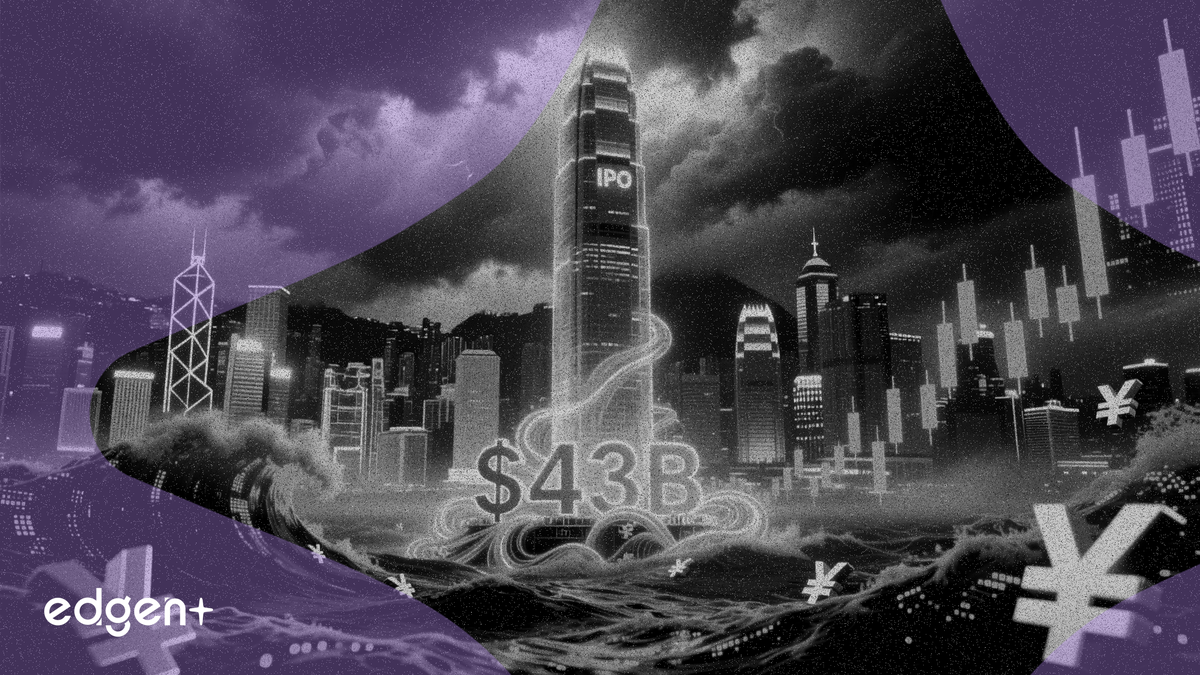
Hong Kong IPOs raised $43 billion in the first five months of 2026, up 50% from a year earlier, with technology companies accounting for 63% of listings.
"The shift in investor composition is reshaping pricing dynamics," Chen Ge, Co-Head of Global Investment Banking at UBS Securities, said. "Five years ago, 30% to 40% of HK IPO capital came from US investors. That share has dropped to about 20%, while Europe and the Middle East now account for 30% to 40%."
The Hang Seng AH Premium Index, which tracks the valuation gap between dual-listed stocks, fell to near an eight-year low in February, dropping from above 161 in early 2024 to around 113. Stocks including Contemporary Amperex Technology Co., Montage Technology Co. and GigaDevice Semiconductor Inc. now trade at a premium in Hong Kong versus their Shanghai listings — a reversal of the historical discount that persisted for over a decade.
The repricing reflects a broader reallocation of global capital toward Chinese technology assets. Global active funds have increased their China allocation to about 7% from 5% in the fourth quarter of 2024, still well below the 2021 peak of 15%, according to UBS research. UBS forecasts the Hang Seng Index will exceed 30,000 by year-end 2026 and expects full-year HK IPO fundraising of $45 billion to $50 billion.
The changing investor base is visible in cornerstone allocations. Qatar Investment Authority participated in Dongpeng Beverage's A+H listing as a first-time HK IPO cornerstone. Abu Dhabi Investment Authority took its debut HK IPO cornerstone role in MiniMax's listing. JPMorgan and Fidelity also served as HK IPO cornerstone investors for the first time this year.
In Montage Technology's IPO, UBS Asset Management received the largest cornerstone allocation, with JPMorgan taking the second-largest, Chen said. Both decisions were made in Hong Kong, reflecting the growing influence of Asia-based investment teams.
Hong Kong-listed companies have raised more through convertible bonds than traditional equity placements so far this year. China Hongqiao Group issued a RMB 10.2 billion zero-coupon convertible bond in April, the largest RMB-linked convertible on record.
The investor profile for convertibles is also broadening. Previously, 70% to 80% of buyers were European convertible bond specialists. That share has fallen to about 50%, with insurance companies and equity-focused institutions entering the market, Chen said.
The structural shift in HK IPO pricing power suggests Chinese technology companies can sustain premium valuations in Hong Kong as long as global demand for AI and semiconductor exposure remains strong. Investors will watch upcoming listings from AI startups and chip designers to test whether the new pricing regime holds.
This article is for informational purposes only and does not constitute investment advice.
