Two decades of friendly rivalry between Kamala Harris and Gavin Newsom is approaching a decisive moment as both weigh presidential bids that would force a head-to-head collision for the 2028 Democratic nomination.
Two decades of friendly rivalry between Kamala Harris and Gavin Newsom is approaching a decisive moment as both weigh presidential bids that would force a head-to-head collision for the 2028 Democratic nomination.
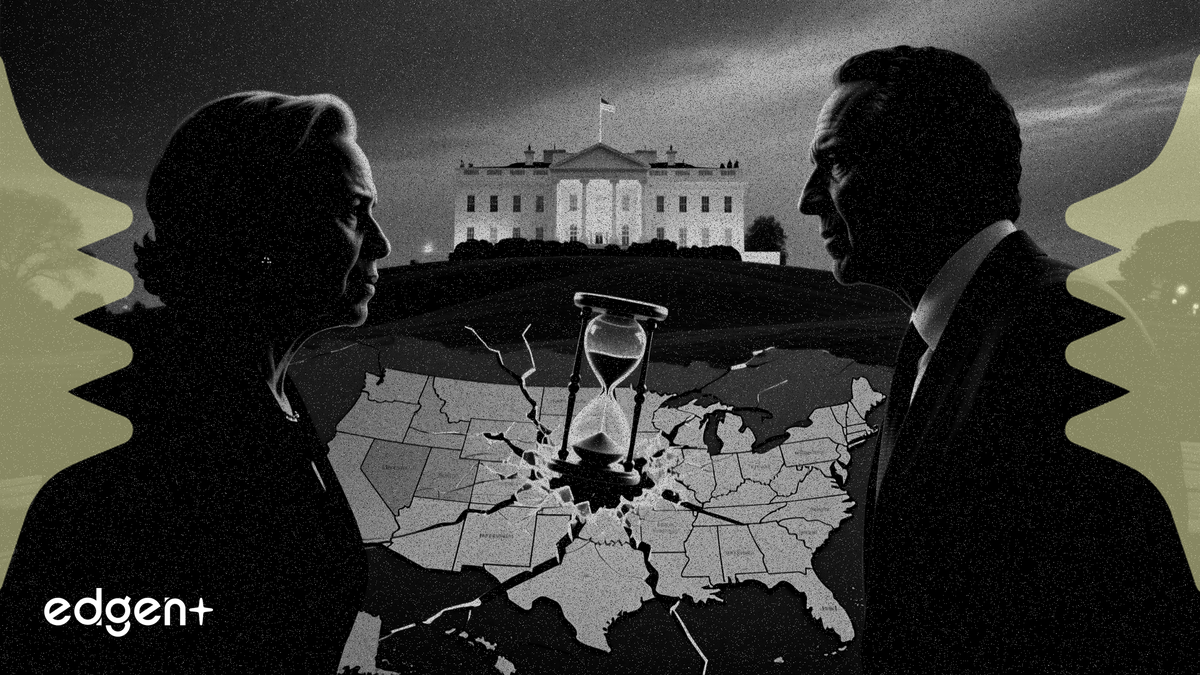
Two decades of friendly rivalry between Kamala Harris and Gavin Newsom is approaching a decisive moment as both weigh presidential bids that would force a head-to-head collision for the 2028 Democratic nomination.
Former Vice President Kamala Harris, 61, and California Governor Gavin Newsom, 58 — fellow Bay Area Democrats who have circled each other for two decades — are weighing 2028 presidential campaigns that would pit the party's two biggest names against each other in a primary contest unlike any in recent memory.
"They've been kind of like two cats, circling each other in an alley for years, politically speaking," said Garry South, a Democratic strategist who worked for Newsom.
Harris's book "107 Days" has sold more than 385,000 copies since September, according to Circana BookScan data, while Newsom's memoir "Young Man in a Hurry" has sold more than 100,000 copies in 13 weeks. Their respective PACs spent $1.6 million and $97,000 buying and distributing their own books to supporters. Most early Democratic primary polls show both occupying top slots in a prospective field that also includes former Transportation Secretary Pete Buttigieg.
A Harris-Newsom primary would force Democratic donors, activists and voters to choose between two conspicuously liberal politicians who share mentors, staffers and consultants — and whose decades of mutual wariness, punctuated by snubs and slights, has left many in the party privately dreading the prospect. "If they ever run in the same race, it will be a murder-suicide," Sean Clegg, a political adviser to both, warned in 2014.
A Rivalry Rooted in San Francisco
The relationship traces to 2003, when both won their first major offices on the same election night — Newsom as San Francisco mayor, Harris as district attorney. Neither received a majority, forcing runoffs. Harris declared victory on runoff night; Newsom waited for absentee ballots. Harris's aides believed the results became a sensitive subject for Newsom's team, which viewed her as a potential future challenger, according to people familiar with their relationship at the time.
As mayor, Newsom liked to speak first at joint news conferences. So did Harris. When Newsom arrived late, Harris would sometimes point to her watch, teasing him for being tardy, former aides said. The two had heated exchanges over the district attorney's office budget, which Newsom largely controlled, with arguments continuing backstage before public events.
At the 2008 Democratic National Convention in Denver, both appeared on a Time magazine panel featuring "Hotshots to Watch" — the same platform that had featured Barack Obama four years earlier. Privately, Harris complained about Newsom's inclusion, according to people who attended.
The Senate Fork That Shaped a Decade
The two avoided a direct electoral matchup in 2015 when Senator Barbara Boxer announced her retirement. Newsom spent days strategizing with his team — which included some of the same consultants who worked with Harris — before deciding to forgo a Senate run and wait two years to run for governor. He phoned Harris to tell her; she didn't pick up. A day later, Harris launched her bid for Boxer's seat. Newsom endorsed her Senate campaign in 2016; she returned the favor in his 2018 gubernatorial race.
During Harris's 2020 presidential campaign, Newsom delayed endorsing her until asked directly in an MSNBC interview — a question that had been suggested to producers by a Harris aide, according to people familiar with the discussions. He did not spend as much time campaigning or fundraising for her as her campaign wanted. Harris dropped out in December 2019 and later became Joe Biden's running mate.
The 2024 Friction
After Biden's abrupt exit from the 2024 race, Harris called Newsom to secure his support. According to Harris's book, Newsom texted back "Hiking. Will call back" — and never did. Newsom has since said he had already issued a statement supporting her and was the last person she needed to speak with.
At the Democratic National Convention in Chicago, Harris was surprised to find Newsom absent from the speaker roster. Advisors told her Newsom had declined a speaking slot because of a scheduling conflict. People close to Newsom said he considered the convention appearance on behalf of Harris about as appealing as giving a speech at the wedding of an ex. He appeared later that week to announce California's delegate count, securing Harris's nomination.
The 2028 Calculus
On the Republican side, President Donald Trump has suggested Vice President J.D. Vance and Secretary of State Marco Rubio could form a "dream team" ticket in 2028, calling them "very talented" and "unbeatable" together in a recent interview. Neither has announced plans to run.
For Democrats, the field is already crowded. Buttigieg has flirted with a bid. But Harris and Newsom remain the two most prominent figures, and their decades of shared history — the endorsements and snubs, the public praise and private wariness — have created a dynamic that many in the party hope will resolve without the "murder-suicide" that Clegg predicted.
After Trump revoked Harris's Secret Service protection following her loss, Newsom provided security through California Highway Patrol officers — a gesture his spokesperson called a response to the president's "vindictive" decision. Whether such cooperation can survive a primary campaign remains an open question.
This article is for informational purposes only and does not constitute investment advice.
