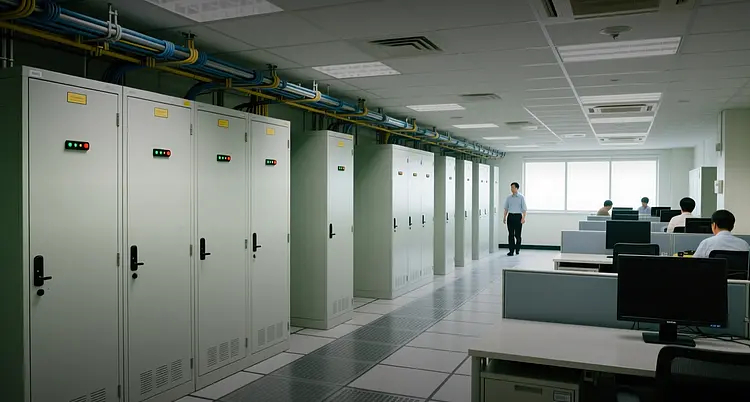
Gorilla Technology Group Inc. (NASDAQ: GRRR) has won a multi-year contract in Taiwan valued in the tens of millions of dollars to extend AI-powered intelligence and accelerated computing infrastructure for the largest criminal investigation bureau of its kind in the Asia-Pacific region, the company said on Sept. 22.
"This is exactly the kind of win that matters to us," Jay Chandan, chairman and chief executive officer of Gorilla Technology, said. "Winning a major national programme is difficult. Being asked to come back, expand what you have built and take on an even larger part of the customer's technology architecture says something very different."
The programme adds next-generation GPU capacity, including NVIDIA B300 accelerated computing systems, plus new intelligence integration and analytics capabilities inside the customer's existing secure IT environment. Gorilla will supply three years of maintenance, support and feature enhancements. Deployment runs from the fourth quarter of 2026 through the fourth quarter of 2027, according to Jackie Wang, the company's country head for Taiwan.
The award is an expansion, not a replacement. Gorilla said the architecture is designed to extend the customer's deployed estate rather than swap it out, which matters for the revenue math: the incremental spend lands on top of an existing installed base, and the three-year support tail stretches the cash flow beyond the 2027 deployment window.
What the disclosure does not say
Gorilla did not disclose the contract's exact value, the split between hardware and software, or the gross margin attached to the work. "Tens of millions" is a range, not a figure, and the company has not filed a corresponding 6-K with specific terms. For a business that reported a market capitalisation in the low hundreds of millions of dollars, the difference between $20 million and $90 million across a multi-year schedule is material to how investors should model the backlog.
The hardware content also cuts both ways. NVIDIA B300 systems carry high unit costs, and reselling accelerated compute is a lower-margin activity than licensing analytics software. Gorilla has spent the past year arguing that its value sits in the intelligence layer above the racks — Chandan's framing is that "compute is the foundation" while "intelligence is where the value is created" — but the press release does not break out how much of this award is silicon versus software.
The repeat-customer detail is the more durable signal. Government security buyers rarely re-tender an incumbent for a broader scope unless the first deployment worked, and switching costs in classified investigative environments are high. Gorilla now has a reference account at national level in Taiwan that it can point to when pitching similar modernisation programmes elsewhere in Asia, where it says it is pursuing sovereign AI and public-safety opportunities.
Who else is chasing the same budget
Gorilla is not alone in that pursuit. Palantir Technologies (NASDAQ: PLTR) has built its government segment on the same thesis — that analytics and integration layers, not raw compute, command the premium — and reported government revenue growth in the double digits in its most recent quarter. Nvidia (NASDAQ: NVDA) supplies the B300 systems underneath both approaches and captures the hardware margin regardless of which integrator wins. In Taiwan specifically, domestic system integrators and Chunghwa Telecom's data-centre arm compete for the same public-sector modernisation budgets.
The addressable pool is real but not unlimited. Taiwan's government has been raising security and digital-infrastructure spending as cross-strait tensions persist, yet the total procurement envelope for a single bureau is measured in tens of millions, not billions. That caps the read-through for the wider sector: this is a validation of Gorilla's execution, not evidence of a step-change in Asia-Pacific sovereign AI demand.
For Gorilla, the practical question is conversion. The company has announced a string of large AI infrastructure and data-centre programmes globally, and the market has rewarded the pipeline narrative. Turning that pipeline into recognised revenue depends on deployment execution through 2027 and on whether the company can disclose contract values that let investors underwrite the backlog with confidence. Until it does, the stock trades on announcements rather than on booked numbers.
This article is for informational purposes only and does not constitute investment advice.