

Google on June 17 launched Brazos, a direct-to-chip liquid cooling system for its data centers, targeting the rising thermal demands of AI workloads.
Google on June 17 launched Brazos, a direct-to-chip liquid cooling system for its data centers, targeting the rising thermal demands of AI workloads.
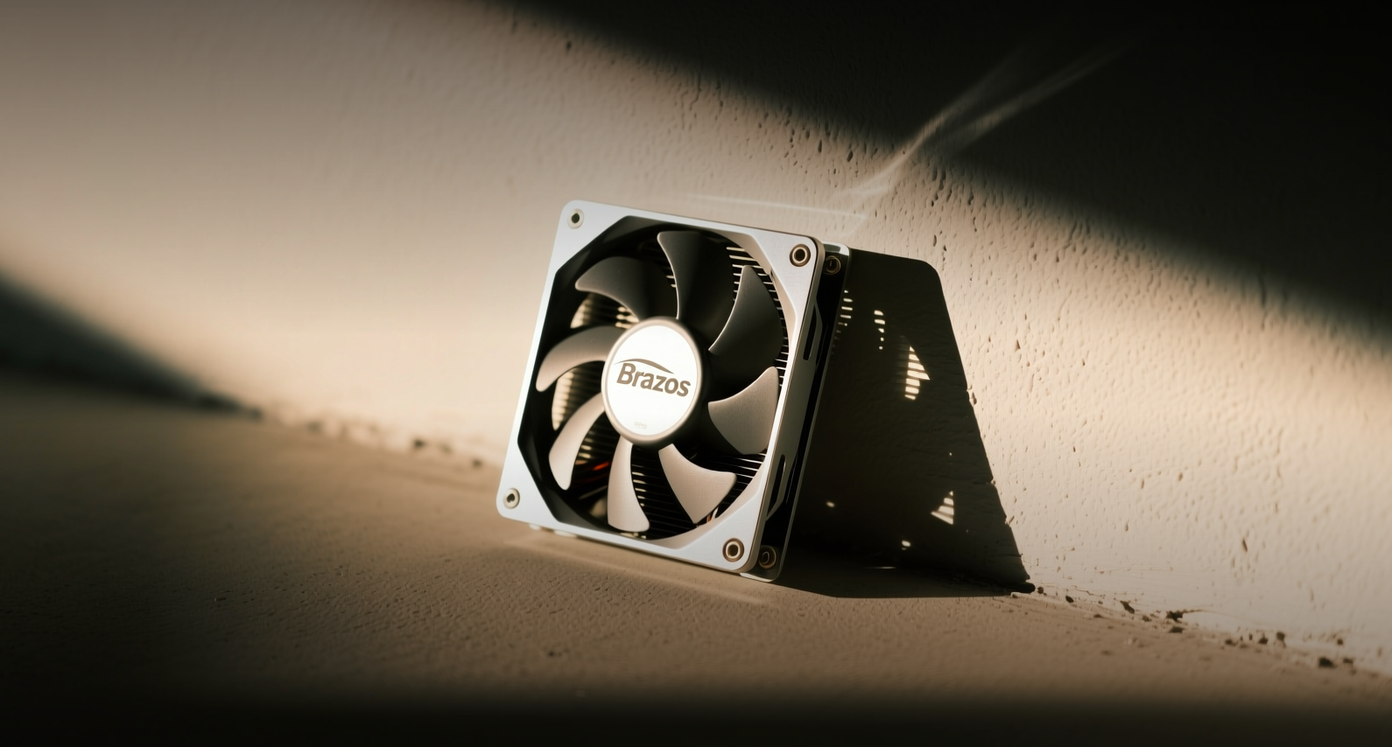
Data center cooling has become one of the most expensive bottlenecks in the AI arms race, and Google's new Brazos system is the latest attempt to solve it.
Google on June 17 announced the launch of Brazos, a liquid cooling system designed for its data centers, as the company seeks to manage the rising power and thermal demands of AI workloads. The system arrives as hyperscalers race to improve cooling efficiency amid a global surge in data center construction that has drawn opposition from local communities over energy use and noise.
"Liquid cooling is no longer optional for high-density AI clusters," said Benoit Dupont, vice president of data center infrastructure at Google, in a statement. "Brazos allows us to pack more compute per rack while reducing overall energy consumption."
The Brazos system uses direct-to-chip liquid cooling, circulating dielectric fluid over processors to absorb heat more efficiently than traditional air cooling. A single hyperscale facility can consume 100 megawatts or more — enough to power roughly 80,000 homes. Liquid cooling can reduce a facility's power usage effectiveness, or PUE, from around 1.4 for air-cooled centers to below 1.1, according to industry estimates from the Uptime Institute. Google did not disclose the specific power savings or the number of data centers where Brazos will be deployed.
Cooling accounts for as much as 30% to 40% of a data center's total energy bill, according to the U.S. Department of Energy. For Google, which spent $45 billion on capital expenditures in 2025, every percentage point improvement in cooling efficiency translates into hundreds of millions in annual savings. The company's cloud revenue reached $47 billion in 2025, making data center efficiency a direct lever on operating margins. The broader liquid cooling market is projected to reach $12.5 billion by 2030, up from $3.2 billion in 2025, according to MarketsandMarkets.
Why Cooling Became a Competitive Battleground
Rival cloud providers are pursuing similar strategies. Microsoft has tested two-phase liquid immersion cooling and deployed direct-to-chip systems in some Azure regions. Amazon Web Services uses liquid cooling in its AWS Trainium clusters. The shift is driven by the thermal density of AI accelerators: Nvidia's H100 generates up to 700 watts per chip, while next-generation Blackwell GPUs are expected to exceed 1,000 watts, pushing air cooling beyond its practical limits.
Google's Brazos launch also puts it in competition with established liquid cooling vendors such as CoolIT Systems, Boyd Corp., and Asetek, as well as newer entrants like ZutaCore and JetCool. However, Google's advantage lies in vertical integration — designing the cooling system alongside its own TPU accelerators and data center layouts allows for tighter optimization than off-the-shelf solutions.
The broader industry is exploring more radical approaches. Panthalassa, a startup backed by Peter Thiel, is developing floating data centers powered by wave energy in the Southern Ocean, targeting 2 cents per kilowatt hour with 90% capacity factor. SpaceX has proposed orbital data centers with deployable liquid radiators, though the plan faces significant technical hurdles and regulatory approval before any 2028 launch target.
For investors, Google's in-house cooling push signals that the company views data center efficiency as a competitive differentiator in the cloud market. Alphabet trades at 22 times forward earnings, a discount to Microsoft's 30 times, and narrowing the efficiency gap could support margin expansion. Rivals AWS and Azure may need to accelerate their own cooling investments to keep pace as AI workloads continue to drive data center power demand higher.
This article is for informational purposes only and does not constitute investment advice.
