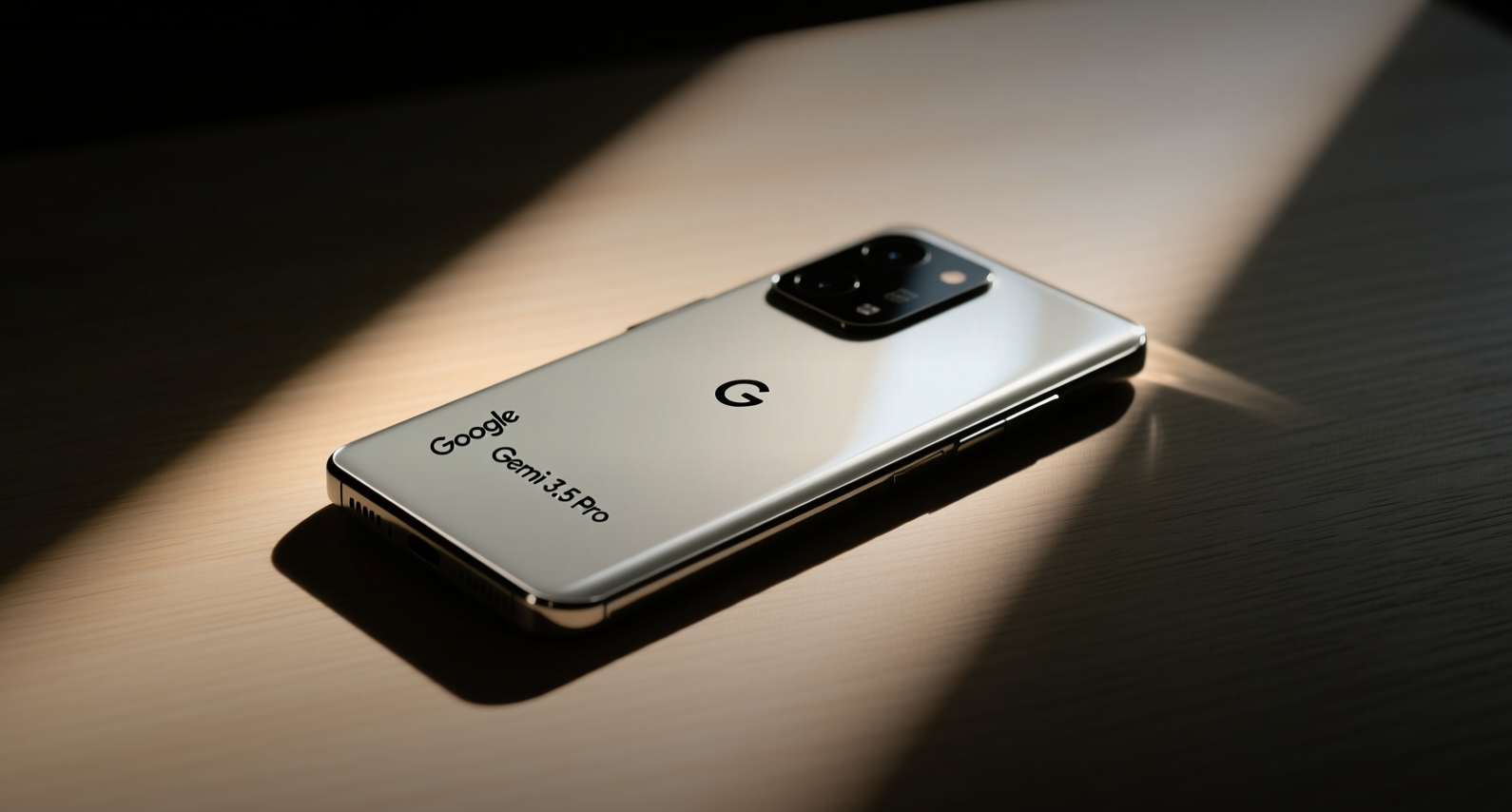
Google DeepMind's Gemini 3.5 Pro trades a two-month delay for a complete architectural rebuild, betting front-end visual generation can carve a niche against OpenAI and Anthropic.
Google DeepMind will launch Gemini 3.5 Pro on July 17 after scrapping its 2.5 Pro base model and retraining from scratch, a decision that prioritizes quality over speed as OpenAI and Anthropic tighten their grip on the AI market. The model introduces a 2 million token context window and a Deep Think Reasoning Layer for multi-step problem solving, but leaked tests show its strongest gains are in front-end and SVG visual code generation — areas where it outperforms Anthropic's Fable 5, according to Universe of AI and World of AI.
"Google chose to take the risk of delays to ensure the foundation was well-prepared," a person familiar with the development told Geeky Gadgets, adding that the team used the extra time for a completely new pre-training run rather than fine-tuning the existing 2.5 Pro architecture. The decision came after several core AI researchers left the team during the delay, pushing team morale to an all-time low.
The model's standout capability is SVG scene generation and front-end design output. In anonymous tests on the LM Arena platform, Gemini 3.5 Pro produced cleaner interfaces, more precise vector graphics, and higher-fidelity visual code than Fable 5, with one developer generating a recognizable SVG portrait of Gemini product lead Logan Kilpatrick from a single prompt. The term "mogging" — meaning complete domination — has emerged in developer circles to describe the model's front-end advantage over competitors.
Yet the model's strengths are narrowly concentrated. In agent tasks, warehouse-level software engineering, and long-chain reasoning, Gemini 3.5 Pro still trails both Fable 5 and OpenAI's GPT-5.6, which is expected between July 7 and July 9. "Even with the new base, Gemini 3.5 Pro can't beat Fable 5 or GPT-5.6 on the hardest agent and long-chain tasks," one leaker said. Fable 5 leads on SWE-Bench Pro for repository-level code debugging, while GPT-5.6 dominates multi-step reasoning benchmarks.
A Two-Front Strategy on One Base
Google is extending the Gemini 3.5 Pro architecture beyond text and code. The company is developing Nano Banana Pro, an image generation model built on the same new base, targeting OpenAI's GPT-Image 2 — which recently surpassed Google's previous image generation leader. The dual-product approach means a single pre-training investment could yield competitive offerings in both text-code and image generation simultaneously.
A separate model, Gemini 4 Flash, is also in development, optimized for speed-priority lightweight tasks. The product line expansion reflects DeepMind's strategy of covering multiple market segments rather than betting everything on one flagship.
On pricing, Google is positioning Gemini 3.5 Pro as a cost-effective alternative to OpenAI and Anthropic's premium tiers, targeting enterprise customers who prioritize value over raw benchmark leadership. The affordability focus could help Google capture a segment of the market that the higher-priced leaders may overlook.
What This Means for Investors
The competitive landscape is tightening. OpenAI's GPT-5.6 launch, expected within days, brings improved speed, reliability, and government-aligned ethical safeguards that strengthen its enterprise credibility. Anthropic's Fable 5 continues to dominate engineering-heavy workloads. Google's delayed but retooled entry signals it is unwilling to ship an inferior product — but the narrowness of Gemini 3.5 Pro's advantages means it may struggle to capture high-value enterprise use cases in coding and complex reasoning.
Alphabet shares (GOOGL) have priced in limited AI competitive risk, trading at roughly 22x forward earnings. If Gemini 3.5 Pro delivers on its front-end promises and Nano Banana Pro reclaims the image generation lead, the dual-product strategy could justify a re-rating. But the model's clear limitations in reasoning and engineering tasks cap the upside until Google demonstrates it can close those gaps in future iterations. The July 17 launch — and independent benchmark results that follow — will determine whether Google's bet on quality over speed pays off.
This article is for informational purposes only and does not constitute investment advice.