
Gold rebounded from a six-month low after the U.S.-Iran peace deal drove oil prices lower and revived expectations for Federal Reserve rate cuts.
Gold rebounded from a six-month low after the U.S.-Iran peace deal drove oil prices lower and revived expectations for Federal Reserve rate cuts.
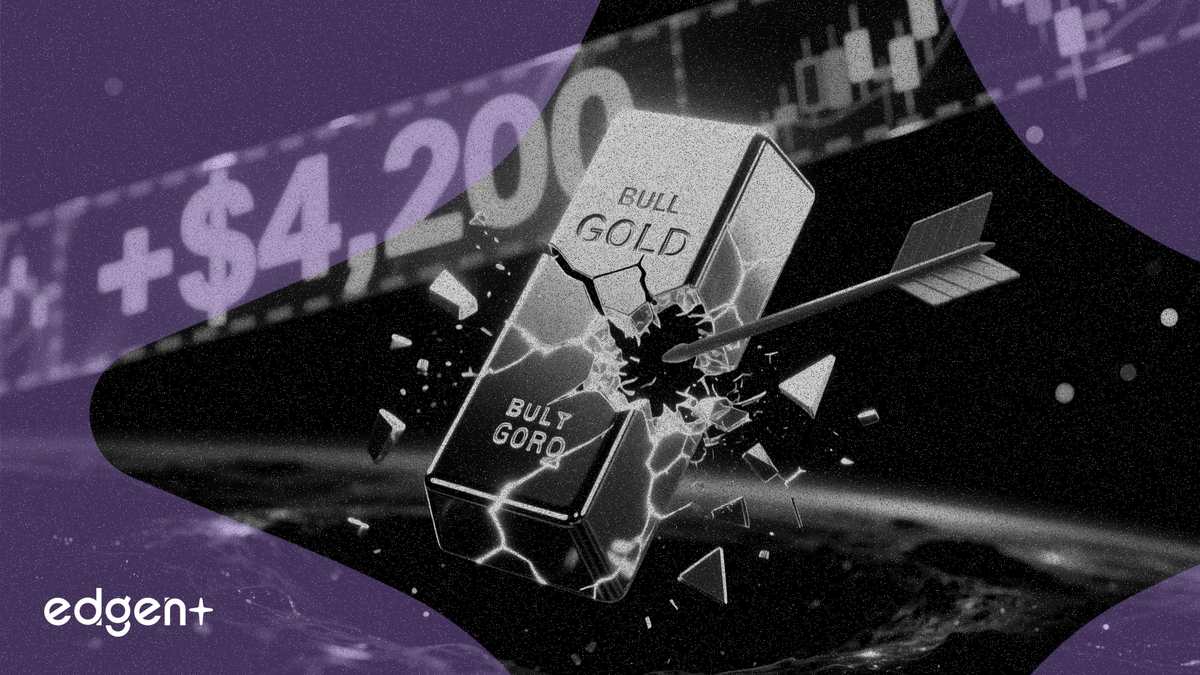
Gold rebounded from a six-month low after the U.S.-Iran peace deal drove oil prices lower and revived expectations for Federal Reserve rate cuts.
COMEX gold rose to $4,188.00 per troy ounce Friday, up 4.1% from a six-month low of $4,022.00, after the U.S.-Iran peace deal cut rate-hike bets and weakened the dollar.
"The market has to digest the risk of a Fed hike and a stronger dollar, but scope for a bounce exists if the Middle East conflict eases and oil falls to $80 a barrel," Aakash Doshi, head of gold and metals strategy at State Street Investment Management, said.
The U.S.-Iran agreement announced Sunday reopened the Strait of Hormuz and pushed Brent crude below $85 per barrel from a March peak of $118, according to Reuters. Lower energy prices reduce inflationary pressures, supporting expectations for a dovish Fed pivot. The dollar weakened against major currencies, further supporting gold. The metal had surged 64% in 2025, the most in 46 years, before falling 25% from its January record of $5,595 as the Iran war drove an oil-price rally and boosted rate-hike bets. Strong U.S. jobs data last week lifted those bets further, sending gold below its 200-day moving average for the first time in 2-1/2 years.
That closely watched technical level — now acting as resistance at $4,446 — suggests the market's dynamics have shifted, one precious metals trader said. The next catalyst is the pace of Fed easing, with rate-cut expectations solidifying as oil retreats further.
ETF Outflows Total 16 Tons in May as Physical Demand Slumps
Gold-backed ETF outflows totaled 16 tons in May and 7 tons in the first week of June, with at least 270 tons in loss-making territory at prices below $4,250, according to Standard Chartered analyst Suki Cooper. At $4,000, that figure rises to 298 tons. Physical demand is seasonally weak, with bullion trading at a deep discount in India.
COMEX managed short positions were at the lowest since January 2025 in the week to June 2, leaving scope for bearish bets to build, Adrian Ash, head of research at BullionVault, said.
Strait of Hormuz Reopening Leaves 60 Million Barrels in Floating Storage
While the Iran deal removes the immediate supply shock that drove oil to $118, the Strait of Hormuz reopening may not restore full transit capacity. Around 60 million barrels of crude and refined products remain in floating storage within the Gulf, according to Kpler. Shipping behavior is likely to remain cautious, with tanker owners minimizing time inside the Gulf. Saudi Arabia has tripled loadings from its Red Sea port of Yanbu to around 4.5 million barrels per day since March, shifts unlikely to reverse completely.
Nicky Shiels, head of metals strategy at MKS PAMP, expects gold prices to be rangebound over the next few months before more strategic tailwinds emerge. Doshi sees gold reverting to safe-haven demand longer term as fiscal deficits balloon and geopolitical fragmentation persists.
This article is for informational purposes only and does not constitute investment advice.
