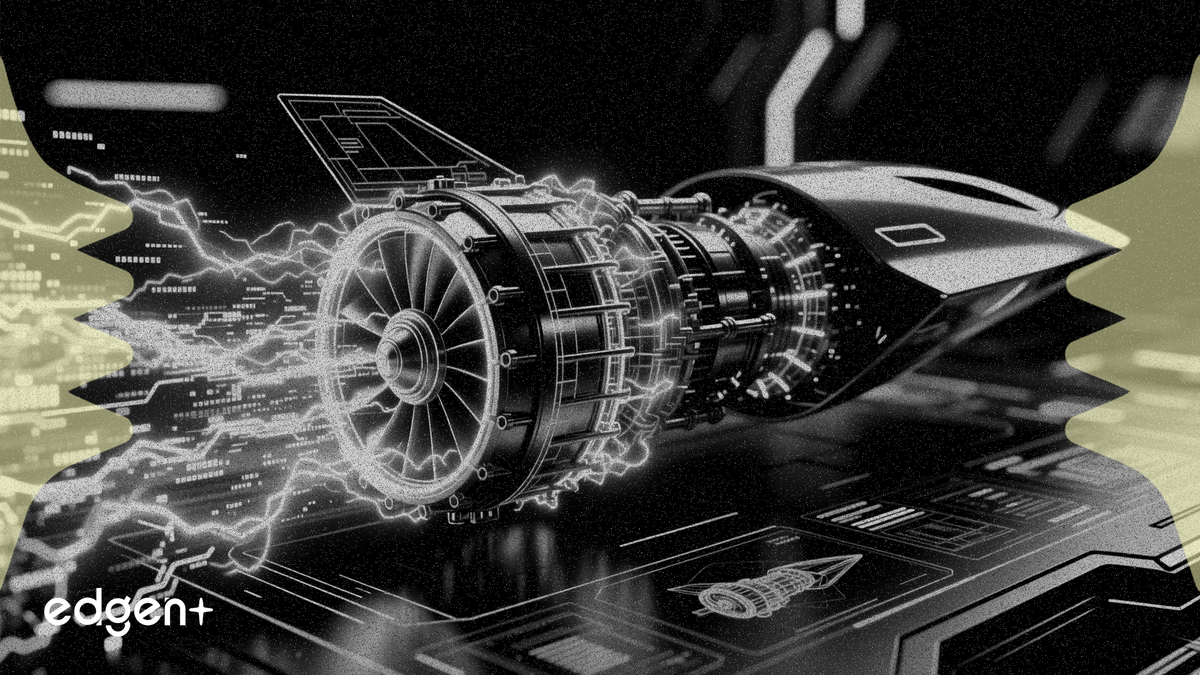
GE Aerospace is using generative AI to drastically shorten the development timeline for hypersonic weapons components, creating a potential competitive advantage in a defense market defined by high-tech barriers and long production cycles. The company announced its researchers developed an in-house AI tool that can generate hundreds of preliminary designs for a hypersonic ramjet engine in seconds.
“We can significantly reduce design cycle times, enabling us to be faster to test and ultimately faster to commercialize the best, most proven end product,” said Joe Vinciquerra, general manager and senior executive director at GE Aerospace Research, in a news release.
A ramjet is a type of engine that uses an aircraft's high speed to forcibly compress air for combustion, enabling efficient thrust at supersonic and hypersonic speeds. By automating the initial design phase—a process that traditionally takes months—GE can iterate on complex concepts almost instantly. This capability is a critical accelerator for developing hypersonic cruise missiles and other advanced defense applications. There are currently some 30,000 GE military aircraft engines in service, with the company delivering about 700 per year.
For investors, this makes GE’s already strong defense business more formidable. The Defense Propulsion Technologies segment is forecast to generate about $13 billion in sales and $1.6 billion in operating profit for 2026, according to FactSet data. Jefferies analyst Sheila Kahyaoglu, who projects GE’s defense engine deliveries could exceed 1,000 units by 2028, notes that the aerospace and defense sector's high capital intensity and specialized nature create strong barriers to disruption, allowing incumbents like GE to capture the benefits of AI internally.
This AI-driven breakthrough in hypersonic design is part of a broader push by GE into next-generation propulsion. The company was also recently awarded a U.S. Air Force contract to complete the preliminary design for its GE426 engine, a system purpose-built for uncrewed, autonomous combat aircraft. By using advanced digital tools across its portfolio, GE aims to lower costs and accelerate development to meet evolving military needs for hypersonic and autonomous systems.
This article is for informational purposes only and does not constitute investment advice.