Ford and General Motors are repurposing their EV battery investments into grid-scale energy storage, opening a new revenue stream that analysts estimate could generate $500 million in annual profit for Ford alone by 2030.
Ford Motor Co. and General Motors Co. are pivoting their EV battery investments into grid-scale energy storage, chasing a market where Tesla already generates $12.7 billion in annual revenue with 30% margins. The move turns years of EV battery spending into a new business line serving utilities, industrial customers and AI data centers.
"Ford is a hidden data center beneficiary," Barclays analyst Dan Levy said, citing the automaker's ability to repurpose battery manufacturing capacity for stationary storage.
Ford Energy, announced in May, plans to produce as much as 20 gigawatts of battery storage capacity over five years, with deliveries starting in 2028. The automaker is investing $2 billion in the business. Morgan Stanley analysts project Ford Energy could generate $500 million in operating profit by 2030 — a fraction of Ford's $6.8 billion in EBIT last year but a new growth vector as its core auto business struggles.
GM is taking a different technical path, partnering with Peak Energy to develop sodium-ion battery cells for grid applications. Sodium-ion chemistry eliminates the need for active cooling equipment required by lithium-iron phosphate systems, potentially reducing storage costs by about 20% while delivering 99% uptime, according to Peak Energy. GM will develop the cells in its Michigan battery labs and retain exclusive manufacturing rights.
The pivot comes as Ford's EV division has accumulated $16 billion in losses over the past several years, with management expecting continued losses for three more years. The company posted a net loss of $8.2 billion in 2025, including a $19.5 billion write-down tied to EV restructuring. Energy storage offers automakers a way to monetize battery investments without relying on consumer EV adoption, which has been hampered by rising material costs, tariffs and the elimination of federal EV tax credits.
Tesla's blueprint shows the prize
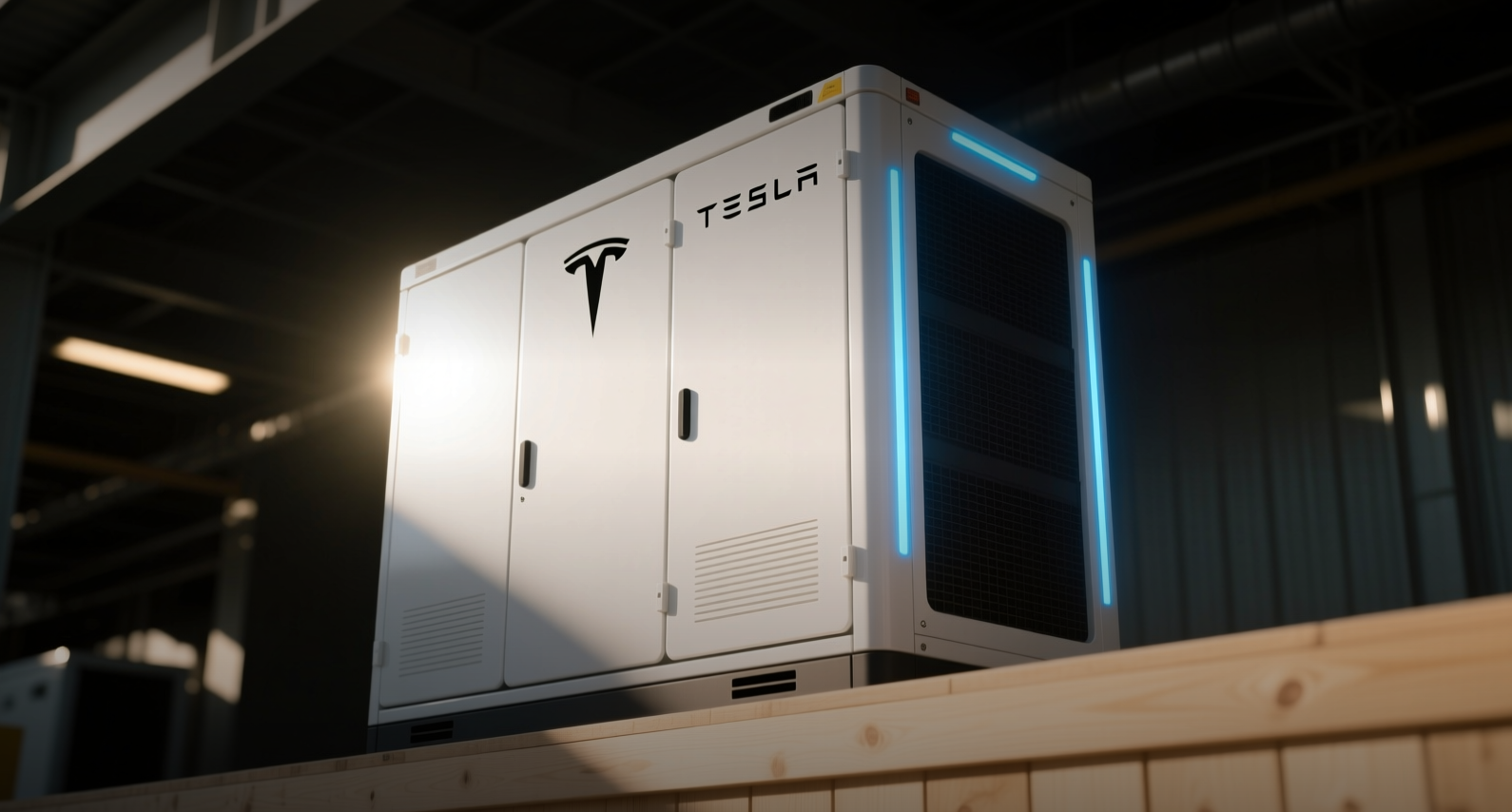
Tesla Energy deployed 46.7 gigawatt-hours of storage last year, generating $12.7 billion in revenue with margins around 30% — far higher than Tesla's automotive margins. The division has become a meaningful profit center for the EV leader, demonstrating that stationary storage can outperform vehicle battery economics.
For Ford and GM, the addressable market is large and growing. US data center electricity demand is projected to nearly triple by 2030 as artificial intelligence workloads expand, driving demand for backup and peak-shaving battery systems. Utilities are also adding grid-scale storage to integrate renewable energy, with US battery storage capacity expected to exceed 100 gigawatts by 2030, up from about 30 gigawatts today.
Valuation disconnect and investor reaction
Ford shares surged 47% in May following the Ford Energy announcement, reflecting investor enthusiasm for the company's pivot. But the rally may be premature — Ford Energy has no revenue or profit today, and battery deliveries do not begin until 2028. Ford trades at roughly 7 times forward earnings, a discount to GM at 8 times and a steep discount to Tesla at 65 times, suggesting the market has not fully priced in the energy storage opportunity for either Detroit automaker.
Ford CEO Jim Farley told the Detroit Free Press the company is already seeing "tremendous interest from customers" on both the supply and demand sides. GM has not disclosed revenue targets for its sodium-ion storage business.
This article is for informational purposes only and does not constitute investment advice.