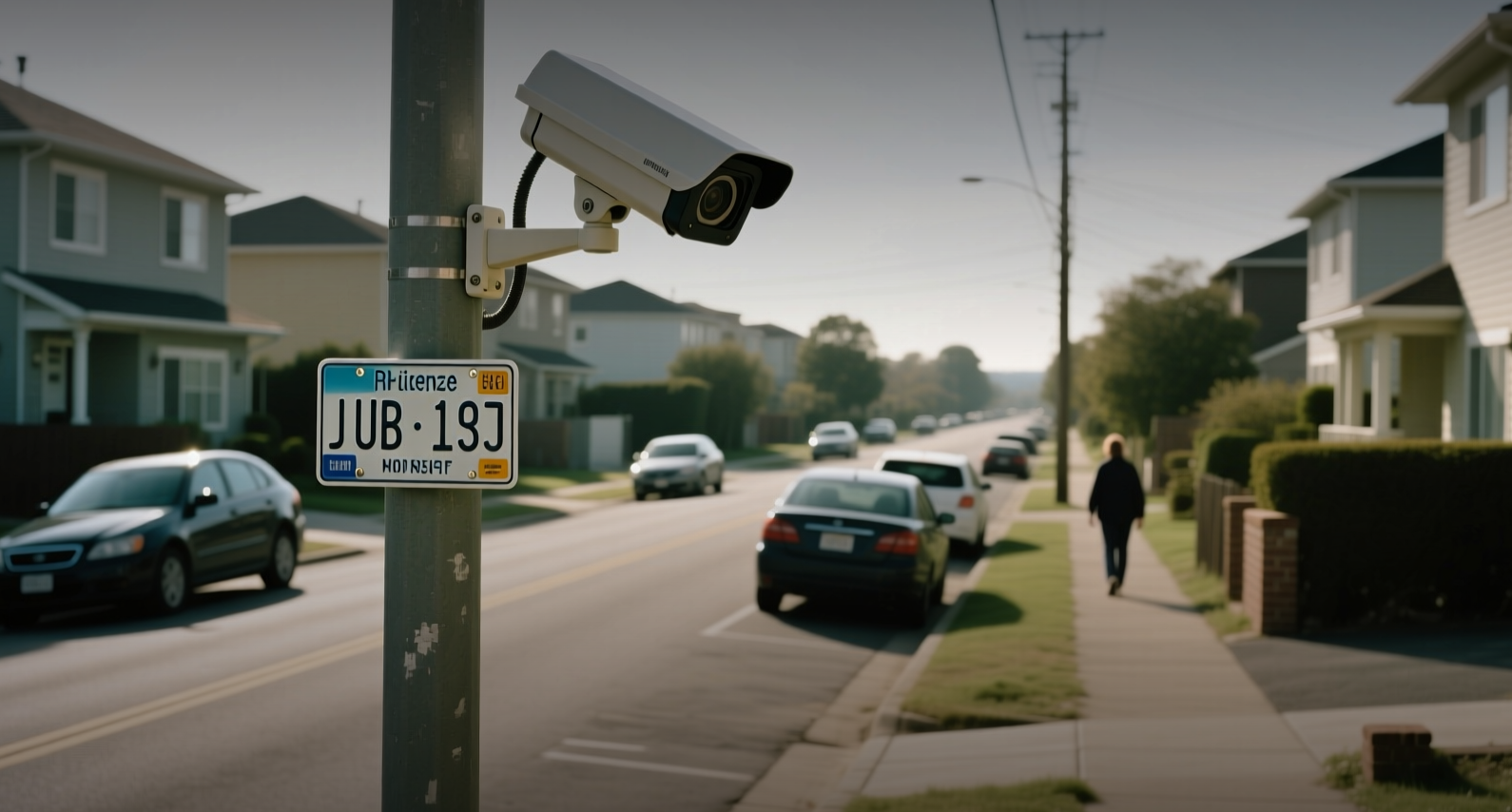
Flock Safety shortened how long its network of more than 120,000 license-plate cameras holds vehicle data, cutting the default retention window to seven days from 30 and requiring officers to enter a case number before running a search, the company said Wednesday.
The changes land two days before the Senate Judiciary Subcommittee on Crime and Counterterrorism holds a hearing on Flock's "nationwide AI surveillance network," and follow a bipartisan letter from Sens. Raphael Warnock (D-Ga.) and Katie Britt (R-Ala.) asking Attorney General Todd Blanche to issue guidance on automated license plate reader misuse.
"While law enforcement agencies around the country appropriately use ALPR for legitimate public safety purposes including the investigation of violent crime and the location and recovery of missing and abducted persons, misuse of these systems undermines the public's confidence in the technology," Warnock and Britt wrote in the letter sent Monday.
Flock's cameras capture more than plate characters. The company builds what it calls a "vehicle signature" — make, model, color, bumper stickers, decals and accessories — though it says it does not use biometric data or facial recognition. The new guardrails add standardized search categories alongside the case-number requirement, narrowing the queries an agency can run against a database that spans departments nationwide.
The concession is the first measurable output of a scrutiny cycle that has been building since a Washington Post investigation published Aug. 13 found more than 50 officers accused, charged with or convicted of misusing Flock or other plate readers to track exes and romantic interests. That reporting pushed the company into a public policy revision; the Senate hearing, scheduled for Friday, now tests whether the revision is enough.
Federal exposure is broader than the municipal contracts that generate most of Flock's revenue. A Government Accountability Office report last year found Customs and Border Protection, Immigration and Customs Enforcement and the Secret Service had disclosed agreements to query or view information from third-party automated license plate readers. Warnock and Britt asked Blanche what grant oversight and accountability mechanisms the Justice Department has in place, and whether it has policies governing collection, storage and access to ALPR data.
Sen. Josh Hawley (R-Mo.), who chairs the crime and counterterrorism panel, said he invited the chief executives of Flock and other ALPR firms to testify. None appeared on the witness list as of Tuesday afternoon, leaving open whether the hearing produces sworn testimony or an empty chair.
The politics cut across party lines. Privacy-conscious conservatives have joined progressive critics of police surveillance, a combination that makes ALPR restrictions one of the few technology-policy areas where a bipartisan bill is plausible. For Flock, the near-term risk sits in city council chambers rather than in Washington: retention limits and audit requirements written into municipal contracts determine whether a department can keep querying historical data, and a seven-day default removes most of the archive that made the network useful for cold cases.
Peers face the same template. Motorola Solutions and Axon Enterprise, both publicly traded and both active in law-enforcement video and data, would inherit comparable retention and case-number standards if state legislatures copy the Flock framework. Neither company has announced matching changes.
Flock is privately held, so there is no listed equity to reprice on the announcement. The financial impact shows up instead in contract renewals and in the cost of compliance — audit logging, case-number enforcement and shorter retention all reduce the data footprint that agencies pay to access. The next datapoint arrives Friday, when Hawley's subcommittee convenes and the DOJ decides whether to answer a letter that asks it to police a technology it also uses.
This article is for informational purposes only and does not constitute investment advice.