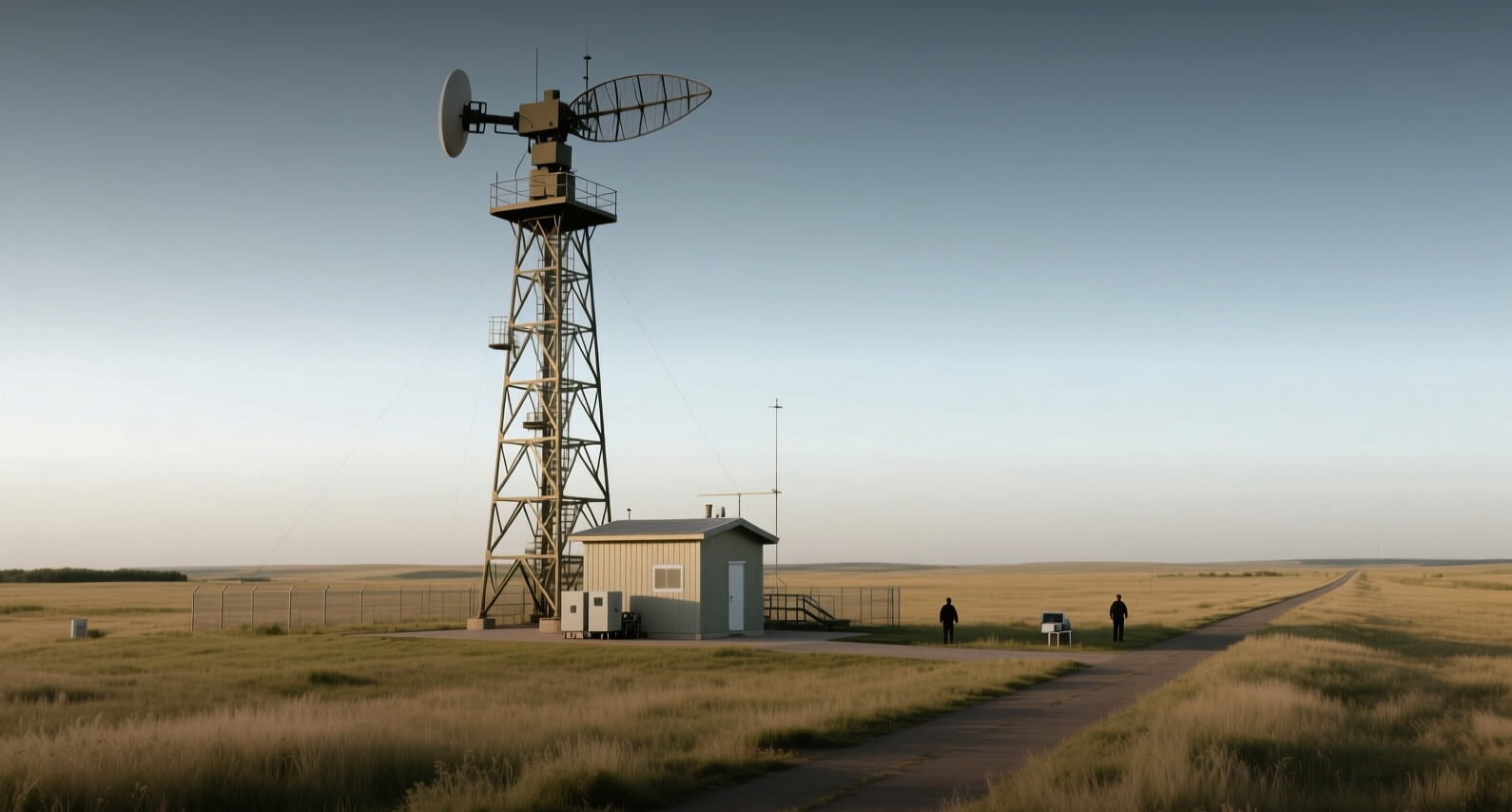
Duty payments on imported radar, avionics and communications gear will cost the Federal Aviation Administration about $100 million, the agency's administrator said, a levy that lands on a modernization budget already stretched by aging equipment.
"The agency expects about a $100 million cost from tariffs on the government's more than $12.5 billion air traffic control modernization plan," the FAA administrator said on Sept. 17.
The figure equals roughly 0.8 percent of the program's headline value, but it is not spread evenly. Tariffs apply to imported hardware — solid-state radar components, avionics, copper cabling and semiconductor assemblies — rather than to domestic installation labor, which makes up the bulk of the contract value. The FAA did not break the $100 million down by supplier or by equipment category, and the agency has not disclosed whether the added cost is absorbed within existing appropriations or requires a supplemental request.
The disclosure lands in a procurement cycle where the arithmetic is already tight. The FAA's Facilities and Equipment appropriation, the account that funds most modernization work, has been funded at roughly $3.7 billion to $4 billion a year in recent budgets, meaning a $100 million overrun consumes about 2.5 percent to 3 percent of a single year's capital budget. The agency has not published a revised total program cost, and no schedule change has been announced.
Where the $100 million lands
The modernization program is delivered through a mix of prime contractors and subcontractors spanning surveillance radar, satellite-based navigation, controller communications and the terminal automation systems that route traffic into major airports. Because most of those primes hold fixed-price or cost-reimbursable contracts awarded before the current tariff schedule took effect, the added duty is a live question of who eats it.
Under fixed-price terms, an unanticipated input-cost increase compresses contractor margin unless a change order or equitable adjustment is granted. Under cost-reimbursable terms, the government absorbs it and the pressure shifts to the appropriation. The FAA has not said which mechanism it will use, leaving suppliers to model both outcomes. For a mid-cap aerospace supplier with a $200 million ATC segment, a $100 million program-wide cost increase spread across several years and several vendors is a margin question measured in tens of basis points, not a solvency question — but it is the kind of variance that shows up in quarterly guidance language.
The affected supplier base overlaps heavily with the defense electronics sector. Radar and communications primes compete for the same engineering talent and the same imported components as missile-defense and space programs, so a tariff-driven cost increase in one program raises the reference price for the others. That is the transmission channel that matters beyond the FAA: tariff policy is now a line item in federal infrastructure procurement, not just a trade-policy abstraction.
The budget math behind the headline
The $100 million is small against the $12.5 billion program and small against total federal outlays, which is why the market reaction was muted. The significance is directional. Tariff costs on imported capital equipment raise the unit price of public infrastructure at the exact moment when the FAA is trying to accelerate deployment of a satellite-based surveillance system and retire legacy radar sites.
The historical parallel is instructive. When steel and aluminum tariffs were imposed in 2018, federal and state infrastructure agencies reported cost increases in the low single digits on affected projects, and several delayed or rescoped equipment purchases rather than seek supplemental funding. The pattern repeated in the 2021-2022 supply-chain period, when lead times rather than prices became the binding constraint. The current case is narrower — a defined $100 million on a defined program — but it follows the same logic: the cost shows up first in procurement schedules, then in program timelines.
For investors, the read-through is concentrated rather than broad. Aerospace and defense suppliers with ATC exposure face a modest, multi-year margin headwind that is unlikely to move sector valuations on its own. The more durable signal is that tariff policy is now embedded in the cost base of long-dated government contracts, which raises the risk premium on fixed-price federal work generally. Watch the FAA's next budget justification for a revised program cost and any change-order activity among the primes; that is where the $100 million either stays a footnote or becomes the first line of a larger number.
This article is for informational purposes only and does not constitute investment advice.