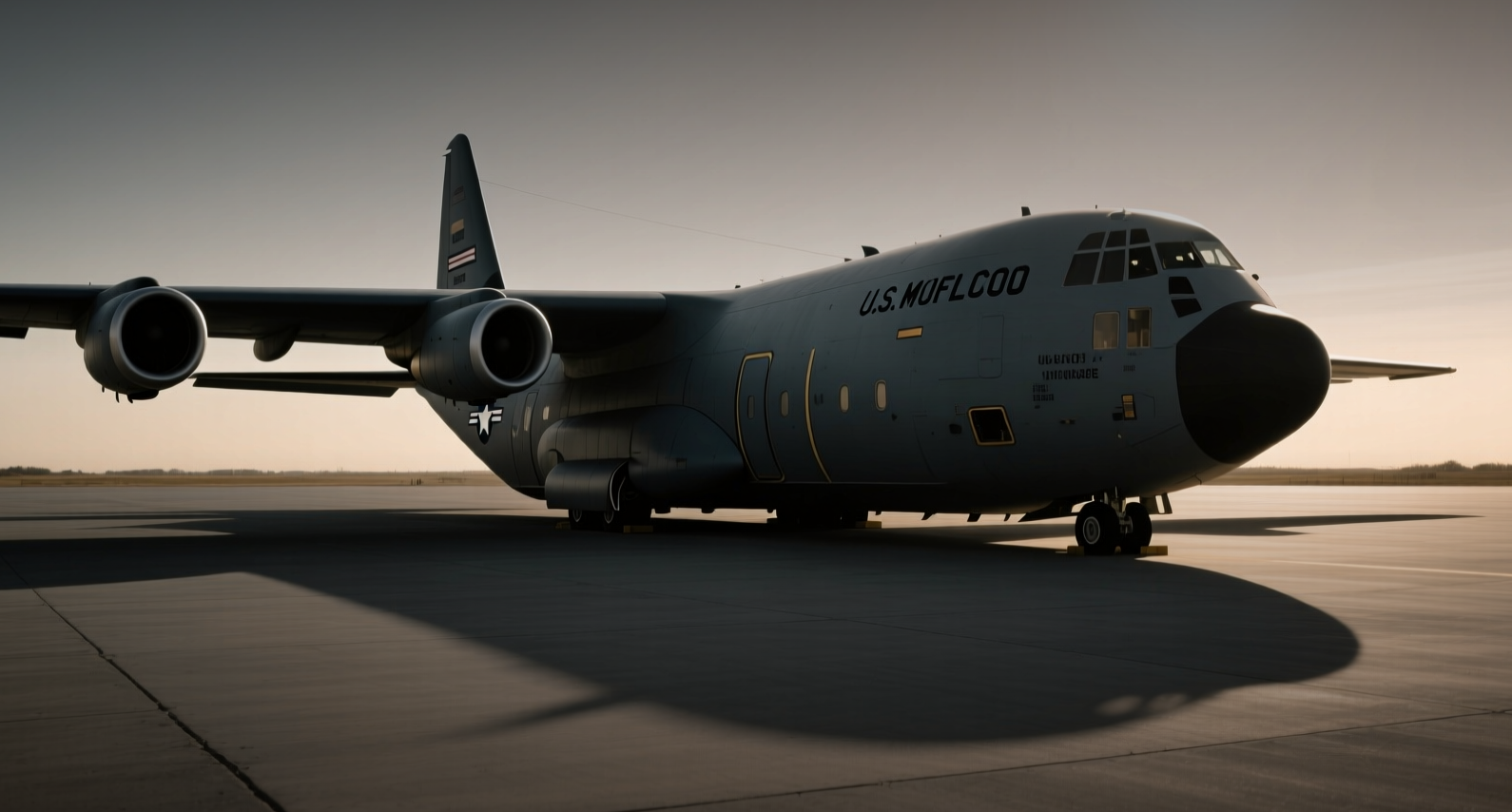
European allies are racing to replace US bombers, warships and Army brigades withdrawn from NATO's European command, facing a capability gap that defense officials say cannot be closed quickly.
The US pullback from NATO's European force posture — canceling an armored brigade deployment to Poland from Fort Hood, Texas, and halting a long-range missile battalion destined for Germany — has left allies scrambling to backfill capabilities from midair refuelers to strategic bombers as Russia presses its advantage. The Pentagon also removed an infantry brigade from Romania last year.
"Europeans are already backfilling what the US cannot any longer promise," NATO Secretary-General Mark Rutte said in an interview. He acknowledged that "in some cases we've got more work to be done" on replacing American capabilities.
NATO estimates European allies and Canada will invest a combined $258 billion more in defense in 2025 and 2026 than in prior years. The 32-nation alliance agreed last year to target 5% of gross domestic product on defense — 3.5% on budgets and 1.5% on infrastructure — up from the previous 2% goal that some members still fail to meet. Spain endorsed the target but said it could fulfill NATO's security requirements without spending that much.
The capability gap risks exposing NATO's European members to a Russian military that, while bogged down in Ukraine, has kept its air, missile and naval assets largely intact. Russia launched a large-scale attack on Kyiv this week, underscoring the urgency of the summit in Turkey's capital. President Donald Trump is expected to meet with Ukrainian President Volodymyr Zelensky on the sidelines, according to a senior administration official.
The Capabilities Most at Risk
European nations have committed all of their new fighter aircraft to NATO's defense instead of holding some back for national missions, allied officials said. Discussions are underway about deploying more ground-based long-range missiles and fighter aircraft to substitute for the US strategic bombers that no other alliance member operates.
But replacing US capabilities in midair refueling — a critical enabler for extended operations — will require establishing more airfields with fuel capacity, officials added. Retired Air Force three-star general David Deptula, dean of the Mitchell Institute for Aerospace Studies, said ground-based fires "cannot come anywhere close to the reach of a bomber or replicate the bombers' capability to quickly revisit targets."
The US cuts fall into two categories: reductions to American Army brigades already deployed on the continent, and a scaling back of air, naval and other reinforcements the Pentagon had pledged to send in a crisis. For the Trump administration, the moves signal that Europeans should take the lead in conventional defense, freeing the US to focus on the Pacific and the Western Hemisphere. Washington has committed to maintain its nuclear umbrella over Europe.
Congressional Pushback and Defense Industry Bottlenecks
In Washington, leading Republican and Democratic lawmakers have sought to block further troop reductions by inserting provisions in pending military-spending legislation that would bar US troop levels from falling below 76,000 without further review. Another battle is brewing over Army weapons and equipment stocks kept in Europe, which US European Command wants to maintain at levels sufficient to field four armored brigades during a crisis.
Senator Jeanne Shaheen, a New Hampshire Democrat on the Senate Armed Services Committee, said the Pentagon is "fundamentally miscalculating the advantage from prepositioning stocks and equipment in Europe."
Retired Army General Curtis Scaparrotti, who served as NATO's top commander, said any transfer of military responsibility from the US to European nations must be carefully timed. "If we determine there should be changes, it cannot be immediate and without preparation, in order to ensure deterrence against what is a real threat from Russia," he said.
Europe's defense industry, freshly infused with new cash after decades of underinvestment, is grappling with production bottlenecks that slow delivery of arms and munitions. "The big issue that Europeans should be focusing on is the industrial cadence and capacity to actually deliver in a much quicker way to meet the moment," said Alexandra de Hoop Scheffer, president of the German Marshall Fund.
The last time NATO faced a comparable US drawdown was in the early 1990s after the Cold War, when Washington withdrew roughly 200,000 troops from Europe over several years — a transition that took place against a diminished Russian threat. Today's pullback is happening as Moscow signals malign intentions through a campaign of sabotage and hybrid attacks across the continent, with some European leaders warning these actions could herald a more conventional military attack in coming years.
German Defense Minister Boris Pistorius said last month that "it is difficult and dangerous for the security of NATO's European front when capabilities are withdrawn very quickly and before it is clear when these can be replaced."
This article is for informational purposes only and does not constitute investment advice.