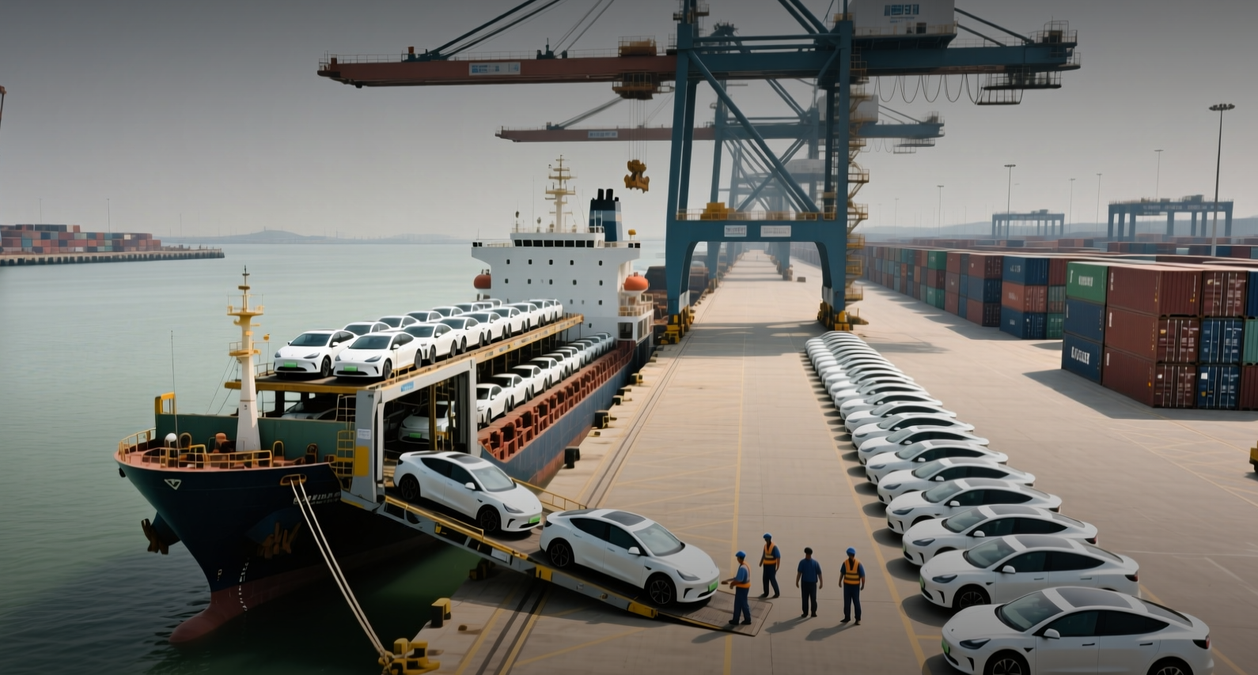
Brussels has asked Beijing to hold Chinese hybrid vehicle sales to roughly 15% of the EU market, a voluntary ceiling that EU officials say will be replaced by unilateral restrictions if China declines, according to a Financial Times report citing people familiar with the matter. The request, reported Sept 17, is the first time the bloc has sought a numerical export cap on a Chinese vehicle category rather than a tariff.
"If they will not limit their exports to our market then we will," an EU official told the FT. "This is about stopping deindustrialisation. We have to act. It's about managed trade."
The demand sits on top of a goods trade deficit that reached €360.6 billion ($413.4 billion) last year and widened 9% in the first six months of 2026, a figure European Commission President Ursula von der Leyen told the European Parliament on Sept 16 had reached a tipping point. She described the pressure as a second "China shock" delivered through deindustrialisation. Trade Commissioner Maros Sefcovic, who is leading the talks, has said he wants tangible results by October and is expected in China by early next month.
The scope extends past cars. The EU has also asked China to limit exports of other products including chemicals, while seeking increased Chinese purchases of European goods as the offsetting side of the bargain. Beijing rejects the overcapacity diagnosis underpinning the request, calling concerns about economic imbalances and excess capacity protectionist and aimed at constraining China.
A cap without an investigation
The 15% figure is unusual because no formal EU investigation into Chinese hybrid imports currently exists. The bloc has imposed countervailing duties on battery electric vehicles, but plug-in hybrids have so far been monitored rather than targeted, according to a European Parliament answer to question E-000346/26. That gap explains the negotiating format: a voluntary restraint avoids the 12-month evidentiary process a new anti-subsidy case would require, and it can be agreed before Sefcovic's October deadline.
For Chinese automakers, the arithmetic is the story. A 15% share ceiling is a hard volume constraint on the fastest-growing part of their European mix, and it lands on companies — BYD, Geely and SAIC among them — that have built EU distribution on the assumption of open-ended growth. European incumbents including Volkswagen, Stellantis and Renault would gain relative protection without the consumer price increase a tariff would carry, which is precisely why Brussels prefers the cap to a duty.
The precedent is close at hand. When the EU raised countervailing duties on Chinese battery EVs, Beijing responded with an anti-dumping probe into EU brandy and a case against French cognac, and Chinese vehicle exports to Europe slowed before rerouting through hybrid and plug-in hybrid lines. A cap on hybrids closes that substitution channel, which is why the chemicals request matters: it signals the EU is prepared to widen the front rather than let exporters shift product categories.
What October decides
The transmission runs through three channels. For European autos, a cap is a margin story — protected pricing on hybrid and compact segments where Chinese competition has been sharpest. For chemicals, the threat alone changes investment planning, since a Chinese export limit on a category the EU has not yet investigated is a discretionary measure that could be applied to any product line. For broader risk sentiment, the relevant question is whether this stays a managed-trade negotiation or becomes a tariff exchange, and the €360.6 billion deficit gives Brussels political cover either way.
China's calculus is the offset demand. Accepting a 15% ceiling in exchange for European purchases is a concession Beijing has resisted in principle, because it concedes the overcapacity framing it publicly rejects. Refusing invites unilateral EU restrictions and a wider product list.
Sefcovic's October target is the date that resolves it. If China agrees to a voluntary cap, the EU gets managed trade without a new investigation and the chemicals threat recedes. If it does not, the bloc has already said it will act alone — and the hybrid cap becomes the first of several.
This article is for informational purposes only and does not constitute investment advice.