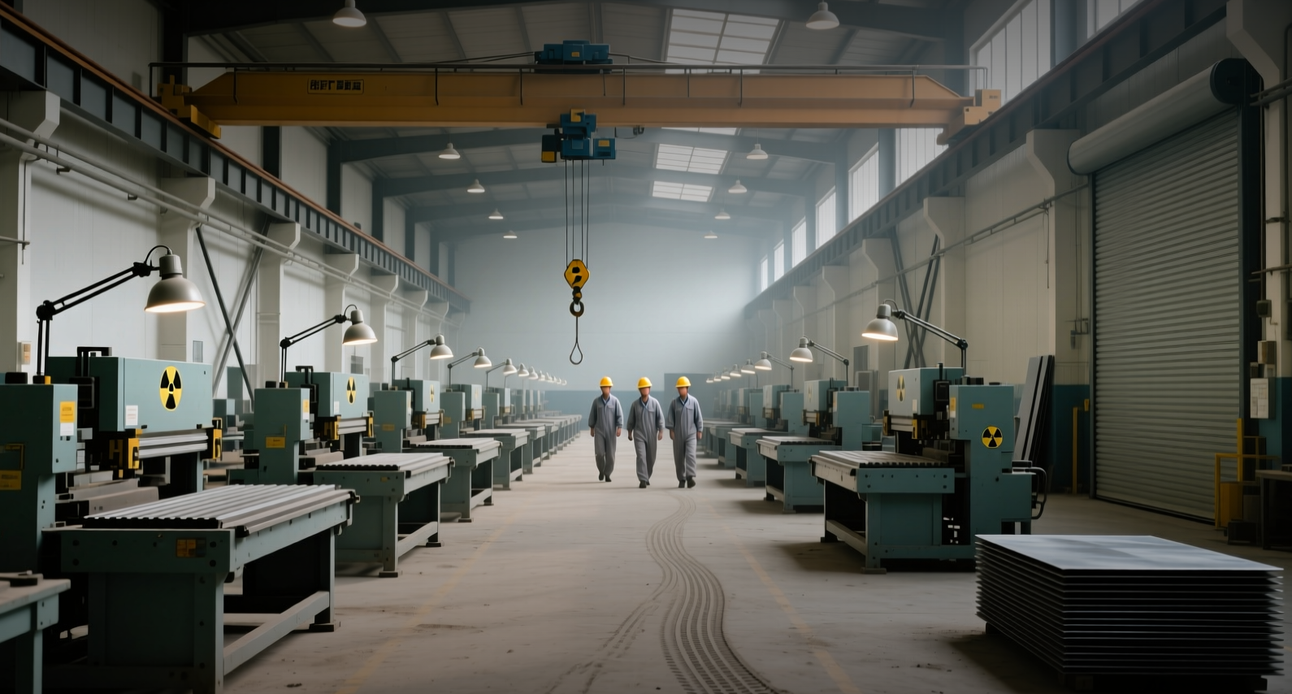
France's EDF intends to build 10 small modular reactors across Europe by 2035 using its NUWARD design, a program run with Italian unit Edison that a senior executive put at tens of billions of euros, with Poland, Belgium and Finland already in talks to host part of the fleet.
"We are in discussions with Poland, Belgium and Finland on the possible construction of part of the 10-reactor fleet," Vakisasai Ramany, senior vice president at EDF, said at an event hosted by Edison in Milan attended by companies that will form part of the nuclear supply chain.
The announcement, made Friday, sets the first hard deadline on a European SMR program of this scale. NUWARD units are designed below 300 megawatts electric, factory-built rather than assembled on site, which is the core of the cost argument: serial production of identical modules rather than bespoke construction. EDF has not disclosed the per-unit capacity, the split of the 10 reactors by country, or the capital structure behind the tens-of-billions figure. Financing terms, the identity of any co-investors and the specific sites are not yet disclosed.
The comparison that matters is cost and schedule. Britain's Hinkley Point C, a conventional 3.2-gigawatt plant, is running years late with a cost estimate that has climbed past 35 billion pounds. NuScale Power, the US-listed SMR developer, cancelled its 462-megawatt UAMPS project in November 2023 after cost estimates rose to $9.3 billion from $5.3 billion, a 53% increase that killed the order book. EDF's pitch is that factory production breaks that pattern. It has not published a levelized cost of electricity target for NUWARD, so the claim remains unverified against those benchmarks.
Fuel is the second constraint. Most SMR designs, including several NUWARD configurations, require HALEU — uranium enriched to 19.75%, against 3% to 5% for conventional light-water reactors. Commercial HALEU supply in the West is thin: Centrus Energy is the only US producer with an operating demonstration cascade, and Russia's Tenex was the dominant global supplier before sanctions. A 10-reactor fleet would add meaningful demand to a market that has not yet proven it can scale enrichment capacity. Cameco, the largest Western uranium producer, and Kazatomprom, the world's biggest by output, sit upstream of that demand.
Regulatory approval is the third gate, and the slowest. Each host country must license the design separately. Poland's nuclear program is overseen by the National Atomic Energy Agency, which has already issued a general opinion on NUWARD's predecessor design; Belgium operates two reactors at Doel and Tihange and has extended their lives to 2035; Finland's Radiation and Nuclear Safety Authority approved Olkiluoto 3, Europe's largest reactor, only after a 14-year delay. Three separate licensing tracks, three separate timelines, none of them disclosed.
The policy backdrop is what makes the program financeable. The European Union lists nuclear in its taxonomy of sustainable activities, giving the program access to green-labelled capital. France's own energy plan targets 25 gigawatts of new nuclear capacity. Italy, where Edison is based and where EDF holds a controlling stake, has no operating commercial reactors and has been debating a return to nuclear since 2023.
For investors, the read-through runs through three layers. EDF is state-owned and unlisted, so the direct equity exposure is limited; Edison is listed in Milan and is the named project vehicle. The supply-chain layer is where the money moves first — reactor components, enrichment, and uranium. NuScale Power trades as the closest listed pure-play comparable, and its 2023 cancellation is the cautionary case for anyone pricing SMR order books at face value. The uranium layer is Cameco and Kazatomprom, both of which would see incremental demand if the 10-reactor program survives licensing.
The next checkpoints are the three national approval processes and any disclosure of the per-unit cost. Until EDF publishes a levelized cost figure and a financing structure, the tens-of-billions estimate is a scope statement, not a budget.
This article is for informational purposes only and does not constitute investment advice.