
Key Takeaways:
- DRAM ETF fell 6.5% in premarket to $60.65, now down 25% from 2026 peak
- Samsung's record earnings of 89.4 trillion won failed to halt the selloff
- Morgan Stanley's Mike Wilson warned of a rotation from memory stocks to hyperscalers
Key Takeaways:
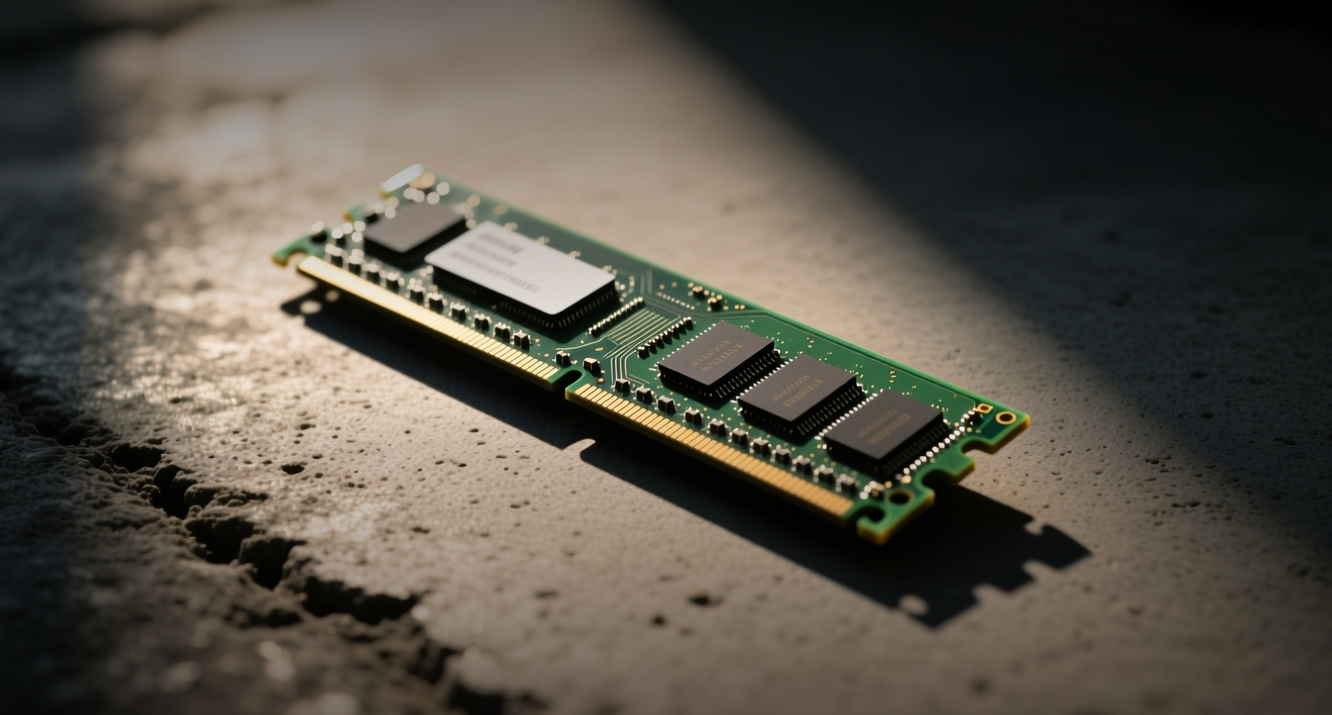
Memory stocks are falling despite strong earnings as investors rotate from semiconductors toward hyperscale cloud operators.
The Roundhill Memory ETF tumbled 6.5% in premarket trading to $60.65, extending its decline to more than 25% from the 2026 peak, as Samsung's record earnings failed to halt a selloff that Morgan Stanley's Mike Wilson called a sector rotation.
"Memory stocks are trading as a crowded, event-driven cycle top," Wilson, the firm's chief investment officer, said. "The rotation to hyperscalers is underway."
Samsung reported operating profit of 89.4 trillion won ($58.4 billion) for the quarter, up from 57.2 trillion won a year earlier, on revenue of 171 trillion won. The strong print did not prevent the selloff. In Japan, Kioxia dropped more than 10%, while South Korea's SK Hynix fell 6%. Micron Technology, which hit a record $1,246 after its own earnings in June, slid to $935 in US premarket trading.
The DRAM ETF's top three holdings — Samsung, SK Hynix, and Micron — account for 75.6% of the fund, making it vulnerable to single-name shocks. Wilson's call for a rotation toward hyperscalers suggests AI infrastructure spending is shifting away from memory suppliers toward cloud operators that consume the chips.
Record Earnings, But the Market Isn't Buying
The pattern of strong results triggering selloffs has now repeated across two consecutive memory earnings cycles. Micron shares jumped to an all-time high after its June report, then gave back the entire gain. Samsung's print followed the same script: revenue more than doubled from the same period last year, yet the stock fell below 290,000 won in Seoul trading.
Several headwinds compound the rotation risk. Meta Platforms is considering selling its extra data center capacity, a move that could signal over-expansion rather than robust demand growth. Apple has applied to buy memory from Chinese suppliers, which would add supply to a market already facing a price-fixing lawsuit from US plaintiffs. Any of these developments, if confirmed, could pressure memory pricing in the second half of the year.
Hyperscalers as the Rotation Target
Wilson's thesis positions hyperscale cloud operators — Amazon's AWS, Microsoft's Azure, and Google Cloud — as the primary beneficiaries of capital rotating out of memory stocks. These companies are spending record amounts on AI infrastructure, but the spending is increasingly directed at custom silicon and networking rather than off-the-shelf memory components.
For investors, the question is whether memory demand re-accelerates fast enough to reverse the rotation. Samsung and SK Hynix are both ramping production of HBM3E (high-bandwidth memory, the specialized chips used in AI accelerators), and data center deployments continue to grow. But with the DRAM ETF down a quarter from its high and a top Wall Street strategist calling for further downside, the near-term momentum favors the hyperscalers.
This article is for informational purposes only and does not constitute investment advice.
