
Key Takeaways: The Dow Jones Industrial Average retreated from a fresh intraday record Tuesday as a renewed selloff in AI-linked semiconductor stocks dragged on the broader market.
Key Takeaways: The Dow Jones Industrial Average retreated from a fresh intraday record Tuesday as a renewed selloff in AI-linked semiconductor stocks dragged on the broader market.
The Dow Jones Industrial Average retreated from a fresh intraday record Tuesday as a renewed selloff in AI-linked semiconductor stocks dragged on the broader market.
The Dow Jones Industrial Average fell 131 points, or 0.3%, to 52,769 Tuesday after reaching a fresh intraday record, as a selloff in AI-linked semiconductor stocks outweighed gains in defensive sectors. Rising oil prices added to investor caution, with Brent crude falling below $72 a barrel after earlier gains tied to heightened Iran tensions.
"The rotation out of technology into value is accelerating as investors reassess whether AI valuations can justify their current multiples," said Matthew Miskin, co-chief investment strategist at Manulife John Hancock Investments. "Last week's jobs report shifted the narrative from rate-hike fears to economic softening, and that changes which sectors benefit."
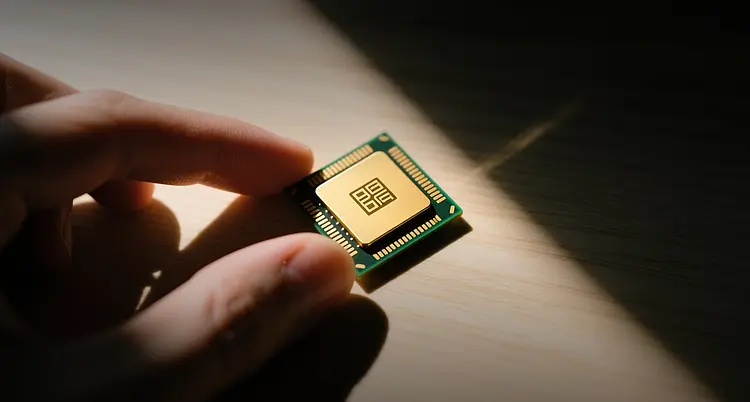
The selloff in semiconductor stocks extended recent profit-taking after extraordinary gains throughout 2026, with names such as Micron and Nvidia leading the decline. Defensive sectors including healthcare, consumer staples, and utilities posted gains, while financials and industrials held up better than the broader market. The S&P 500 was little changed, while the Nasdaq Composite fell 0.8%, reflecting the tech-heavy index's exposure to the AI trade.
The retreat from record levels comes ahead of the Federal Reserve's June meeting minutes, due Wednesday, which will offer the first detailed look at policy discussions under new Chair Kevin Warsh. The central bank held rates steady at 3.5% to 3.75% at that meeting, and traders are now pricing a 78.1% chance of no move in July, according to CME FedWatch data. A weaker-than-expected June jobs report — just 57,000 jobs added versus 130,000 expected — has reduced pressure on the Fed to tighten further.
The Dow's decline masked a broader divergence beneath the surface. While the price-weighted index was dragged lower by weakness in Apple and other large-cap components exposed to the AI supply chain, the equal-weight S&P 500 posted a modest gain, traders said. The 10-year Treasury yield held at 4.48%, while gold rose to around $4,185 an ounce, reflecting demand for havens.
Oil Adds to Headwinds
Rising oil prices added a layer of uncertainty to the session. Brent crude futures fell about 0.4% to $71.82 a barrel, while WTI crude slipped 0.3% to $68.50, as markets monitored developments between the US and Iran. The Strait of Hormuz saw reduced ship traffic over the weekend after Iran's Islamic Revolutionary Guard Corps issued warnings, according to reports from The Guardian, raising the prospect of supply disruptions.
What's Next
Investors now turn to the Fed minutes on Wednesday for clues on the central bank's rate path. The Q2 earnings season kicks off later this week with PepsiCo reporting Thursday and Delta Air Lines on Friday, followed by major banks starting July 14. The combination of Fed policy signals and corporate earnings will determine whether the rotation out of AI leaders into value sectors has staying power.
This article is for informational purposes only and does not constitute investment advice.
