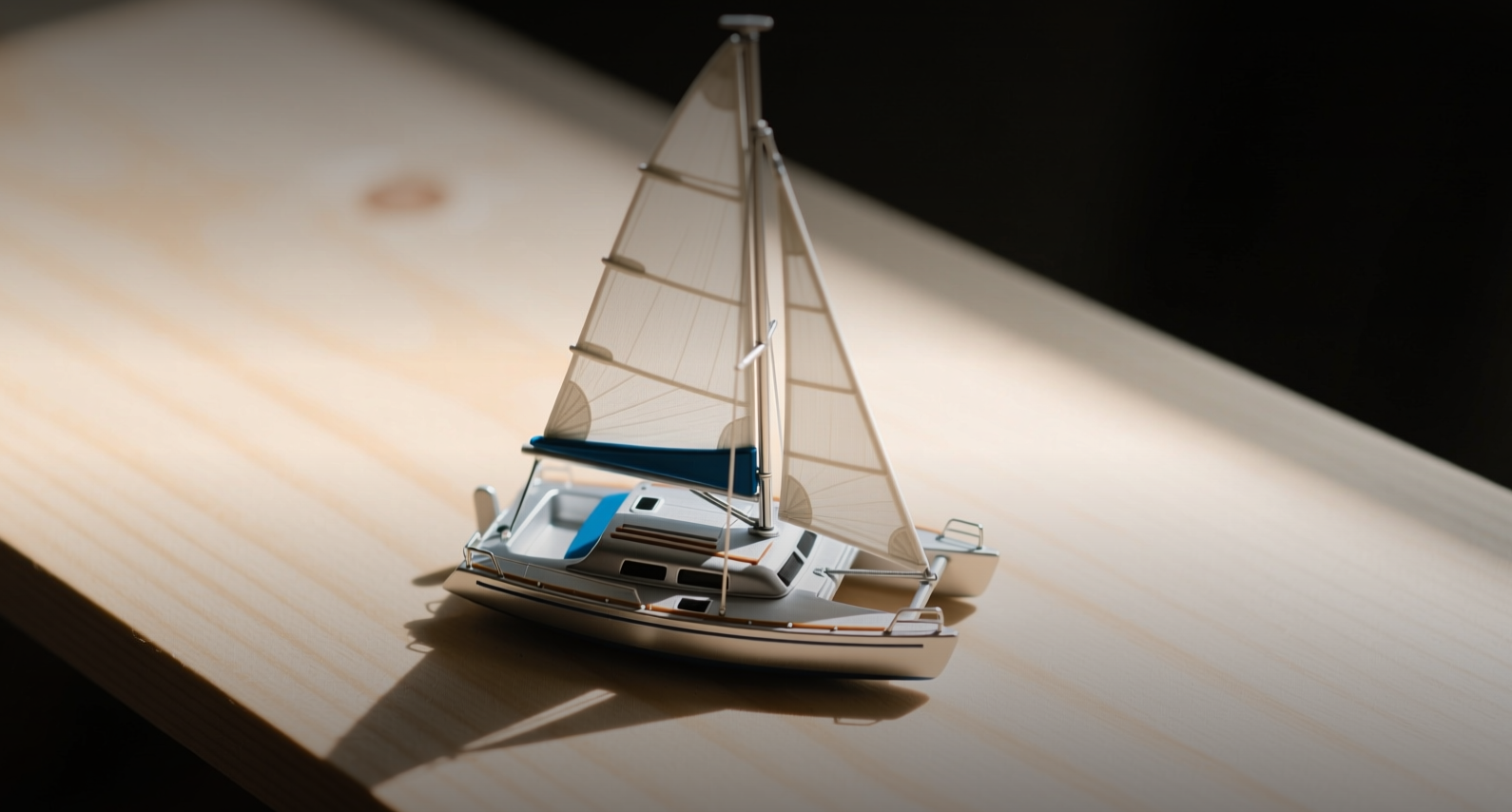
DHL Global Forwarding will begin shipping goods across the Atlantic on 220-foot wind-powered trimarans starting in 2027, cutting emissions by as much as 99% versus air freight.
DHL Global Forwarding plans to carry freight across the Atlantic on wind-powered trimarans starting in 2027, a move that could cut shipping emissions by up to 99% compared with air transport and reshape how logistics companies approach decarbonization.
"As a leading player in the global logistics industry, DHL is committed to supporting the decarbonization of transport and expanding the range of solutions available to its customers," Laurent Terreyre, chief executive of DHL Global Forwarding France, said.
The 220-foot aluminum vessels, built by French startup Vela, can carry 415 metric tons of goods — about five times the cargo capacity of a cargo plane but roughly one-fifth the length of a standard container ship. The trimarans travel at about 14 knots, or 16 miles per hour, following wind patterns rather than fixed routes, making the Atlantic crossing in roughly two weeks compared with nine days for conventional ships and eight hours for air freight.
The partnership comes as oil prices have surged amid the Iran war, making wind propulsion more cost-competitive for logistics operators. Vela expects to reduce greenhouse gas emissions by up to 99% versus air freight and up to 90% versus conventional sea freight, depending on the route — a differential that could become a pricing advantage if carbon taxes or emissions regulations tighten further.
How the Vela Trimaran Works
The vessels are built from lightweight aluminum to maximize speed and efficiency, with a target cruising speed of 14 knots. Vela co-founder Michaël Fernandez-Ferri described the design as "a gigantic sailboat" that relies entirely on wind for propulsion. The company was co-founded by François Gabart, a professional yacht racer who set a world record in 2017 for sailing solo around the globe in under 43 days.
Unlike conventional cargo ships that follow fixed routes, the trimarans will chart courses based on prevailing wind conditions, adding flexibility but also extending crossing times. The first commercial shipments on the trans-Atlantic route are scheduled for 2027, with DHL cargo sharing space alongside goods from other companies, including Japanese pharmaceutical firm Takeda Pharmaceuticals.
Vela aims to have five trimarans in operation by 2030, enabling weekly crossings. The vessels will carry a range of goods from pharmaceuticals to wine and cosmetics — high-value, lower-volume cargo where speed-to-emissions trade-offs matter most.
What This Means for Shipping Decarbonization
The global shipping industry accounts for about 3% of worldwide carbon dioxide emissions, according to the International Maritime Organization, and has faced growing pressure from regulators and customers to cut its carbon footprint. Wind-assisted propulsion remains a niche solution — most efforts have focused on retrofitting existing ships with rotor sails or kites rather than building purpose-built wind-powered vessels from scratch.
DHL's commitment gives Vela a marquee customer that could help scale the technology. DHL parent Deutsche Post AG trades on the Frankfurt Stock Exchange and has set a target of net-zero emissions by 2050. The company's freight forwarding arm handles millions of shipments annually across air, ocean, and ground transport, giving it broad scope to integrate low-carbon options into its network.
For investors, the question is whether wind-powered shipping can move beyond niche, high-value cargo to compete with conventional freight on cost and scale. Vela's trimarans carry 415 metric tons per trip — a fraction of the 20,000-plus metric tons a typical container ship hauls. That capacity gap means wind-powered vessels are unlikely to replace bulk shipping but could capture a premium segment of the logistics market where customers pay extra for low-carbon transport.
This article is for informational purposes only and does not constitute investment advice.