A $1.1 billion high-yield bond backing a Virginia data center leased entirely to CoreWeave priced at a 9.25% yield, roughly 270 basis points above the average for similarly rated debt, setting a new reference price for AI infrastructure credit.
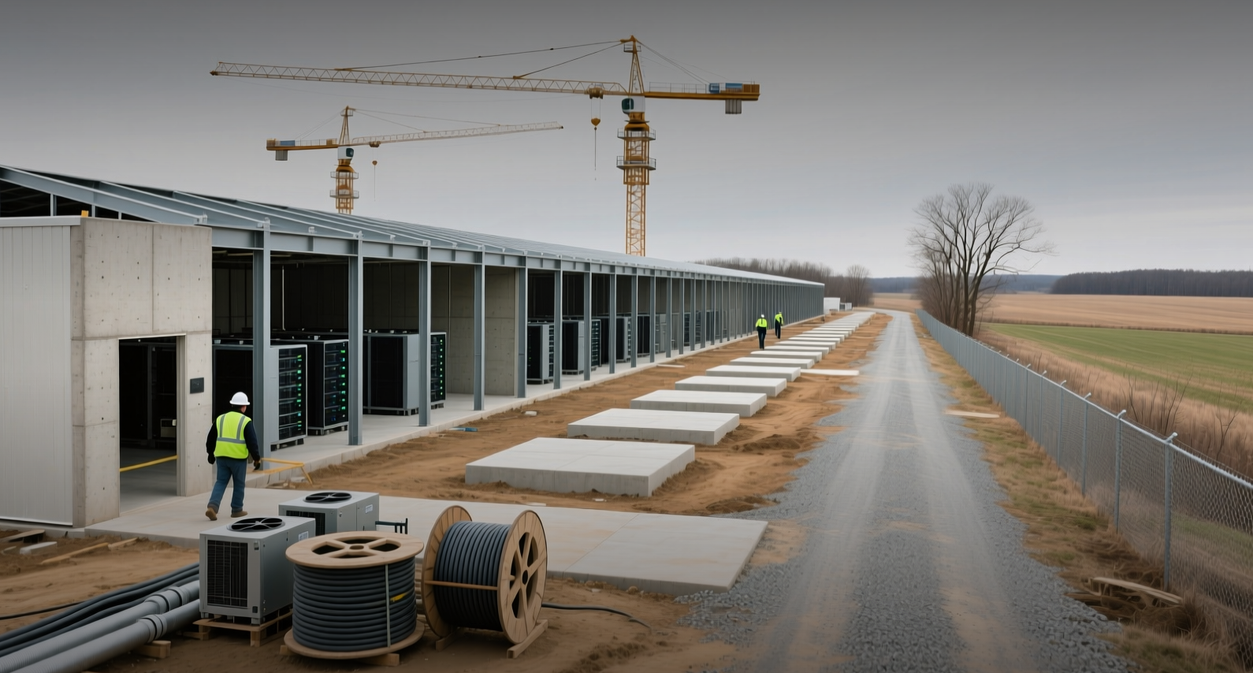
The five-year notes, sold at 98.5 cents on the dollar by an affiliate of Blue Owl Capital, were underwritten by Goldman Sachs, Citigroup and Deutsche Bank, according to people familiar with the transaction. Proceeds fund additional compute capacity at the Digital Drive campus near Richmond, Virginia, where all 76 megawatts of IT capacity is pre-leased to CoreWeave under a single 15-year contract worth $2.94 billion, with operations due to begin between 2027 and 2028.
"The spread is the market telling you what a single-tenant, speculative-grade cash flow stream is worth," said Marta Oyelaran, head of structured credit research at Aegon Asset Management, said. "You are underwriting one tenant's balance sheet for 15 years, not a diversified portfolio of leases."
S&P Global Ratings assigned the debt BB-, three notches below investment grade, and named "exposure to a single speculative-grade tenant" as a key risk. The deal landed as AI infrastructure borrowers flood the high-yield market and investors demand wider compensation for projects without investment-grade tenants.
Three layers of concentration in one asset
The 270 basis point premium is not a judgment on the Richmond facility's engineering. It prices three overlapping concentrations: one tenant, one site, one source of cash flow. If CoreWeave fails to perform, the landlord has no second tenant to absorb the shortfall, and AI-optimized halls built for dense GPU racks are not easily re-leased to conventional enterprise customers.
That distinguishes this paper from the data center debt that has traded at tighter spreads. Digital Realty Trust and Equinix, both investment grade, lease to hundreds of tenants across dozens of campuses, and their bonds price off that diversification. The Richmond deal prices off a single counterparty whose own credit is speculative grade.
The sponsors — Blue Owl Capital affiliates, Cedarwood Investment Group LP and PowerHouse Data Centers LLC — bring asset management credibility, but they do not change the underlying dependency. Blue Owl has become one of the largest financiers of AI compute buildouts, and its willingness to underwrite this structure at this coupon is itself a data point about where private credit sees the risk-reward line.
CoreWeave's growth does not settle the credit question
CoreWeave's operating momentum is real. Second-quarter revenue more than doubled from a year earlier to $2.575 billion, and the company reported a backlog of $104 billion. A 15-year, $2.94 billion lease is a modest slice of that pipeline, which argues the tenant can service this obligation if the backlog converts.
The doubt sits on the other side of the ledger. Bond investors are underwriting debt service capacity, not revenue growth, and a company expanding capital spending faster than cash generation can post impressive top-line numbers while still straining to cover fixed charges. CoreWeave's speculative-grade rating means it cannot offer the credit backstop that Amazon, Microsoft or Google provide when they sign data center leases — a gap that shows up directly in the coupon.
For the developer, the arithmetic is unforgiving. At 9.25%, debt service consumes a materially larger share of project revenue than it would for a facility leased to an investment-grade hyperscaler, compressing margins and dragging on internal rate of return. Every 100 basis points of coupon on a deal this size is roughly $11 million a year in additional interest expense over the five-year term.
What the next AI data center deal will cost
The Richmond pricing is likely to become the anchor that bankers and sponsors cite when they market the next single-tenant AI facility. If subsequent deals price inside 9.25%, it will signal that investors see the CoreWeave structure as an outlier. If they price wider, the economics of a whole class of projects come into question.
The transmission runs through the physical buildout. Data center capacity is financed on the assumption that lease revenue covers debt service with room to spare. Push coupons toward double digits and marginal projects — the ones with thinner pre-leasing, smaller sponsors or tenants with shorter operating histories — stop clearing the return threshold. That slows construction timelines for the GPU capacity that AI model developers are counting on.
Watch the next two or three AI infrastructure offerings for direction. A widening pattern would pressure sponsors to contribute more equity, accept lower returns, or delay projects, and it would raise the cost of capital for the entire compute supply chain, including the equipment vendors and power providers tied to these campuses.
This article is for informational purposes only and does not constitute investment advice.