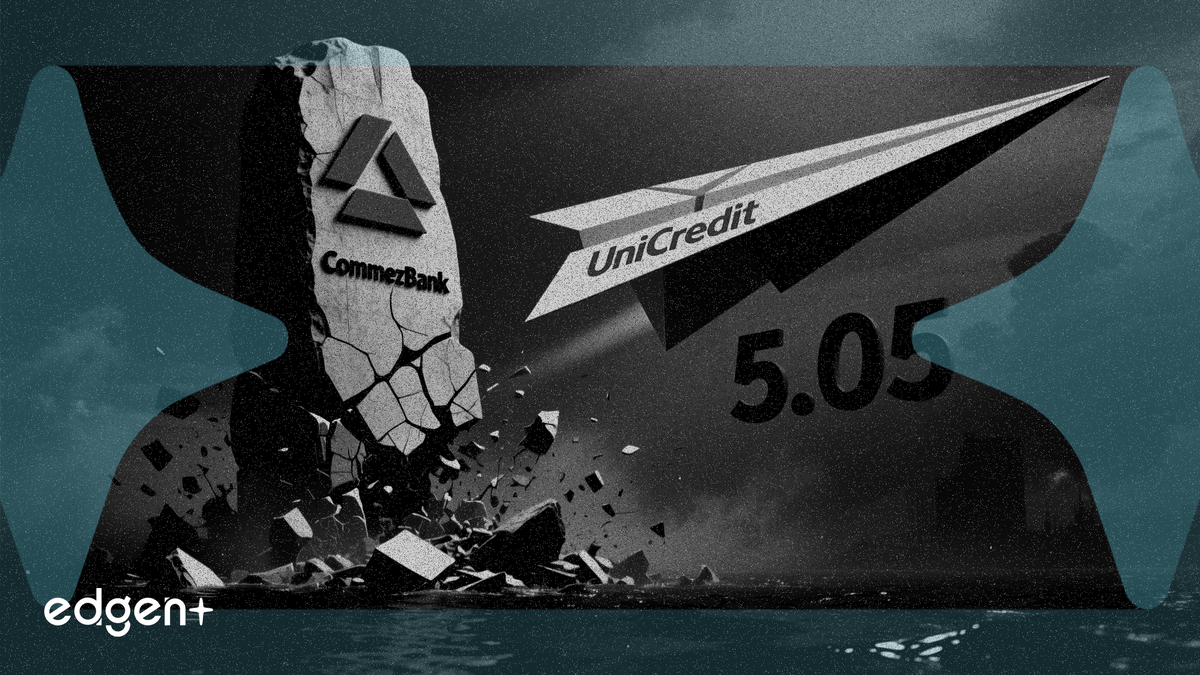
Commerzbank AG shares fell below the price implied by UniCredit SpA's hostile takeover offer for the first time since the bid was launched, as Germany's government formally rejected the deal.
Commerzbank AG shares slipped below the price implied by UniCredit SpA's hostile buyout offer on Tuesday, the first time the stock has traded at that level since the Italian lender launched its unsolicited bid on May 5, as Germany's government formally rejected the deal.
"Accepting the offer was already not an option from a financial point of view, as it does not include an appropriate premium on the current share price of Commerzbank's shares," Germany's finance agency said in a statement Tuesday.
The government, which holds a 12% stake in Commerzbank, cited concerns about UniCredit's "aggressive approach" and said the offer failed to reflect an adequate premium. Commerzbank had traded consistently above the bid-implied level since the unsolicited offer was announced, with the gap narrowing in recent weeks as regulatory and political hurdles mounted.
The rejection marks a significant setback for UniCredit's push to create a pan-European banking powerhouse and raises questions about the feasibility of cross-border bank mergers in the region. Commerzbank plays a critical role in financing Germany's Mittelstand of medium-sized companies and is an integral player in Frankfurt, the nation's financial hub — factors the finance agency said "must continue to be ensured in the future."
The German government's opposition has been a persistent obstacle since UniCredit first built a stake in Commerzbank last year. The finance agency said Tuesday it supports Commerzbank's independence, effectively closing the door on what would have been one of Europe's largest banking mergers.
UniCredit crossed the mandatory 30% takeover threshold under German law when it launched its unsolicited bid in March, triggering a regulatory review. The Italian bank has argued that a combination would create a stronger competitor capable of challenging larger European lenders such as Deutsche Bank AG and BNP Paribas SA, but German officials have pushed back, citing national interests and the importance of maintaining a domestic banking champion.
The deal's collapse would leave UniCredit with a significant stake in a bank it cannot control, potentially forcing the Italian lender to unwind its position or accept a minority role. For Commerzbank, the failed bid removes a source of uncertainty but leaves the lender to navigate an increasingly competitive European banking landscape on its own. The last time a major cross-border European banking merger collapsed — the 2019 attempt by Deutsche Bank and Commerzbank to combine — both lenders underperformed the Stoxx 600 Banks Index in the following 12 months.
This article is for informational purposes only and does not constitute investment advice.