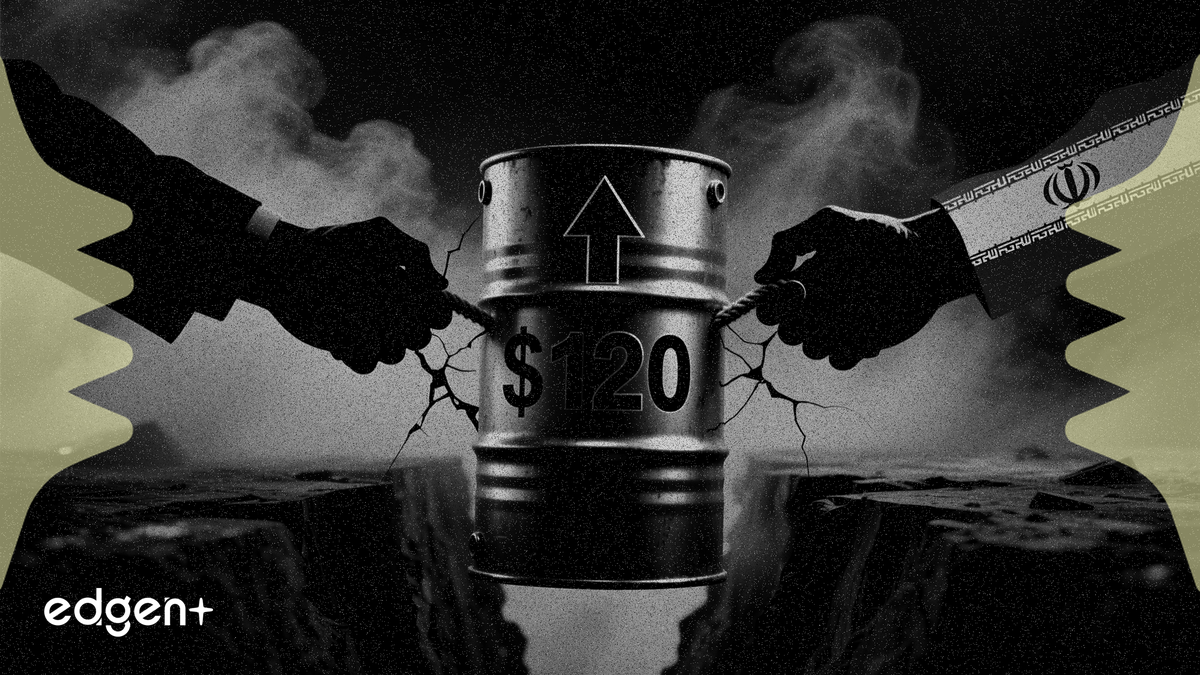
A deadlock in US-Iran peace talks could send Brent crude past $120 per barrel in the next three months, Citigroup said, even as a fragile ceasefire is repeatedly tested by military clashes in the Strait of Hormuz.
Citigroup is maintaining its three-month price forecast for Brent crude at $120 a barrel, warning that a failure to reach a diplomatic agreement between the US and Iran creates significant short-term upside risk for oil prices.
"The difficulty in reaching a US-Iran agreement still increases short-term upside risks to oil prices," Citi said in a note, despite its base case that turmoil in the Strait of Hormuz will ease by the end of May.
The warning comes as recent diplomatic efforts falter, with President Trump calling Iran's response to a US peace proposal "totally unacceptable." Meanwhile, US Central Command said it has turned around 58 vessels to enforce its blockade of Iranian ports, and Iran's Revolutionary Guards have threatened US sites in response to American forces firing on two Iranian oil tankers.
The geopolitical risk premium is rising as the market weighs the potential for a wider conflict against signs of demand weakness and inventory releases. Citi projects oil will eventually fall, forecasting an average of $110 per barrel in the second quarter of 2026, dropping to $95 in the third quarter and $80 by the fourth quarter.
Ceasefire Under Strain
The analysis from Citi comes amid a highly volatile situation in the Middle East. A ceasefire that took effect in April has been repeatedly violated by both sides. Recent incidents include drone attacks on ships off the coast of Qatar and the UAE, which blamed Iran for the attacks.
U.S. forces have engaged directly with Iranian vessels, firing on two tankers to prevent them from docking at an Iranian port in what it says is a violation of a U.S. blockade. In response, Iran's Revolutionary Guards threatened to "target U.S. sites in the Middle East." An adviser to Iran's supreme leader went further, comparing control over the strategic Strait of Hormuz to having an "atomic bomb" and vowing not to relinquish it.
Uranium Stockpile a Key Hurdle
A major sticking point in any potential deal is the fate of Iran's highly enriched uranium stockpile. The International Atomic Energy Agency says Iran possesses more than 970 pounds of uranium enriched up to 60% purity, a short technical step from weapons-grade levels. U.S. Energy Secretary Chris Wright has called ending Iran's nuclear program a "critical thing," stating that the world "can't live with a nuclear-armed Iran."
While Citi's base case points to an easing of tensions, the bank acknowledges several mitigating factors that could temper a price spike, including declining global inventories, releases from strategic petroleum reserves, reduced imports by China, and signs of weak demand. However, the path of negotiations remains the most immediate driver for the market.
This article is for informational purposes only and does not constitute investment advice.