
China's foreign exchange regulator allocated $5.3 billion in new overseas investment quotas, the biggest single expansion of the QDII program in five years.
China's foreign exchange regulator allocated $5.3 billion in new overseas investment quotas, the biggest single expansion of the QDII program in five years.
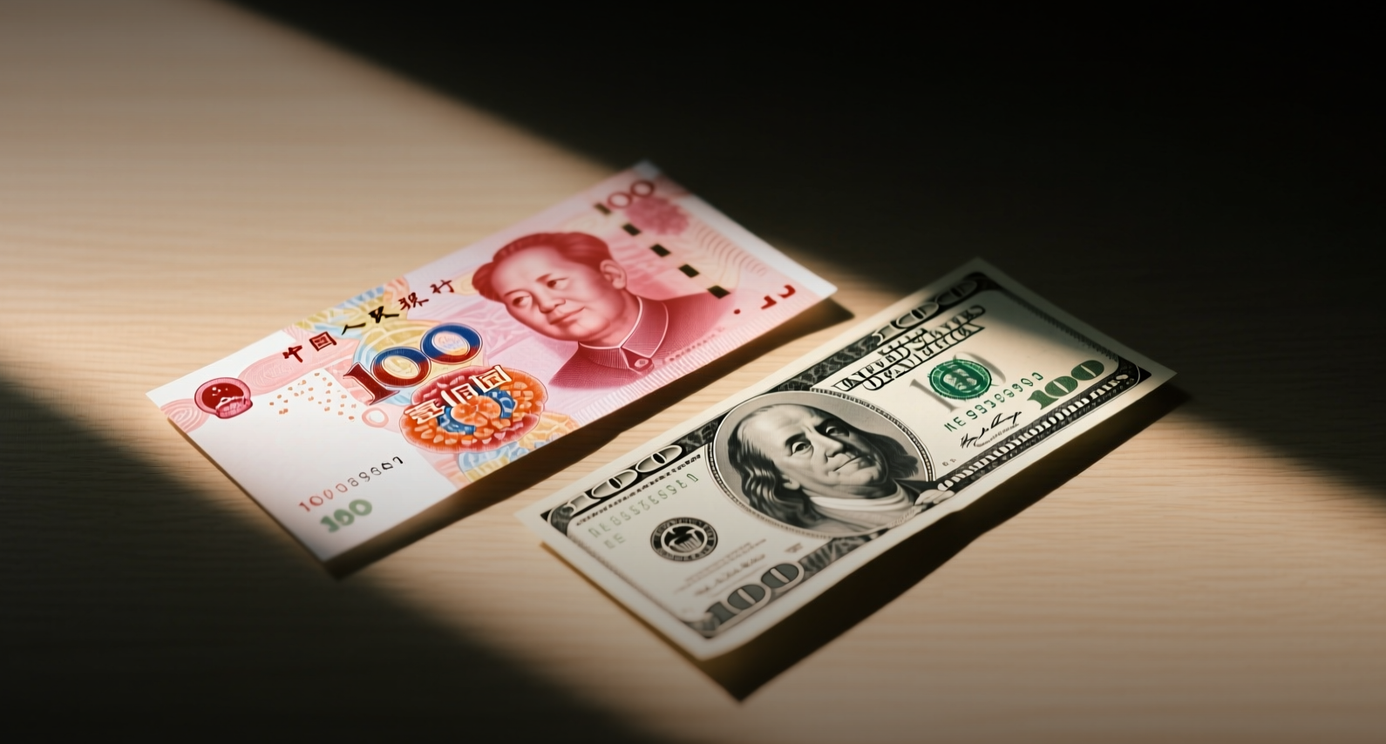
China's foreign exchange regulator allocated $5.3 billion in new overseas investment quotas, the biggest single expansion of the QDII program in five years.
China's SAFE allocated $5.3 billion in fresh QDII quotas to 78 institutions, the largest single expansion since 2021, as Beijing demonstrates its commitment to financial liberalization while maintaining tight controls on capital leaving through other channels.
"The new quotas better support domestic entities in global asset allocation," Zhu Hexin, vice governor of the People's Bank of China and director of SAFE, said at the 2026 Lujiazui Forum on June 17.
Securities and fund firms received the largest share at $2.99 billion, or about 56% of the total. Insurers picked up $1.32 billion, while banks got $990 million. The allocations push the total outstanding QDII quota to approximately $176 billion, according to SAFE data.
The expansion gives Chinese institutional investors greater capacity to diversify into overseas equities, bonds and money market instruments, potentially channeling billions into global markets while relieving pent-up demand for offshore exposure. The QDII program, established in 2006, remains one of the few legal channels for mainland capital to invest abroad, and Beijing has used it as a calibrated valve — expanding quotas when it wants to demonstrate openness while keeping the yuan stable.
The allocation followed SAFE's late-March announcement of plans for a new round and coincides with a period of relative yuan stability that gives policymakers more room to ease capital outflows. The onshore yuan has traded in a narrow range against the dollar in recent months, reducing the risk that additional QDII quotas would trigger destabilizing depreciation pressure.
The breakdown by institution type reflects Beijing's strategic priorities. Securities firms, which captured more than half the new quota, are best positioned to channel funds into global equity and fixed-income markets. Insurers, with their long-duration liabilities, received a quarter of the allocation, likely targeting overseas bonds and infrastructure assets. Banks rounded out the remainder with $990 million.
The expansion comes as China's broader financial opening proceeds unevenly. While the QDII program has grown steadily — total quotas have risen from roughly $100 billion in 2019 to $176 billion today — other channels for capital account liberalization, such as the Stock Connect and Bond Connect programs, have seen more measured expansion. The contrast highlights Beijing's preference for controlled, institution-mediated outflows over retail-driven capital flight.
For global investors, the QDII expansion represents a potential source of incremental demand for offshore assets. Chinese institutions managing the new quotas will likely allocate across US Treasuries, developed-market equities and Hong Kong-listed stocks, providing a modest tailwind for these markets. The impact will be gradual: QDII quotas represent authorized capacity, not actual deployment, and institutions typically draw down their allocations over several quarters.
This article is for informational purposes only and does not constitute investment advice.
