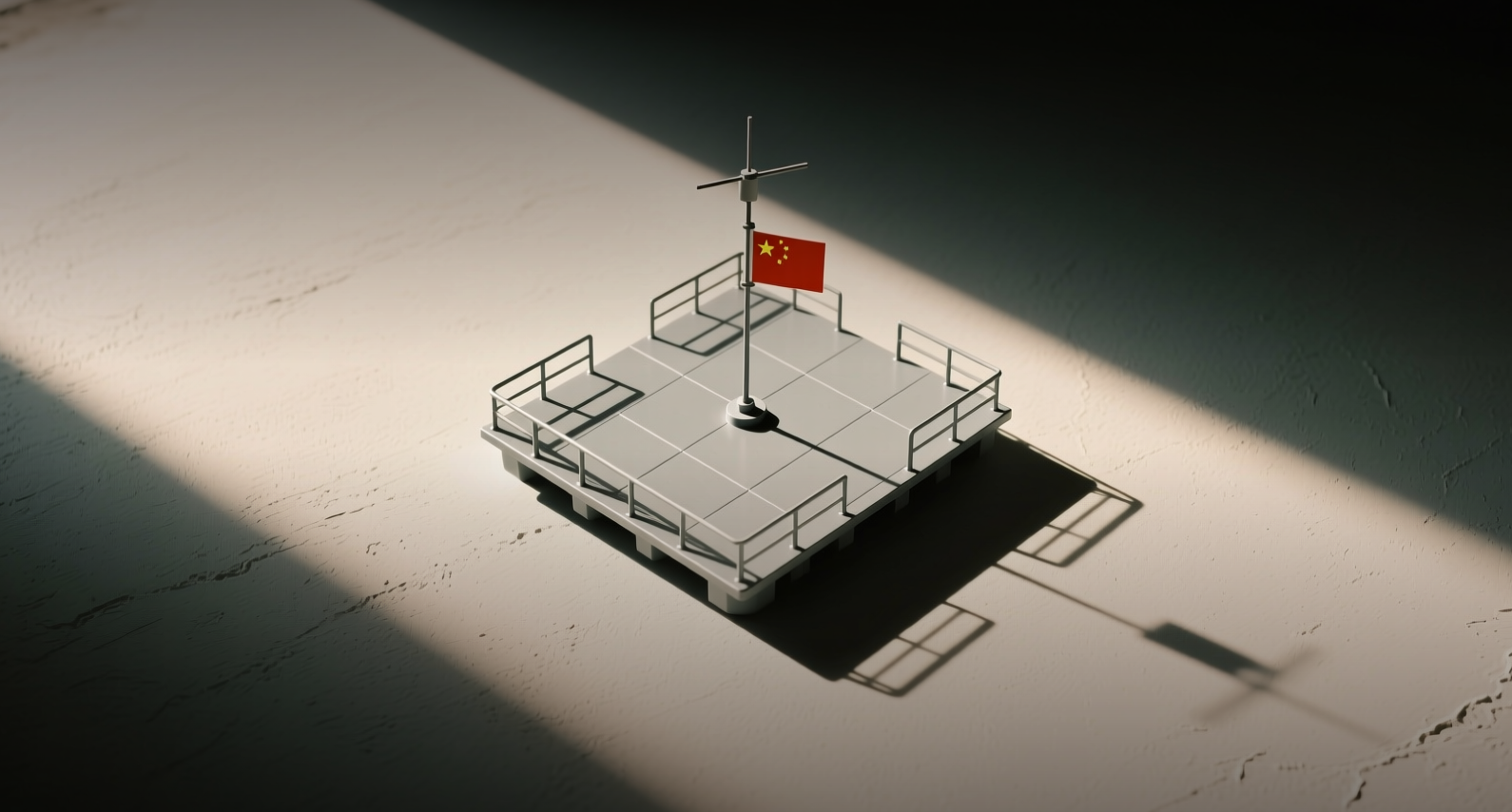
China's deployment of a floating research platform at Scarborough Shoal has deepened Philippine concerns that Beijing is preparing to permanently occupy the disputed atoll, 145 miles from Luzon.
China removed a floating platform from Scarborough Shoal on June 23 after a three-week deployment that Philippine officials said signaled a potential precursor to permanent occupation of the atoll, which Beijing has controlled since 2012.
"The level of concern is significantly higher because of recent Chinese activity around the shoal," Philippine Defense Secretary Gilberto Teodoro Jr. said in an interview with the Financial Times, describing the platform as "worrisome" if it precedes more permanent structures.
The 300-square-foot platform, equipped with an antenna and carrying Chinese nationals, appeared at the shoal in late May, Philippine officials said. Oceanographers at the state-controlled Chinese Academy of Sciences described it as a temporary scientific research facility studying coral reefs. Analysts at the Center for Strategic and International Studies said China more than doubled patrols near the shoal last year, while Beijing declared a nature reserve in the area in September.
The South China Sea carries about a quarter of global seaborne trade, and any disruption to shipping lanes would affect supply chains from Singapore to Shanghai. The escalation comes ahead of a planned meeting between President Trump and Chinese leader Xi Jinping in Washington in September, adding diplomatic sensitivity to an already volatile flashpoint.
A Pattern of Incremental Expansion
China's activity at Scarborough Shoal follows a playbook used elsewhere in the South China Sea. After seizing control of the atoll following a two-month standoff with Manila in 2012, Beijing embarked on an island-building campaign the following year, turning submerged reefs into military bases capable of hosting missiles and aircraft. The last time China deployed a research vessel to survey seabeds in the region, it preceded the construction of artificial islands at Mischief Reef and Subi Reef.
"What China appears to be doing here is salami-slicing its way toward eventual habitation," said Ray Powell, executive director at the SeaLight Foundation, which tracks gray-zone activities in the South China Sea. Harrison Prétat, an expert on Asian maritime issues at CSIS, said the data collected by the research platform could help plan future construction or dredging, even if the stated purpose was conservation.
Philippine officials have also found buoys and additional antennas at the shoal in recent months. In August, a Chinese coast guard and navy ship collided during a pursuit of a Philippine vessel, footage from the Philippines showed.
Alliance Building and Military Modernization
Manila is deepening defense ties with allies in response. Teodoro said the Philippines wants to acquire Tomahawk cruise missiles and the Typhon missile system from the United States, and is discussing the purchase of Abukuma-class destroyers from Japan. The annual Balikatan military exercises with the US included a record number of participating countries this year, including Japan, Australia, New Zealand and Canada.
Canada and the Philippines signed defense cooperation and mutual logistics support agreements on June 11, with Defense Minister David McGuinty saying the relationship is "rooted in a shared commitment to democracy, the rule of law and a free, open and stable Indo-Pacific." The Philippines has also begun integrating artificial intelligence into its defense systems to improve surveillance and predict Chinese military movements, Teodoro said.
China has rejected the concerns. The Chinese embassy in Washington said Beijing has "indisputable sovereignty" over Scarborough Shoal — known in China as Huangyan Dao — and that its activities fall within its sovereign rights. Beijing also rejected the 2016 UNCLOS tribunal ruling that invalidated the basis for its historic maritime claims, arguing the tribunal exceeded its jurisdiction.
The 2016 ruling marked a decade since its issuance this year. The last time China faced a similar diplomatic confrontation over the ruling, it accelerated island construction across the Spratly chain within six months. If history repeats, the removal of the platform may not signal the end of Beijing's ambitions at Scarborough Shoal — only a tactical pause.
This article is for informational purposes only and does not constitute investment advice.