
Cerebras Systems has built a wafer-scale chip that rivals Nvidia's GPUs on speed, but a $20 billion OpenAI deal and margin pressure will determine whether the architecture translates into durable revenue.
Cerebras Systems has built a wafer-scale chip that rivals Nvidia's GPUs on speed, but a $20 billion OpenAI deal and margin pressure will determine whether the architecture translates into durable revenue.
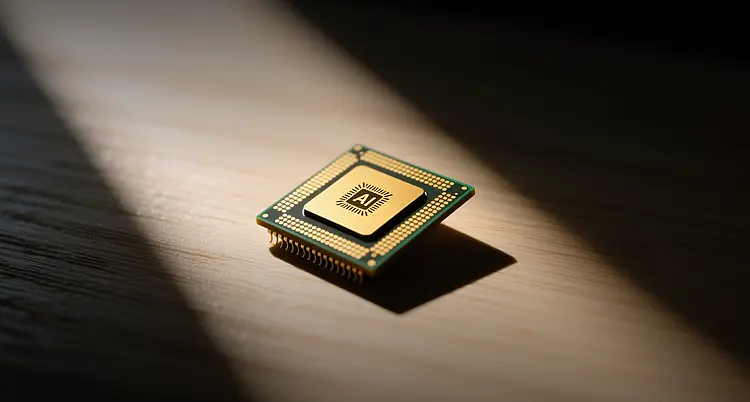
Cerebras Systems has built a wafer-scale chip that rivals Nvidia's GPUs on speed, but a $20 billion OpenAI deal and margin pressure will determine whether the architecture translates into durable revenue.
Cerebras Systems Inc.'s wafer-scale architecture challenges Nvidia Corp.'s GPU dominance with faster inference speeds, yet the stock has fallen 19.2% in the past month as investors weigh delivery obligations tied to a $20 billion OpenAI partnership.
"The technology is real, but the business model is unproven at scale," said a semiconductor analyst who tracks AI infrastructure companies. "Cerebras needs to show it can deliver on multi-year contracts without destroying its margins."
The Wafer-Scale Engine-3 packs about 4 trillion transistors and 900,000 AI-optimized cores on a single silicon wafer, bypassing the interconnect bottlenecks that slow multi-chip GPU systems. Cerebras reported first-quarter core revenue of $191.3 million, up 92% from a year earlier, with cloud and services revenue jumping 167% to $79.8 million. The company's partnership with Amazon.com Inc.'s AWS combines Amazon's Trainium3 for prefill processing with Cerebras' CS-3 systems for decoding, while the OpenAI agreement covers 750 megawatts of inference compute valued at more than $20 billion over several years.
The consensus estimate calls for 2026 revenue of $861.3 million, climbing to $2.77 billion in 2027, with a projected swing from a loss of 89 cents per share to earnings of 96 cents. Whether Cerebras hits those numbers depends on three tests: meeting OpenAI's deployment deadlines, managing near-term margin compression from infrastructure buildout, and securing enough data-center capacity to serve growing demand.
The OpenAI Test: Speed vs. Delivery Risk
Cerebras' technology advantage centers on inference speed — the ability to run trained AI models and generate responses faster than GPU-based systems. The WSE-3 delivers 21 petabytes per second of memory bandwidth and 214 petabits per second of fabric bandwidth, specifications that support the company's claim of lower latency for large-model workloads. The OpenAI agreement, the largest validation of Cerebras' approach, requires the company to deploy systems across multiple data centers with strict milestones. If Cerebras misses those deadlines, OpenAI can terminate portions of the contract, according to the company's disclosures.
The concentration risk is significant. Historically, G42 and MBZUAI accounted for most of Cerebras' annual revenue, and OpenAI is expected to represent a substantial portion of future revenue. That dependence leaves Cerebras exposed to any shift in OpenAI's strategy or satisfaction with the technology.
The Margin and Capacity Squeeze
Cerebras expects near-term gross margin compression as it rents systems and builds the infrastructure needed to serve cloud demand. The company described data-center capacity as difficult to secure even as it expands across the U.S., Canada, Europe and other regions. This creates a tension: Cerebras must invest heavily in infrastructure to fulfill its OpenAI and AWS commitments, but those investments will pressure profitability before the revenue from those deals materializes.
Nvidia, by contrast, operates at scale with gross margins above 70% and a supply chain that spans TSMC CoWoS packaging, HBM memory from SK Hynix and Samsung, and a vast installed base of data-center customers. Advanced Micro Devices Inc. competes with its MI300 and MI350 accelerator families, which are already deployed in hyperscale environments. Cerebras' wafer-scale approach requires a fundamentally different manufacturing and deployment model, limiting its ability to leverage the same supply chain efficiencies.
Investment Implications
Cerebras shares trade on the narrative of a structural shift in AI computing, but the stock's 19.2% decline over the past month — compared with Nvidia's 3.8% drop and AMD's 7.4% gain — suggests the market is already pricing in execution risk. The consensus estimate for a return to profitability by 2027 implies confidence in the revenue trajectory, but the path depends on Cerebras clearing each of the three tests: delivery, margins and capacity. If the company meets its OpenAI milestones and demonstrates improving unit economics, the stock could re-rate higher. If it stumbles on any one of them, the wafer-scale thesis loses its strongest proof point.
This article is for informational purposes only and does not constitute investment advice.