

CATL's first commercial sodium-ion battery deliveries mark a turning point for a chemistry that has long promised cheaper energy storage but struggled to reach production scale.
CATL's first commercial sodium-ion battery deliveries mark a turning point for a chemistry that has long promised cheaper energy storage but struggled to reach production scale.
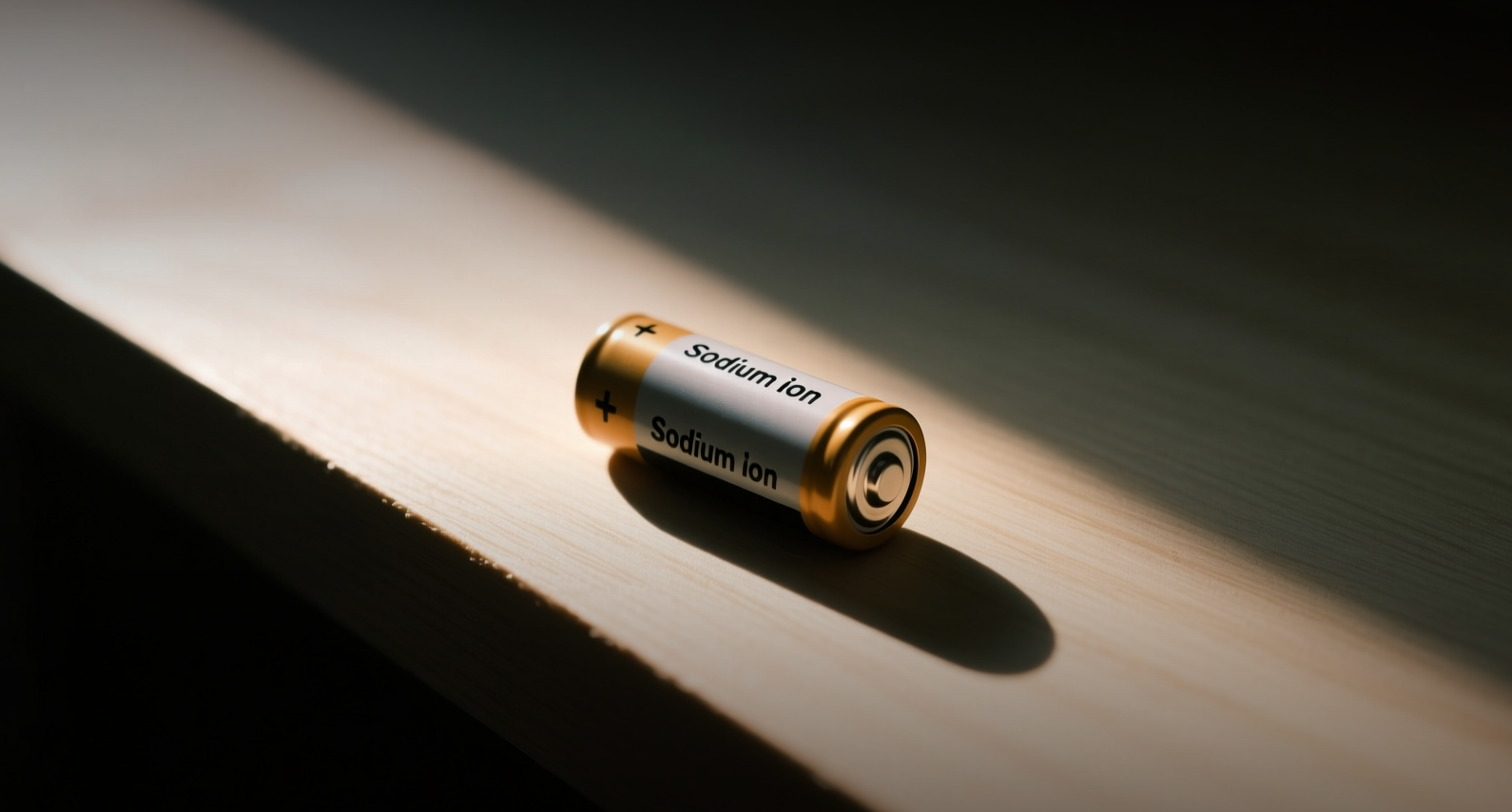
Contemporary Amperex Technology Co. Ltd. will begin delivering its first sodium-ion battery solutions to mainland Chinese customers in September, with costs 10-20 percent below the industry average, the company's chief technology officer said.
"Through technological enhancements to material structure and manufacturing consistency, we have considerably improved the yield rate," Xu Jinmei, chief technology officer of CATL's energy storage business and president of Europe, said in a statement.
The world's largest battery maker expects GWh-level shipments by year-end, with global market deliveries scheduled to start in June 2027. CATL's mass production lines are fully operational, providing a stable manufacturing foundation for large-scale commercial deployment, Xu said. The company has also secured a three-year, 60 GWh sodium-ion supply agreement with energy storage firm HyperStrong, signaling early scale-up beyond pilot deployments.
The commercial launch positions CATL to capture a nascent market that Benchmark Mineral Intelligence estimates at roughly 1 percent of China's battery market today, projected to reach 3.4 percent by 2030. Sodium-ion batteries, which use abundant sodium instead of lithium, offer a structural cost advantage — they can use aluminum current collectors on both sides of the cell, while lithium-ion requires more expensive copper on the anode side.
Manufacturing quality matches lithium-ion
Independent validation of sodium-ion manufacturing quality arrived earlier this year. Researchers at Germany's RWTH Aachen University published a teardown of a commercial sodium-ion cell from Chinese manufacturer Hina Battery, finding cell-to-cell resistance varying by just 5.3 percent across 120 cells — a level of uniformity that rivals the best lithium-ion cells on the market. The Hina cell uses a tabless, double-aluminum current collector design that mirrors Tesla's 4680 architecture, the researchers noted.
The study confirmed that sodium-ion has closed the manufacturing gap. "We were positively surprised by how uniform the cells are," Moritz Schutte, a researcher at RWTH Aachen, said.
Where sodium-ion still trails is energy density. CATL's Naxtra sodium-ion cells target around 175 Wh/kg, compared with more than 250 Wh/kg for leading lithium-ion cells. That keeps the chemistry better suited to stationary storage, grid services and shorter-range vehicles than long-range passenger EVs. Hina's commercial cells are rated at roughly 165 Wh/kg.
Cold-weather charging remains another weakness. "For applications that require frequent charging at low ambient temperatures, appropriate thermal management or operating strategies will be important," Schutte said.
Real-world validation from trucking
Chinese heavy truck maker FAW Jiefang recently completed a seven-month, 15,000-kilometer test of a 339 kWh sodium-ion battery pack co-developed with supplier Zhongke Haina. The pack retained more than 90 percent of usable capacity at minus 40 degrees Celsius and achieved a full charge in 20 to 25 minutes, with a cycle life exceeding 8,000 cycles under fast-charging conditions, according to Zhongke Haina.
The results suggest sodium-ion may find its first vehicle applications in commercial fleets, where cold-weather reliability and rapid charging matter more than range.
Competitive landscape heats up
CATL is not alone in pushing sodium-ion toward mass production. BYD has claimed a new long-life sodium-ion battery good for more than 10,000 charging cycles. In the United States, Peak Energy entered a partnership with General Motors in April to manufacture sodium-ion batteries for energy storage systems, with GM's vice president for battery and sustainability, Kurt Kelty, calling sodium-ion "a defining chemistry for grid-scale energy storage systems."
The technology is already on the road. CATL and Changan unveiled the world's first mass-produced sodium-ion EV, the Changan Nevo A06, in February. At SNEC 2026 in Shanghai, sodium-ion was increasingly discussed as a parallel technology pathway rather than a niche alternative, with Hithium showcasing an eight-hour, 6.9 MWh long-duration storage system based on a 1,300 Ah cell.
Investment angle
CATL shares trade on the Hong Kong Stock Exchange under ticker 03750.HK. The sodium-ion commercial launch strengthens CATL's competitive moat against rivals such as BYD and CALB by opening a lower-cost chemistry pathway for stationary storage and entry-level EVs. If sodium-ion closes the energy density gap the way lithium iron phosphate did a decade ago, the cost math could shift billions of dollars in annual battery procurement spending. Benchmark Mineral Intelligence projects sodium-ion will capture 3.4 percent of China's battery market by 2030, up from roughly 1 percent today, representing a multi-billion-dollar addressable market.
This article is for informational purposes only and does not constitute investment advice.
