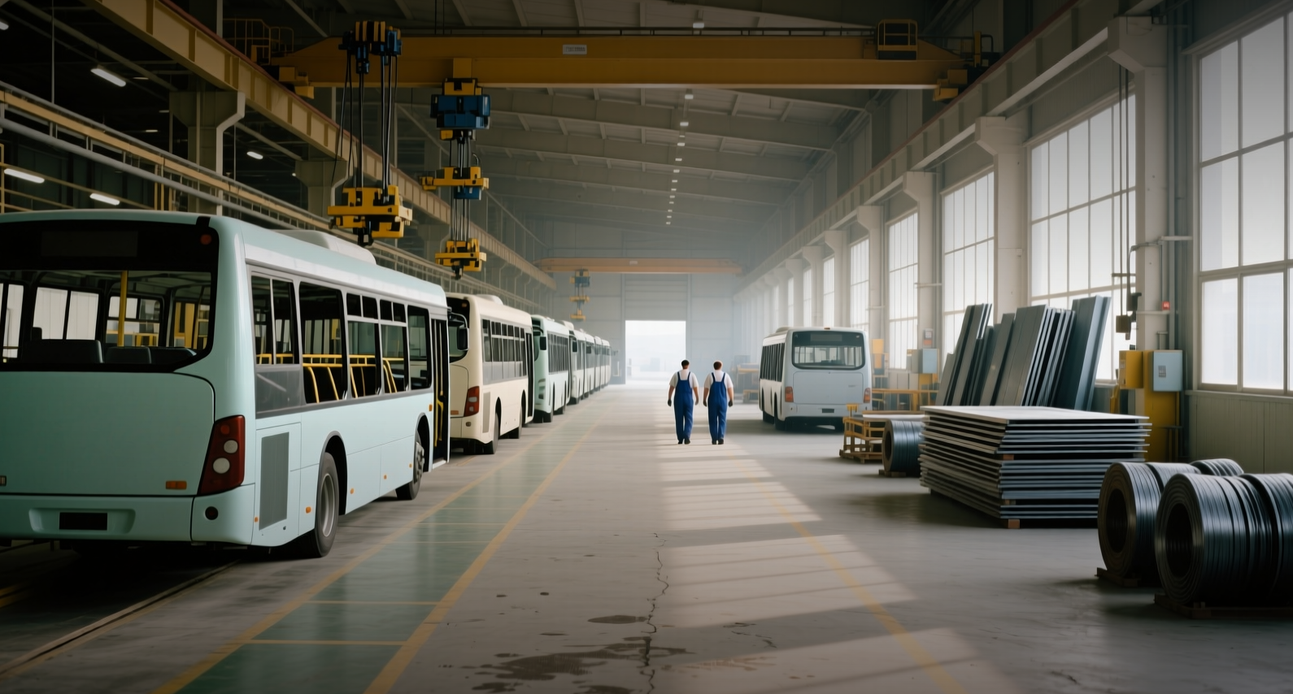
BYD Company (01211.HK) is weighing Italy, Spain and Germany for a European assembly plant after Executive Vice President Stella Li toured a bus factory in Flumeri, near Avellino in southern Italy, according to reports citing people familiar with the matter. The company is in talks with the Italian government, and no site has been agreed.
The visit puts a number on a decision that has been pending for more than a year: BYD needs capacity inside the European Union's customs border to escape duties that Brussels applies to Chinese-built electric vehicles. "Local content is becoming the price of admission," Massimiliano Messina, the Nissan Motor Co. executive who oversees Europe, said, warning that the UK may have to levy its own tariffs on Chinese cars to win equal treatment under EU local-content rules.
BYD shares closed at a loss of 0.400 Hong Kong dollars, or 0.505 percent, on Sept. 16, the day the site report circulated. Short selling in the stock reached $162.87 million, equal to 20.651 percent of turnover, according to exchange data timed 16:25 HKT — a level that shows traders are actively betting on the direction of a company whose European plans remain unconfirmed.
The Italian option carries industrial logic beyond tariffs. Menarini's Flumeri plant already builds buses, giving the site a workforce, a supplier base and a regional government that has been courting Chinese manufacturers. Spain offers lower labor costs and an established automotive cluster, while Germany brings engineering depth and the largest domestic EV market in the bloc. BYD has not disclosed investment figures, capacity targets or a timeline for any of the three.
The stakes extend past one factory. Chinese commercial-vehicle maker Foton Motor used IAA Transportation in Hannover this month to say local European assembly should start by 2028, part of a strategy it calls "in Europe, for Europe." Foton, which delivered its 13 millionth vehicle into the Spanish market, sells through networks in nearly 20 European markets and more than 300 service outlets. The shift from finished-vehicle exports to local manufacturing is becoming the standard playbook for Chinese automakers facing EU trade barriers.
Europe's electrification gap explains why Brussels tolerates the investment. Electrically chargeable trucks made up 4.8 percent of new EU registrations in the first half of 2026, up from 3.6 percent a year earlier, according to the European Automobile Manufacturers' Association. In China, electric heavy freight trucks accounted for about 28 percent of truck sales in 2025, against roughly 1.5 percent in Europe, International Energy Agency data show. McKinsey has said the slow European transition creates openings for entrants with scale, battery and EV technology advantages.
BYD's charging network is the second half of the European case. Citi analysts wrote that the company's ultra-fast charging system could contribute RMB21.6 billion in profit by 2030, treating it as a revenue line rather than a cost center. A plant inside the EU would let BYD pair vehicle sales with charging infrastructure under one local entity, an argument that carries more weight with member-state governments than export volumes alone.
For investors, the site decision is the swing factor. BYD trades in Hong Kong with a short interest ratio above 20 percent, meaning a confirmed European plant would force covering in a stock where bears have built a large position. A decision that stalls — or lands in a country with weaker incentives — leaves the tariff exposure intact and the charging profit forecast dependent on imported vehicles. The next milestone to watch is a signed site agreement or a formal memorandum with a national government; until one appears, the Flumeri visit remains a tour, not a commitment.
This article is for informational purposes only and does not constitute investment advice.