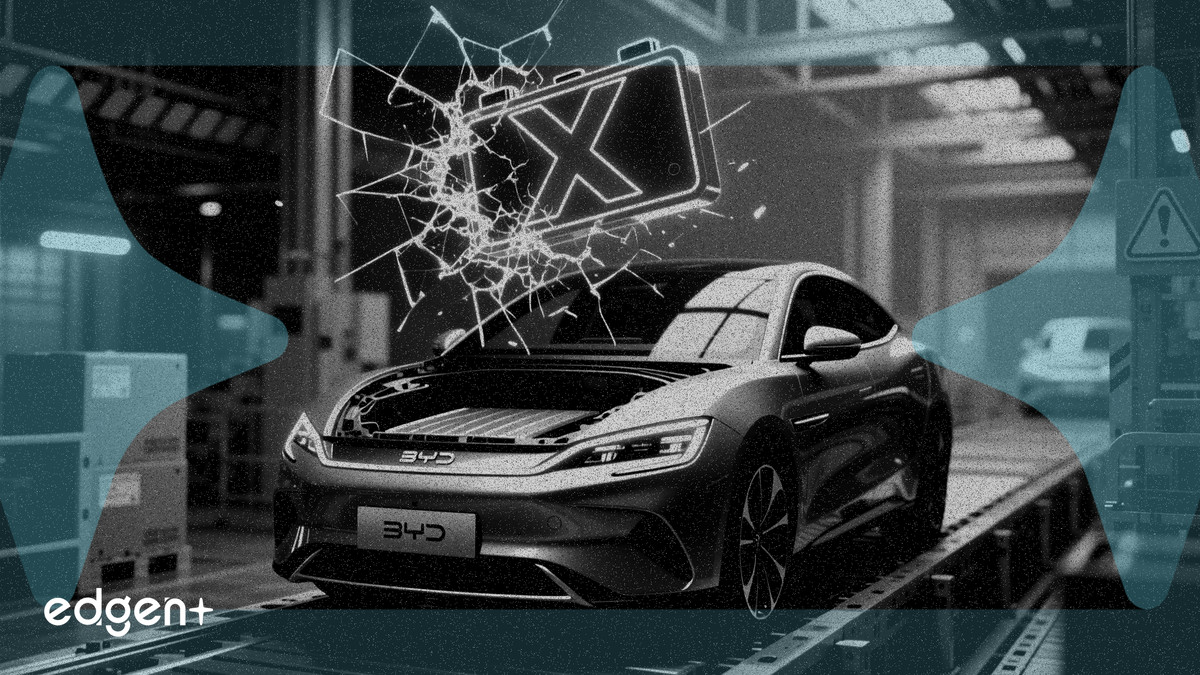
Chinese electric vehicle manufacturer BYD is struggling to produce enough of its new Blade Batteries to meet surging demand, creating a significant bottleneck that affects more than 140,000 unfilled orders. The supply crunch follows the aggressive rollout of new models featuring ultra-fast charging technology across the company’s multiple brands, straining its vertically integrated production system.
"The company is facing tight battery production capacity, with multiple models under the Dynasty, Ocean, Denza and Yangwang brands entering a ramp-up phase," Wang Chuanfu, Chairman and President of BYD, said at the 2026 Yangwang Business Research Institute conference.
The shortage centers on BYD’s second-generation Blade Battery, a lithium iron phosphate (LFP) pack that allows for a 10 to 70 percent charge in approximately five minutes. The company shipped 20.98 gigawatt-hours (GWh) of batteries in April, with 10.49 GWh installed in its own vehicles in China for a 16.8 percent domestic market share, according to China EV DataTracker. Total EV battery installations in China reached 62.4 GWh for the month.
This production strain represents a critical test of BYD’s growth strategy. While the intense demand confirms the market appeal of its flash-charging technology, the inability to meet it in the short term could cap monthly sales growth and cede ground to competitors. The company is simultaneously expanding its charging network, targeting 20,000 stations by the end of 2026, and pursuing factory capacity in Europe to fuel its global ambitions.
Flash-Charging Rollout Fuels Demand
BYD launched its advanced flash-charging platform in March, positioning it as a key feature to eliminate range anxiety and reduce charging times to less than a typical refueling stop. The technology has been a major driver of consumer interest, particularly in new premium models from its Denza and Yangwang sub-brands, as well as upcoming vehicles like the Atto 3 flash-charge variant.
The strategy has been successful in generating massive order books, with some estimates suggesting the backlog for flash-charge models now exceeds 140,000 vehicles. The Datang, the brand's largest EV, secured over 100,000 pre-orders alone, a testament to the appeal of the new technology combined with competitive pricing.
Production Under Pressure
The demand has put BYD’s battery output under immense pressure. While Wang stated that monthly sales will increase as battery capacity is gradually released, the public admission of a shortage is a rare acknowledgment of growing pains from the world’s largest EV maker.
The issue has been compounded by online discussions around the battery’s thermal management during high-rate charging. Recent livestream demonstrations in China reportedly showed battery surface temperatures reaching over 76°C, sparking debate about long-term durability. BYD has not commented on the tests or suggested any safety concerns are linked to the current production constraints.
For investors, the supply crunch is a double-edged sword. It validates BYD's technological lead and strong consumer demand but also introduces execution risk. The company's ability to rapidly scale its second-generation Blade Battery production will be the key determinant of its sales trajectory for the remainder of the year, weighing on a stock that has factored in aggressive growth.
This article is for informational purposes only and does not constitute investment advice.