Bulgaria secured its first-ever Eurovision victory, a surprising triumph that defused a political crisis for organizers as Israel placed second for the second consecutive year.
Bulgaria secured its first-ever Eurovision victory, a surprising triumph that defused a political crisis for organizers as Israel placed second for the second consecutive year.
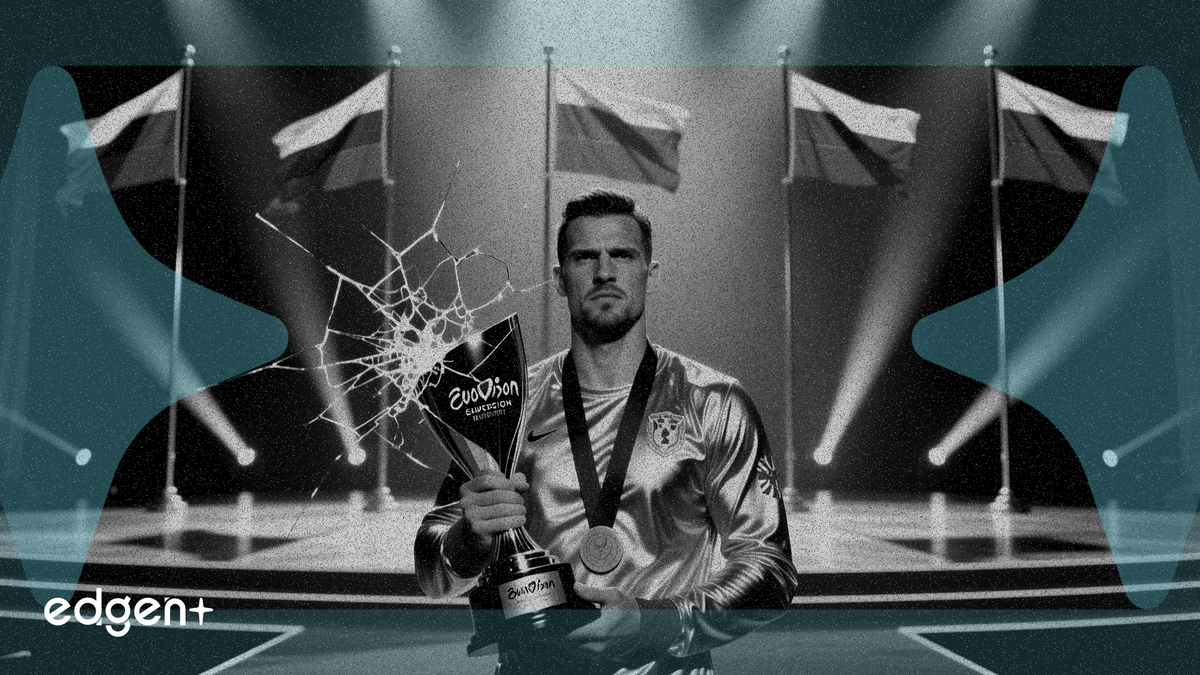
Bulgaria’s Dara has won the 70th Eurovision Song Contest with her song ‘Bangaranga,’ in a Vienna final shaped by a five-nation boycott and protests over Israel's participation. The 27-year-old singer’s victory, the first for her country, came after a tense night that saw Israel’s Noam Bettan finish as runner-up, a result that avoids a logistical and political headache for the European Broadcasting Union (EBU) over hosting the 2027 contest.
On stage, Dara described her winning entry as “pop music with folklore bones,” though she remained playfully elusive about the title’s meaning. “‘Bangaranga’ is a feeling that everybody gets in themselves,” Dara said in the green room. “It’s the moment that you choose to be in love and not fear... a special energy that everyone has got in themselves, a feeling that everything is possible.”
Dara topped both the jury and public votes, earning 516 points. Israel’s entry, ‘Michelle,’ secured a strong public vote to finish second with 343 points. The grand final, held in Vienna’s Wiener Stadthalle, featured 25 participating countries, but the absence of Ireland, Spain, the Netherlands, Slovenia, and Iceland, who all refused to compete, was deeply felt. At the other end of the scoreboard, the UK’s entrant Look Mum No Computer finished last, failing to score a single point from the public vote.
Bulgaria’s win spares the EBU a difficult decision. Had Israel won, the organization would have faced intense pressure over the location and security of the 2027 contest. Instead, the question of hosting now moves to Sofia, as the competition grapples with its most profound political crisis in years, testing its "apolitical" mantra.
The boycott by five countries was a protest against Israel’s continued participation amid the ongoing military offensive in Gaza, which followed the Hamas-led attack on October 7, 2023. The broadcasters from Spain, Ireland, the Netherlands, Slovenia, and Iceland cited the humanitarian crisis and criticized the EBU’s handling of the situation. The move reduced the number of competing countries to 35, the fewest since 2003.
Outside the arena, an estimated 2,000 demonstrators marched in Vienna to protest Israel’s inclusion. Inside, the atmosphere was calmer than in previous years, though booing was audible when Israel’s public vote score was announced, surging them up the leaderboard. The EBU had recently changed voting rules, halving the number of votes per person from 20 to 10, a move seen as a reaction to Israel's aggressive state-backed social media campaigns in the past.
Tensions also surfaced when Israel’s broadcaster Kan mocked the traditional facial tattoos of Croatia’s group Lelek, comparing them to “henna tattoos in Eilat.” Kan later apologized, but Lelek condemned the remarks as dismissive of their culture and the history of sicanje tattoos, a tradition used to resist forced religious conversions during the Ottoman Empire.
For the United Kingdom, the night ended in familiar disappointment. Sam Battle, the YouTuber known as Look Mum No Computer, saw his song ‘Eins, Zwei, Drei’ finish in last place with ‘nul points’ from the televote. It marked another bleak chapter for the UK in the contest, which has struggled to make an impact for most of the last two decades, with the notable exception of Sam Ryder’s second-place finish in 2022.
The result places the UK alongside Belgium and Germany, who also received zero points from the public. The consistent poor showing raises fresh questions about the UK's strategy and appeal within the competition, a stark contrast to the national celebration now beginning in Bulgaria.
This article is for informational purposes only and does not constitute investment advice.
