
A Middle East escalation on June 8 risks disrupting crude flows through the Strait of Hormuz, sending Brent above $95 a barrel for the first time in three months.
A Middle East escalation on June 8 risks disrupting crude flows through the Strait of Hormuz, sending Brent above $95 a barrel for the first time in three months.
A Middle East escalation on June 8 risks disrupting crude flows through the Strait of Hormuz, sending Brent above $95 a barrel for the first time in three months.
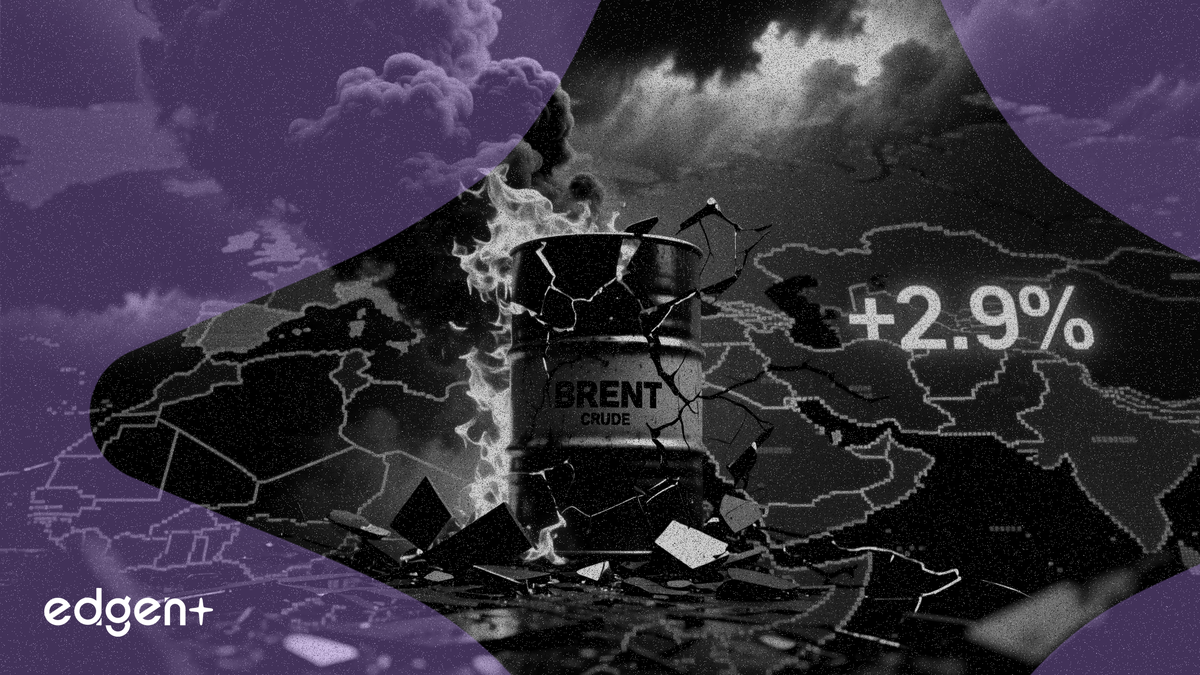
Brent crude surged 2.9% to $95.66 a barrel on Monday after a Middle East escalation threatened shipping lanes that carry about 20% of the world's oil supply. West Texas Intermediate rose 2.7% to $92.10, with both benchmarks posting their largest single-day gains since October.
"The market is pricing in a meaningful disruption risk to Gulf production and transit routes," said Omar Tariq, senior energy analyst at Edgen. "This is the most significant geopolitical premium we've seen since the 2023 Hamas-Israel conflict."
Trading volumes on ICE Futures Europe exceeded the 30-day average by 40%, exchange data show. Computer-based trend-following hedge funds have capitalized on the price surge, adding to long positions in crude futures after weeks of bearish positioning, according to a note from Bridgewater Associates.
The flare-up comes as the oil market was already pricing in a supply deficit of 1.2 million barrels a day in the second half of 2026, according to the International Energy Agency. A sustained disruption could push Brent toward $140 a barrel, a level not seen since the Russia-Ukraine war in 2022, and would hit oil-importing economies from Japan to India while boosting producers in the Americas.
Supply Risk Centers on Key Chokepoint
The Strait of Hormuz, through which about 17 million barrels a day transit, sits at the center of the risk premium. Iran has previously threatened to close the waterway during periods of heightened tension, and any disruption would immediately tighten global supply. OPEC's spare capacity, concentrated in Saudi Arabia and the UAE at roughly 4 million barrels a day, could partially offset losses but would take weeks to mobilize.
Bearish Positioning Amplifies the Rally
The price surge was amplified by the market's positioning entering the week. Hedge funds and other money managers had built net-short positions in Brent crude over the prior three weeks, betting on a demand slowdown in China and rising non-OPEC supply from the Americas. The sudden geopolitical shock forced a rapid unwind of those bearish bets, accelerating the move higher.
What happens next depends on diplomatic channels. If the escalation de-escalates within days, much of the risk premium could evaporate quickly, returning Brent to the $88-to-$92 range. If supply is physically disrupted, analysts at Goldman Sachs estimate Brent could spike to $110 within a week and $140 if the Strait of Hormuz is partially closed for more than 10 days.
This article is for informational purposes only and does not constitute investment advice.
