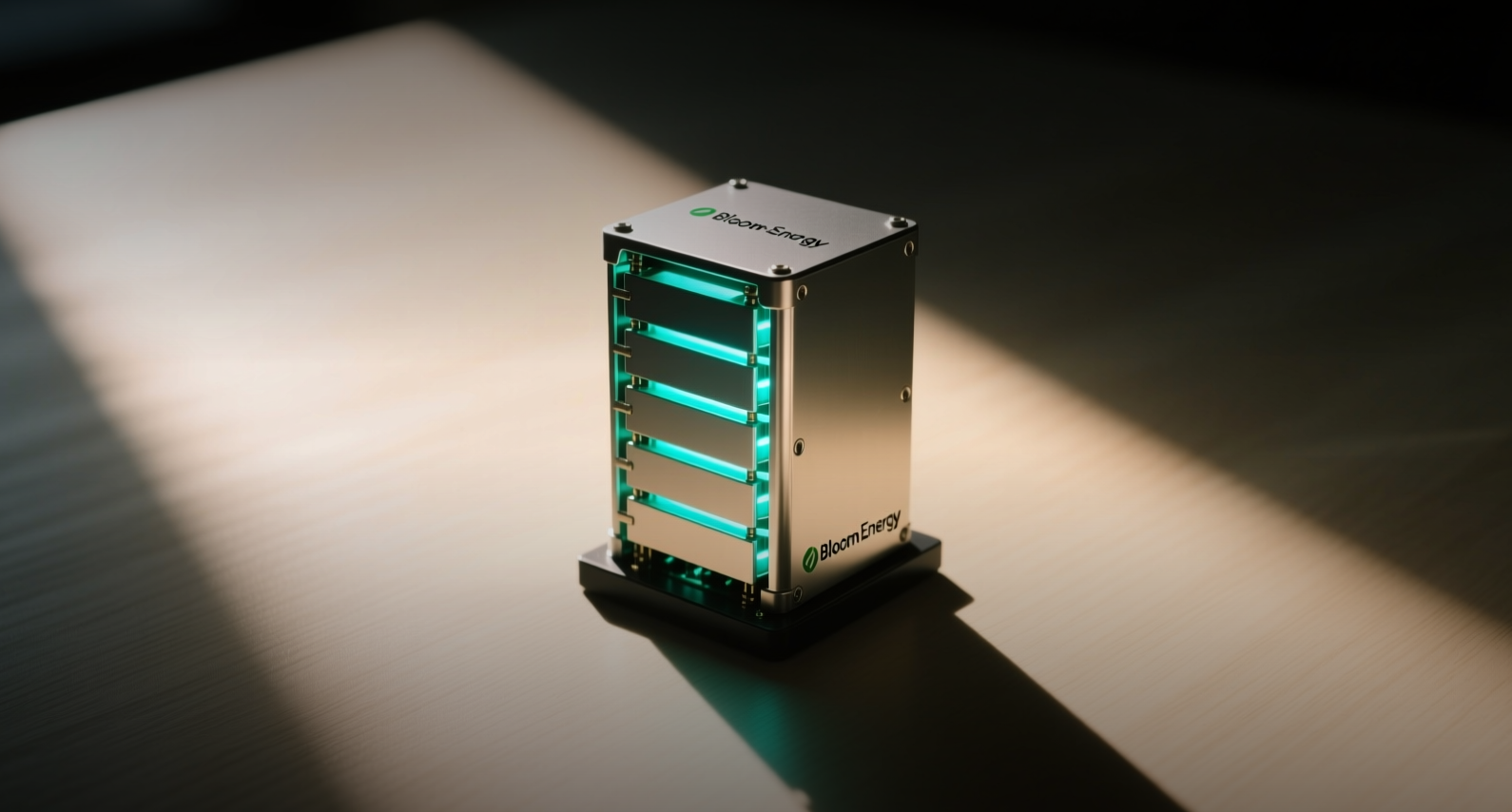
Bloom Energy's fuel cell technology has become a critical bridge between surging AI compute demand and a US power grid that cannot keep up, driving the stock up 219% year to date.
The company's 2026 Data Center Power Report, released Monday, found that 84% of data center operators now rank power availability as their top site selection criterion — a bottleneck that is forcing a structural shift toward onsite generation. By 2030, between 27% and 38% of data center facilities are expected to rely on onsite power for primary energy needs, up from just 13% projected in last year's survey.
"Bring-your-own-power has shifted from a slogan to a business necessity for AI hyperscalers and manufacturing facilities," Bloom Energy Chief Executive Officer KR Sridhar said.
The numbers behind the rally are stark. Bloom Energy's first-quarter revenue more than doubled year over year to $751.05 million, beating the $0.13 consensus EPS estimate by delivering $0.44. Management raised full-year 2026 revenue guidance to a range of $3.4 billion to $3.8 billion, while total backlog swelled to roughly $20 billion. The company's $5 billion AI infrastructure partnership with Brookfield and a collaboration with Oracle Corp. serve as the primary catalysts behind the stock's ascent.
The Grid Bottleneck Is Reshaping Data Center Economics
US data center operators are expected to add 55 gigawatts of IT capacity over the next five years, according to the Bloom Energy report, nearly doubling the current installed base of roughly 25 GW. The scale of individual campuses is also shifting: one in five data center campuses is expected to exceed 1 GW of capacity by 2030, rising to one in three by 2035.
Texas is emerging as the critical battleground, with projected grid demand potentially surpassing 40 GW by 2028. The report also noted that Bitcoin mining facilities are being repurposed for AI workloads, as both share the same fundamental requirement for massive, reliable electricity at competitive rates.
The implications for Bloom Energy's solid oxide fuel cell platform are significant. Bernstein analyst Sunaina Ocalan, who initiated coverage with a Market Perform rating and a $276 price target, called the technology "increasingly relevant in a scenario where grid infrastructure can't keep up with expected load growth." However, she noted the company still needs to demonstrate a path to free cash flow that does not rely on one-time contract timing.
Valuation vs. Momentum
Of the 28 analysts covering Bloom Energy, 14 rate it a Buy or higher, 12 rate it a Hold, and two have a Sell rating. The average 12-month price target of $263.65 implies roughly 6% downside from the last close, according to Koyfin data. On Stocktwits, retail sentiment has plunged to extremely bearish levels from neutral a month ago, even as the stock continues to climb.
Bloom Energy shares, trading at roughly $278 with a market cap near $79 billion, now dwarf fuel cell peers. FuelCell Energy Corp. is up 135% YTD with a $1.16 billion market cap, while Plug Power Inc. has gained 42% to trade around $2.81. The valuation gap reflects Bloom Energy's revenue growth — 130% versus FuelCell's 5% decline and Plug Power's continued operating losses — but also raises the bar for execution on the raised guidance and the Brookfield partnership ramp.
This article is for informational purposes only and does not constitute investment advice.