
Key Takeaways:
- US retail beef hit a record $9.64 per pound in April, up 13% from a year earlier
- The cattle herd is at a 72-year low, with recovery pushed to 2028 or 2029
- A resurgent screwworm parasite in Texas threatens to deepen supply constraints
Key Takeaways:
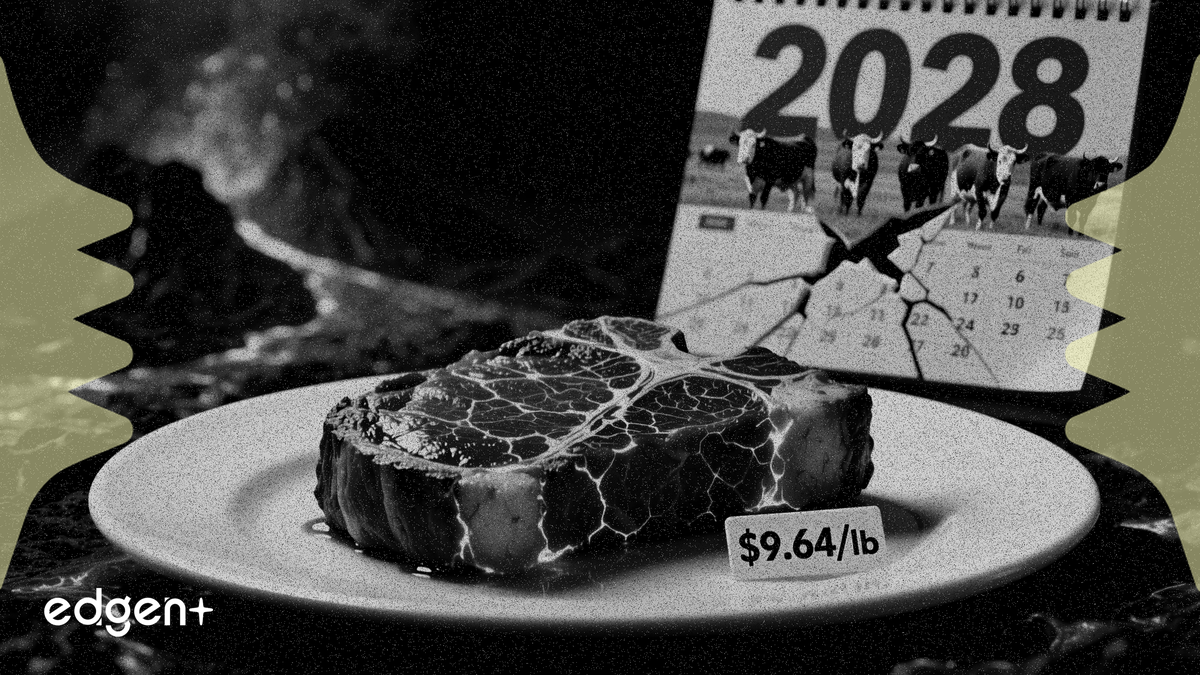
The US cattle herd has shrunk to its smallest in 72 years, pushing retail beef prices to a record $9.64 per pound and delaying any meaningful recovery until 2028 or 2029, according to Omaha Steaks CEO Nate Rempe.
US retail beef hit a record $9.64 per pound in April, up 13% from a year earlier, as the nation's cattle herd sits at a 72-year low.
"The demand is just not waning," Nate Rempe, president and CEO of Omaha Steaks, said in an interview. He said ranchers must retain more female cattle for breeding rather than sending them to market, a process that delays any meaningful supply increase.
The US Department of Agriculture confirmed at least three cases of New World screwworm in Texas cattle this week, adding pressure to an already strained supply chain. The beef industry has been grappling with the smallest cattle herd in 75 years after prolonged droughts, according to USDA data. Those supply constraints have persisted even as consumer demand remains strong heading into key summer grilling holidays.
"I think maybe last year when we talked, we were thinking we would see recovery in 2027, now we are into 2028, maybe even 2029 before we start seeing meaningful herd building happening," Rempe said. A full-blown screwworm outbreak could cost $3 billion across the Southwest, according to a report by the Federal Reserve Bank of Dallas, further delaying the recovery timeline.
The screwworm, a flesh-eating parasite that was eradicated from the US in the 1960s, has re-emerged in Texas. The USDA confirmed at least three infected cattle this week. Female adult flies lay eggs in fresh wounds of warm-blooded animals, and the larvae feed on the hosts, causing bacterial infections or death.
Cattle producers in affected states lost up to $50 million to $100 million per year before full eradication, according to a 2025 USDA analysis. The border closure to livestock imports from Mexico, announced in May 2025 by USDA Secretary Brooke Rollins, has also contributed to higher beef costs, said David Anderson, an agriculture economist at Texas A&M University. Feedlots where Mexican cows were fattened were hit hard, affecting US beef supply.
The USDA broke ground on a facility to mass produce sterile screwworm flies in Texas in April, with production expected to start in November 2027. It has also been bringing in 100 million sterile flies per week from a facility in Panama. The department sought EPA approval to release NovoFly, a genetically modified male-only sterile fly that would double capacity.
"It's the technology that we used to win the battle in the 60s, and it will definitely help again," Colin Woodall, CEO of the National Cattlemen's Beef Association, said.
For consumers, the combination of a depleted domestic herd, a resurgent parasite, and strong demand means elevated beef prices are likely to persist for years. The $9.64 per pound record may not hold for long if supply constraints continue to tighten, adding to broader food inflation pressures.
This article is for informational purposes only and does not constitute investment advice.
