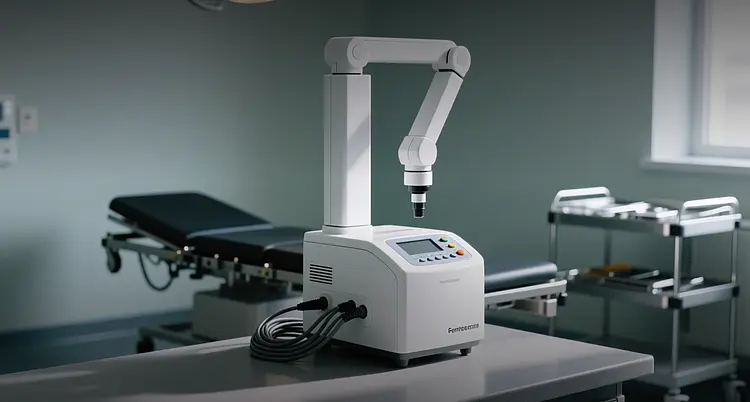
Bausch + Lomb secured European CE Mark approval for SeeLyra, its next femtosecond laser, opening a premium cataract and LASIK device line in a market where Alcon and Johnson & Johnson Vision already hold installed bases.
The Vaughan, Ontario-based company said SeeLyra will reach European surgeons on a limited basis in the coming months, with broader availability expected in 2027. Bausch + Lomb is also pursuing approvals in other markets, including the United States, where no filing date has been disclosed.
"Building on over 15 years of experience in the femtocataract laser market, our goal was to deliver a platform that provides both enhanced functionality and greater flexibility to the OR," Luc Bonnefoy, president of Surgical at Bausch + Lomb, said.
The device performs laser preparation for premium cataract, LASIK flap creation and corneal therapeutic procedures. Its distinguishing feature is size: Bausch + Lomb calls SeeLyra one of the most compact femtosecond platforms available, with no fixed patient bed and compatibility with existing bed setups. That matters because femtosecond lasers have historically been the bulkiest capital equipment in an ophthalmic operating room, and floor space is the constraint that decides whether a surgical center can add a second premium-procedure platform at all.
SeeLyra carries live swept source OCT, which gives surgeons real-time depth visualization during the procedure. The company says this reduces variability during docking — the step where the laser must align precisely with the patient's eye — and allows positioning of laser cuts with visual control during application. It retains the interface and procedure range of VICTUS, Bausch + Lomb's previous-generation femtosecond platform.
"Premium surgery success begins with precise surgical preparation of the eye," José Manuel Larrosa, MD, of the University of Zaragoza in Spain, said. "SeeLyra will help me to achieve this consistently on my terms, while fitting seamlessly and efficiently into our OR space and workflow."
What the approval does and does not disclose
Bausch + Lomb did not disclose SeeLyra's price, unit volume targets or the capital cost to surgeons, and no revenue contribution has been guided. Those omissions matter for modeling: femtosecond platforms are sold as capital equipment with per-procedure disposable and service revenue attached, so the economics depend on install base growth rather than a single sale. The company has not said how many systems it expects to place in Europe during the limited launch phase.
The competitive field is well established. Alcon's LenSx was the first femtosecond laser cleared for cataract surgery and remains the most widely installed platform globally, while Johnson & Johnson Vision's Catalys system competes on a fluid interface designed to reduce suction pressure on the eye. Both companies have multi-year head starts in surgeon training and service networks, which is the practical barrier to displacement in this category. Bausch + Lomb's own VICTUS platform, launched more than a decade ago, gives it an existing European service footprint to build on.
The regulatory pathway here is the European CE Mark, which certifies conformity with EU medical device requirements rather than the more demanding US premarket approval standard. That distinction cuts both ways: CE Mark is faster to obtain, but the US market — where femtosecond cataract lasers command higher average selling prices — remains closed until the FDA clears the platform. Bausch + Lomb said only that it is "in the process of seeking regulatory approvals" in markets around the world, including the US.
The surgical segment is where the margin argument sits
Bausch + Lomb shares closed at $17.55 on the New York Stock Exchange at last close, a level that reflects a company still working through the leverage taken on at its 2022 spinoff from Bausch Health. Surgical is the smaller of its two reporting segments relative to vision care, but it carries the higher gross margin profile, which is why a new capital platform matters disproportionately to the earnings story.
The near-term financial impact is likely to be negligible. A limited European launch in the coming months followed by a 2027 ramp means SeeLyra contributes little to 2026 revenue, and the company has not quantified the opportunity. The more consequential question is whether a compact, bed-free platform can win placements in ambulatory surgery centers, where space constraints are tightest and where premium cataract procedure volumes have been growing fastest. If SeeLyra converts those placements, it also pulls through Bausch + Lomb's premium intraocular lens franchise, which is where the recurring revenue sits.
For investors, the CE Mark is a de-risking event rather than an earnings event. It removes a regulatory overhang on the surgical pipeline and shifts the debate to execution: European placement pace through 2027, the timing of a US filing, and whether SeeLyra's compact footprint proves to be a genuine purchasing criterion for surgery centers or a marketing point. Peer eye-health device names with pending regulatory catalysts are likely to trade with BLCO on sentiment around the approval, though the read-through is limited because the femtosecond installed base is concentrated in two competitors.
This article is for informational purposes only and does not constitute investment advice.