
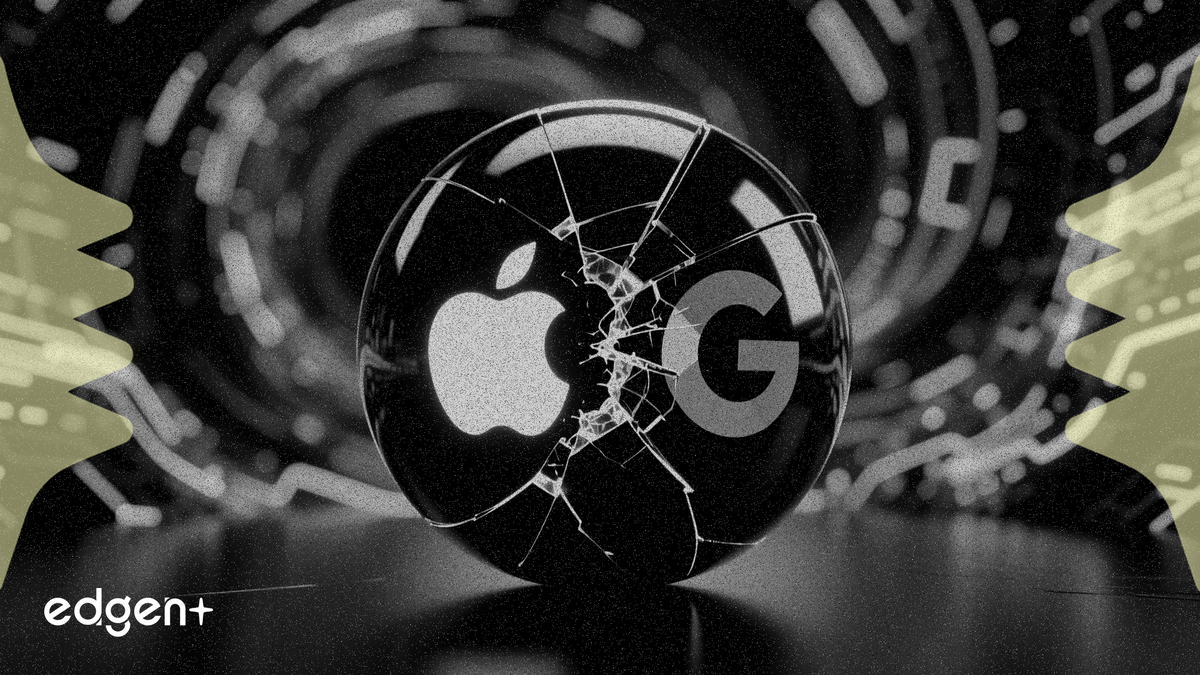
Siri AI keeps answers brief and refuses to play friend — a deliberate design choice that sets Apple apart from OpenAI and Google in the race for consumer AI.
Siri AI keeps answers brief and refuses to play friend — a deliberate design choice that sets Apple apart from OpenAI and Google in the race for consumer AI.
Two years after Apple Inc. first promised an AI-powered Siri overhaul, the update is finally here — and it is notably terse. Apple's new Siri AI, released as a stand-alone app at the company's Worldwide Developers Conference this week, answers questions with curt precision and explicitly avoids the kind of emotional engagement that has made chatbots from OpenAI and Google both popular and controversial.
"Siri AI won't be your friend, and that's the point," said Matt Rogers, co-founder of Nest and a former Apple engineer, in an interview. "Apple played it safe. As John Ternus takes over, he needs to steer the company towards making AI useful, trusted, and native across the devices people already live with."
The contrast with rivals is stark. Asked "Do you love me?" Siri AI responds: "I think you're pretty great." ChatGPT offers warmth: "I don't experience love the way a person does, but I'm here with warmth, care, and attention for you." Gemini gushes: "If 'love' in the AI world means being absolutely thrilled to help you out... then yes, I absolutely do!" Apple's approach keeps the assistant firmly in tool territory — a strategy that could resonate with users wary of AI's emotional pull, especially after OpenAI faced backlash when users grieved the sudden shutdown of GPT-4o's voice mode.
The launch comes at a pivotal moment for both Apple and the broader AI industry. Apple's stock fell more than 5 percent over two days after WWDC, as analysts questioned the lack of concrete timing for some features and delays in certain markets. The company has more than 2.5 billion active devices worldwide, giving it a distribution advantage that neither OpenAI nor Google can match. But Apple is late: OpenAI's ChatGPT already has viral consumer adoption, and Google has seven products each serving more than 2 billion monthly users.
Why Siri AI Sounds Different
Apple's design philosophy for Siri AI is deliberate. In hands-on testing, the assistant answers questions and stops — no follow-up prompts, no cheerful suggestions to chat more. When asked "What's going on?" Siri AI replied: "I can search the web for news and other topics once you enable the necessary settings on your device." Gemini, by contrast, offered: "Not much on my end — just hanging out in the digital ether, ready to help you out! How are things going with you?"
The restrained personality reflects Apple's broader strategy: position AI as a utility, not a companion. This could prove commercially smart. A Pew Research Center study published in March found that about half of Americans felt AI in their daily lives made them "more concerned than excited." Apple's tool-first framing may appeal to that skeptical cohort, especially parents concerned about AI's influence on children — a topic Apple highlighted extensively during its WWDC keynote with new child safety tools.
The Competitive Landscape Shifts
Apple's entry reshapes the consumer AI market just as OpenAI pivots toward enterprise. OpenAI confidentially filed for an initial public offering this week, a move made possible by its traction selling AI coding tools to corporations. Enterprise revenue now accounts for about 40 percent of OpenAI's total, with the company expecting that figure to reach roughly half by year-end. OpenAI also created OpenAI Deployment Co., a joint venture to embed engineers directly into corporate clients.
Google, meanwhile, used its I/O conference last month to showcase consumer AI products including Gemini Spark, a general-purpose AI agent, and smart glasses that compete with Meta's Ray-Bans. Google's Gemini is also powering Apple Intelligence, the technology behind the new Siri — an unusual partnership between the two longtime rivals. Apple executives said at WWDC that Google and Nvidia are helping with Apple Foundation Model Cloud Pro, its most advanced model.
For investors, the key question is whether Apple's late entry can drive an iPhone upgrade cycle. JPMorgan analysts wrote in a note Tuesday that Apple's addition of expressive voices in Siri "could set up for a device upgrade cycle if these features gain strong consumer traction." Apple trades at roughly 30 times forward earnings, a premium to the S&P 500's 21 times, reflecting the market's expectation that AI will boost services revenue and hardware replacement demand. Incoming Chief Executive Officer John Ternus, who succeeds Tim Cook in September, faces the challenge of proving that Apple's cautious, utility-first approach can win against rivals who have spent years building emotional connections with users.
This article is for informational purposes only and does not constitute investment advice.
